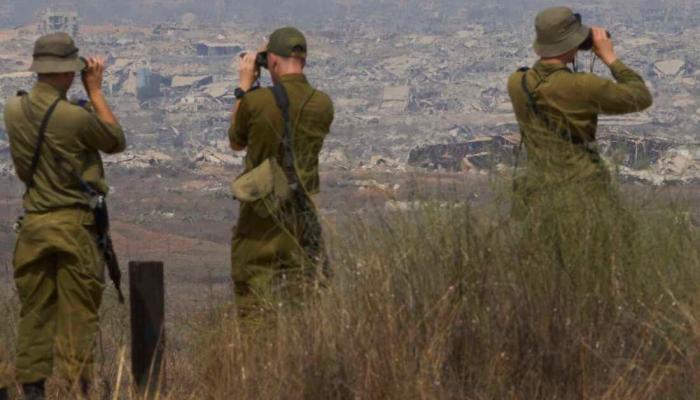
Hezbollah Deploys Fibre-Optic FPV Drones, Killing Idan Fooks in Taybeh
Key Takeaways
- Hezbollah deployed fiber-optic FPV drones to evade Israeli detection.
- Drones targeted Israeli soldiers and an Iron Dome battery near the border.
- Drones and rockets escalated fighting along the Lebanon-Israel frontier.
Fiber-optic drones in Taybeh
In the skies over the Lebanese town of Taybeh, Israel’s multibillion-dollar defence systems were rendered useless by a spool of cable as Hezbollah introduced first-person view (FPV) attack drones guided by a physical fibre optic cable.
“In the skies over the Lebanese town of Taybeh, Israel’s multibillion-dollar defence systems were rendered useless by a spool of cable, according to a report by the Israeli daily Yedioth Ahronoth (Ynet)”
As an Israeli medical evacuation helicopter rushed to rescue soldiers wounded in a drone attack, another unmanned aerial vehicle hurtled towards them, and with electronic countermeasures failing soldiers were forced to point their rifles at the sky before it detonated just metres away.

Yedioth Ahronoth (Ynet) reported that an explosive-laden fibre optic drone slammed into an Israeli armoured unit, killing Idan Fooks and wounding six other soldiers, and Hezbollah then launched two more drones, one of which exploded just metres from the aircraft.
Fire-control frustration surfaced in the account from Israeli military correspondent Doron Kadosh, who relayed an Israeli commander’s line: "The briefing the forces get amounts to: 'Be alert, and if you spot a drone, shoot at it'."
The same report described how some Israeli combat units began independently developing improvised defences, including hanging physical nets over military positions, houses and windows, because "It’s an improvised response… but it’s far from enough."
IDF pushes offensive shift
Israeli coverage framed the response as a change in posture, with ynetnews reporting that senior IDF officers called for lifting restrictions imposed on Israel and striking Hezbollah targets with greater force north of the Litani River.
The same ynetnews account said the IDF should also target the supply chain for explosive-laden FPV drones and create a “price tag” to make Hezbollah think twice before launching attacks.

In that reporting, the officials argued that countering the threat cannot rely solely on defensive measures or point interceptions, warning that "The current situation plays into Hezbollah’s hands — the rules must be changed."
CNN described the technical challenge as well, quoting Yehoshua Kalisky of Israel’s Institute for National Security Studies that the drones are "immune to communication jamming" and, without an electronic signature, "impossible to discover the location from which they were launched."
CNN also said the IDF has relied on jamming signals and frequencies for other drone types, but for fiber-optic drones "Beyond physical barriers like nets, there is little that can be done," according to an Israeli military source.
Ceasefire talks and wider risk
As the drone threat reshaped battlefield tactics in southern Lebanon, France 24 reported that Israeli and Lebanese negotiators met in Washington just days before the ceasefire between the two countries expires.
France 24 said Hezbollah stated it used a drone to attack Israeli soldiers gathered in northern Israel near the border with Lebanon, and the pro-Iranian movement claimed it targeted a gathering of soldiers at the Rosh Hanikra site.
The same France 24 update tied the incident to the negotiations, noting that "This announcement comes as Israeli and Lebanese representatives resumed talks Thursday in Washington" before the ceasefire deadline.
On the ground, Al-Manar TV Lebanon reported that Israeli Channel 15 said at least 15 explosive drones were launched over the weekend toward Israeli army forces in southern Lebanon and along the northern border, while 20 alerts sounded across multiple frontline settlements.
Al-Manar TV Lebanon also reported that Hezbollah fighters targeted two “Drone Dome” drone jamming devices at the newly established site in Nimr Al-Jamal and the Al-Jardah site, using Ababil attack quadcopters, and that an attack on an Israeli occupation army command vehicle at the Jal Al-Alam site resulted in its destruction and the burning of two nearby vehicles.
More on Lebanon
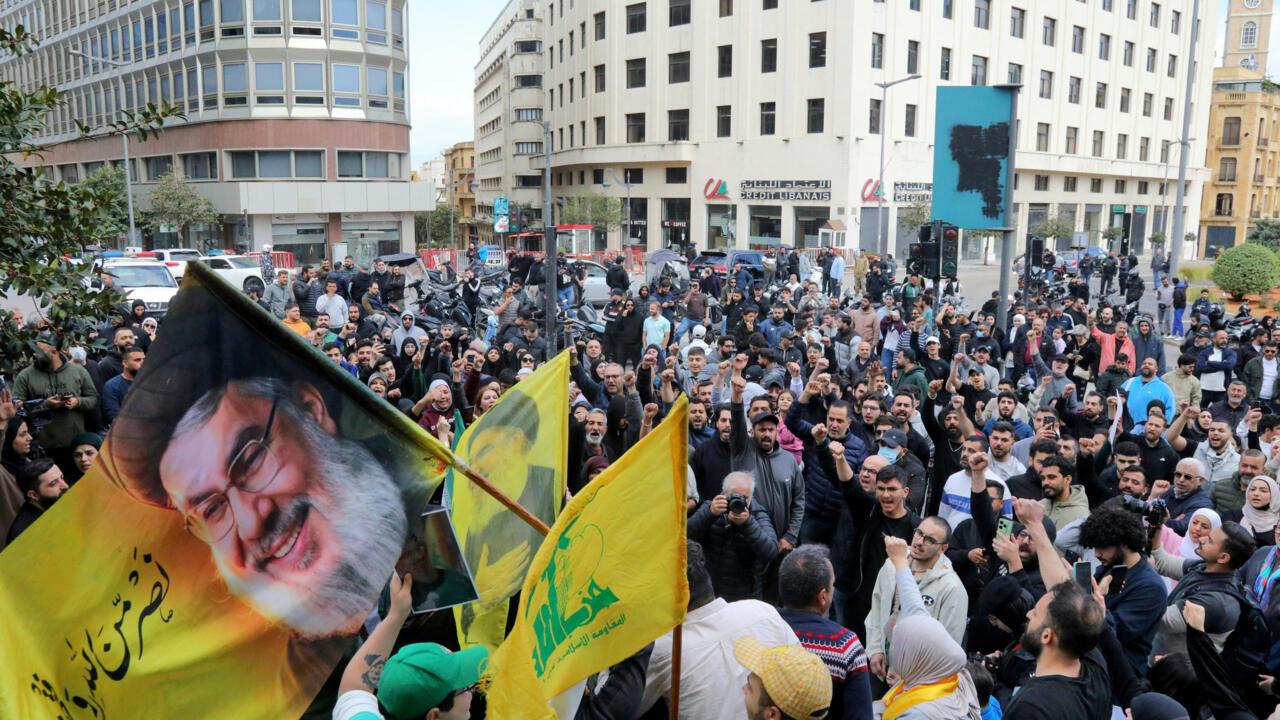
U.S. Sanctions Lebanese Officers Samir Hamadi and Khattar Nassereddine Over Hezbollah Intelligence
15 sources compared
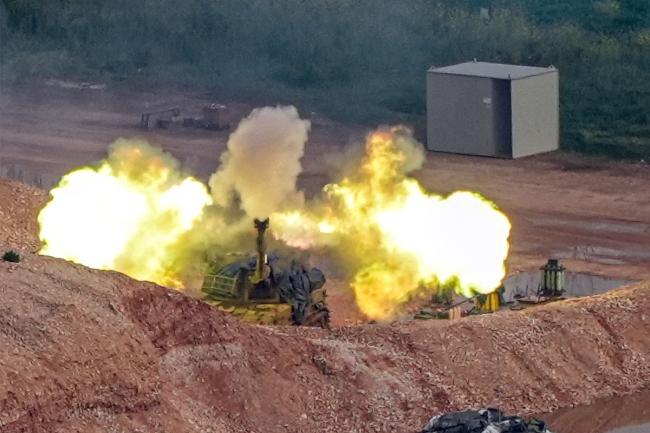
Israeli Strikes Kill 10 in Southern Lebanon, Including Paramedics and a Child
15 sources compared
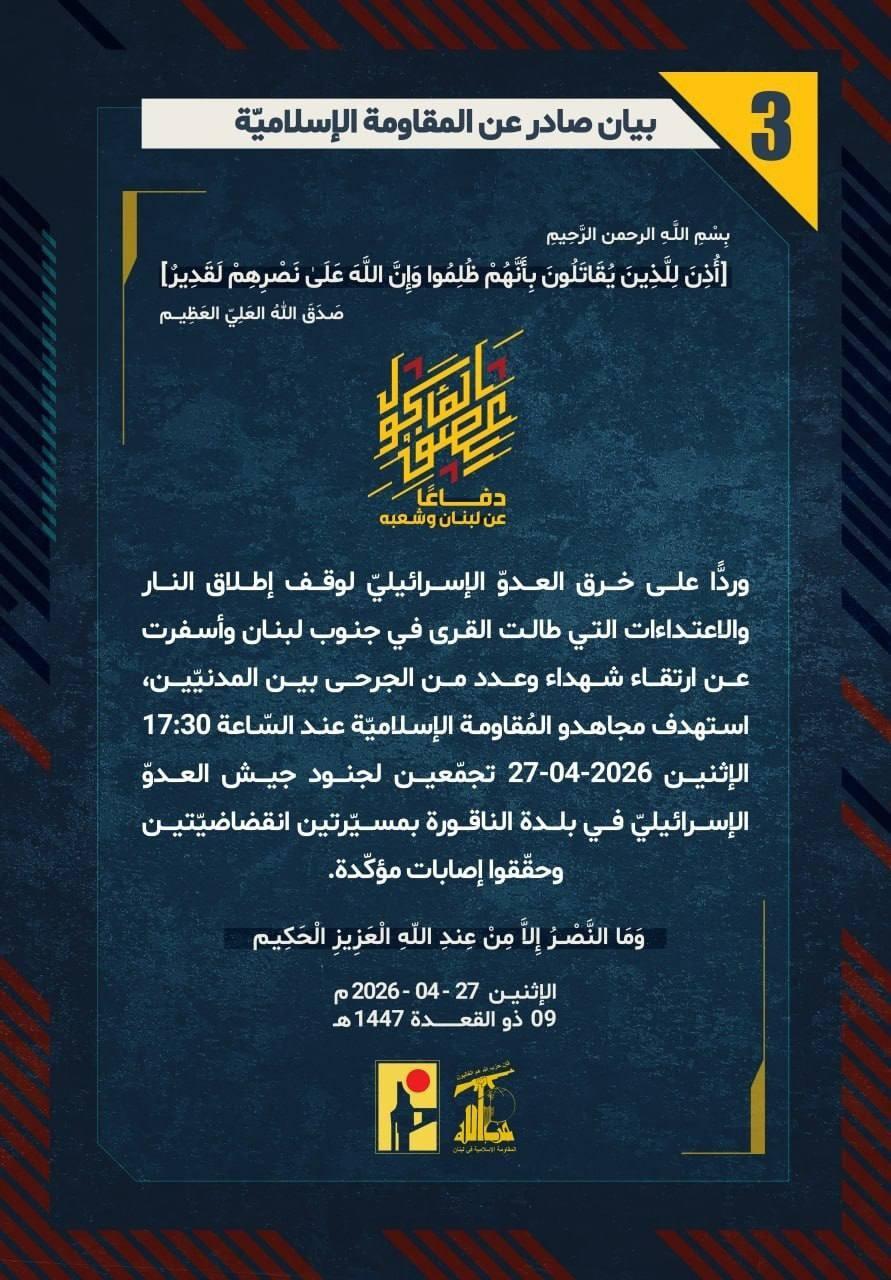
Hezbollah Targets Israeli Soldiers in Naqoura With Attack Drones in Two Waves
15 sources compared

Israel Kills More Than 350 in Beirut Airstrikes After U.S.-Iran Ceasefire
11 sources compared