
US Health Authorities Temporarily Bar Green-Card Holders Returning From Ebola-Affected Congo, Uganda, South Sudan
Key Takeaways
- WHO upgrades Congo Ebola risk to very high amid rapidly rising cases
- Ituri outbreak reports hundreds of suspected cases and dozens of deaths
- US bars green-card holders who traveled to Ebola-affected Congo, Uganda, South Sudan
Ebola travel curbs
US health authorities said they plan to temporarily bar permanent residents from reentering the United States if they’ve traveled recently to Ebola-affected areas under a new rule published Friday.
The move escalates earlier travel restrictions that barred travel to the US for people who had been in the Democratic Republic of Congo, Uganda or South Sudan in the prior 21 days, while the rule said it would not permanently bar affected green-card holders.

Mint reported that the interim final rule is effective immediately and will remain in effect for six months or until Health Secretary Robert F. Kennedy Jr. determines it is no longer needed.
The rule also said existing measures “have not completely stopped (and will not completely stop) global travelers, and other persons crossing from one country into another country, from spreading Ebola disease caused by the Bundibugyo virus across country boundaries,” and that the broader authority is “therefore critical to slowing the introduction of Ebola disease into the United States.”
Congo risk upgraded
In the Democratic Republic of the Congo, the World Health Organization upgraded the outbreak risk level from “high” to “very high” as the Ebola outbreak reached nearly 750 suspected cases and 177 deaths.
CIDRAP reported that WHO Director-General Tedros Adhanom Ghebreyesus said in total 82 Ebola cases and seven deaths have been confirmed in the DRC, while warning the outbreak is likely much larger and that authorities acknowledged it likely began weeks to months before it was first investigated.

The Boston Globe, citing AP, said WHO Director-General Tedros Adhanom Ghebreyesus told the AP that 82 cases and seven deaths have been confirmed in Congo but the outbreak is believed to be “much larger,” and that there is no available vaccine for the Bundibugyo virus.
AP also reported that Congo Foreign Minister Thérèse Kayikwamba Wagner said, “We are trying to catch up,” adding, “It is a race against the clock.”
Aid cuts and response strain
As the outbreak spread in eastern Congo, Chosunbiz linked rising disease risks to aid cuts, saying preliminary 2025 ODA statistics showed ODA by members and associate members of the Development Assistance Committee (DAC) at $174.3 billion, down 23.1% from the prior year.
Chosunbiz reported that the United States aid plunged 56.9% and that the WHO projected external health aid would decline 30%–40% in 2025 compared with 2023, with some countries saying they would scale back core services such as vaccination, disease surveillance, and health emergency responses by up to 70% this year.
CIDRAP said the DRC’s Ituri and North Kivu provinces, the outbreak epicenters, have been compromised by international aid cuts and armed conflict that has led to significant displacement, and it described distrust of outside authorities and misinformation that led youths to torch a hospital in Ituri province.
CIDRAP also reported that the WHO released US$ 3.9 million from the Contingency Fund for Emergencies and that the United Nations allocated $60 million to the response, while Satish Pillai said the CDC dispatched 20 epidemiologists to the DRC and is training 50 community healthcare workers there.
More on Technology and Science

Gavin Newsom Declares State Of Emergency After GKN Aerospace Tank Overheats In Garden Grove
17 sources compared

SpaceX Launches Starship V3 From Starbase, Texas, Loses Super Heavy Booster In Gulf Of Mexico
15 sources compared

xAI Powers Data Centers With Natural Gas as SpaceX Pitches Space-Based Solar
16 sources compared
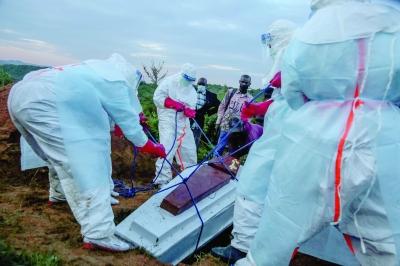
Three Red Cross Volunteers Die From Suspected Ebola in Democratic Republic of the Congo's Ituri
15 sources compared