South America01 June, 20263 min read
Abelardo De la Espriella and Iván Cepeda Head to Colombia Runoff on June 21
This article is an automated aggregation of coverage from news outlets. Our editorials offer in-depth analysis curated by the NewsCord team.
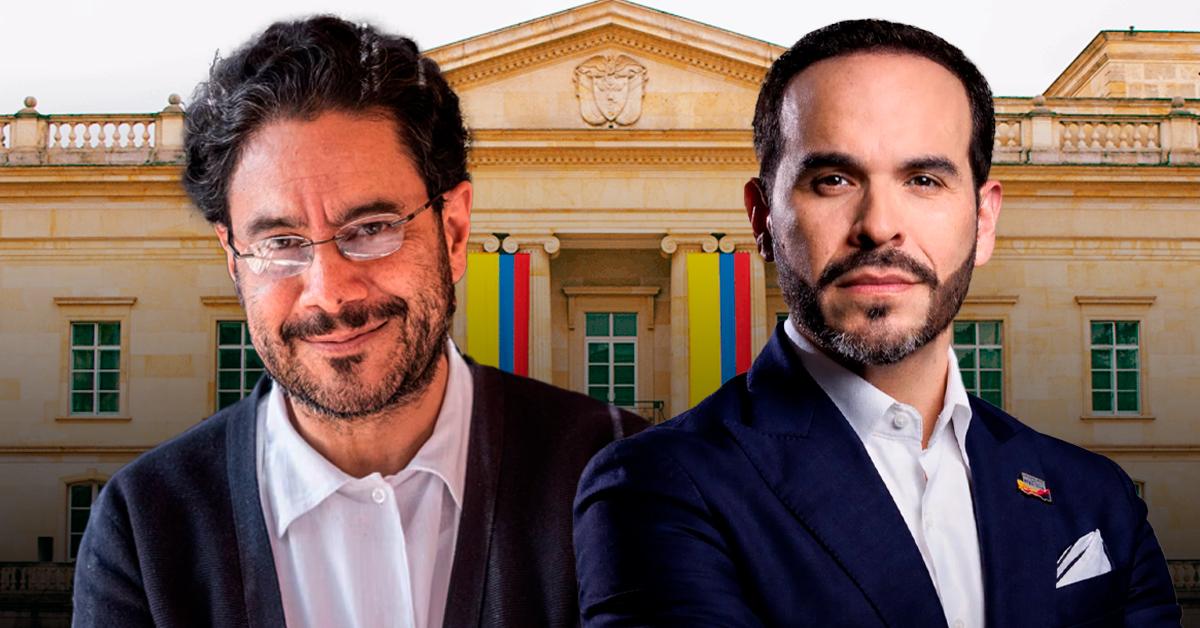
Iván Cepeda and Abelardo de la Espriella advance to a Colombia runoff. De la Espriella won the first round; Cepeda finished second, triggering the runoff.

Colombia runoff set
Colombia’s presidential election moved to a runoff after Abelardo de la Espriella and Iván Cepeda emerged as the top two candidates, with the AP Noticias report saying the preliminary results with more than 90% of the votes counted confirm a runoff on June 21.
Demócrata said the Colombian peso rallied slightly more than 3% against the dollar following De la Espriella’s first-round victory, and it framed the move as part of markets’ expectations that his victory could be consolidated.
El Comercio Perú reported that De la Espriella voted this Sunday in Barranquilla, Colombia, at the colegio La Enseñanza, surrounded by supporters who chanted “sí se puede, sí se puede,” and that he told local media after voting, “Hoy se define la libertad, la democracia. Vamos a derrotar a la tiranía en primera vuelta.”
La República said Colombia entered the final stretch with Iván Cepeda leading in the polls ahead of the May 31 presidential elections, and it cited an Invamer poll attributing him 44.6% of voting intention compared with 31.6% for Abelardo de la Espriella and 14% for Paloma Valencia.
El Comercio Perú also said more than 41 million Colombians were called to the polls for the first round and that more than 118.000 voting tables were installed nationwide this Sunday.
Peru’s June 7 contest
In Peru, the runoff is scheduled for Sunday, June 7, with Keiko Fujimori competing against Roberto Sánchez, according to AS/COA and Ouest-France.
AS/COA said Peru’s pollsters had waited for more than a month after the first-round vote for official confirmation of the two candidates, and it reported that Keiko Fujimori secured a 17 percentshare of valid votes to make her fourth consecutive runoff.

Ouest-France reported that polling stations reopened on Monday after disruptions, and it said the National Electoral Jury (JNE) noted opening from 7 a.m. to 6 p.m. after delays in delivering electoral materials that prevented about 63,000 voters from voting.
La Nación described the final presidential debate before the runoff as a technical tie according to a poll released on Sunday, and it quoted Fujimori saying, “From day one we will act with great force (...) We will fight crime. I will be the one to take the lead in combating criminals,” while Sánchez said, “Now is the time to fight insecurity by restoring democracy.”
RFI said the debate featured “more barbs exchanged than proposals,” with Fujimori promising to confront crime with an iron fist and Sánchez underscoring the fight against the 'political mafia' as his main proposal.
Markets, polls, and stakes
Demócrata linked Colombia’s first-round outcome to currency expectations, saying Ebury anticipated an upward movement of the Peruvian sol if Keiko Fujimori becomes the next president of Peru, and it forecast that Polymarket assigns her an implied probability of victory of 75%. Demócrata also said Ebury predicted that “This would be the most benign scenario for Peruvian financial markets given Fujimori's pro-market vision,” while it warned that a victory for Sánchez would cause sharp drops in the sol. In Colombia, La República reported that Cepeda sought to consolidate support in Cartagena, Barranquilla, and Envigado ahead of the official closing of campaigns, and it said the campaign aimed to avoid the runoff on June 21.
AP Noticias said the surprise was that the governing coalition, which had expected to win in the first round, was relegated to second place, a political setback for President Gustavo Petro and his continuity project. El Mundo quoted Sergio Ángel, director of the Cuba Program at Universidad Sergio Arboleda, saying, “Both elections share the common thread of choosing between options that threaten democracy to some degree,” and it added that the same article described De la Espriella’s victory as accompanied by an “unexpected Venezuelan stamp” tied to Alex Saab.