Amputees often feel disconnected from their bionic hands. AI could bridge the gap
Key Takeaways
- Four participants tested a new AI-enabled prosthetic hand.
- Samoana Matagi wore the AI hand on one arm, hook on the other.
- Researchers from Utah NeuroRobotics Lab conducted the study.
Study overview and outcome
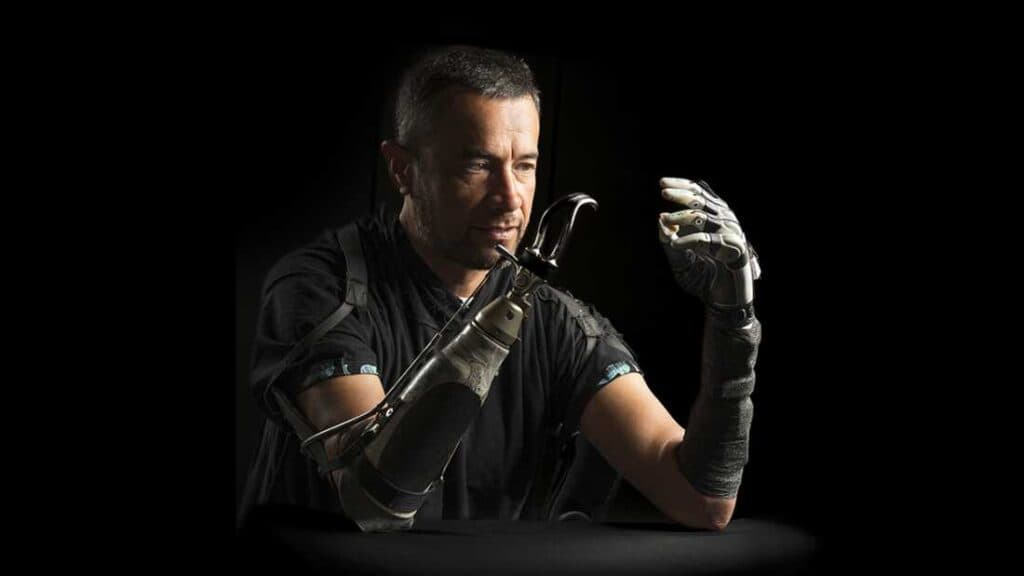
Researchers tested a bionic hand enhanced with artificial intelligence and sensors on four people missing a hand, including Samoana Matagi.
“Samoana Matagi was one of the four participants in a study that tested the capabilities of a new bionic hand”
With the AI-assisted shared control, participants could reliably grasp a cup and pretend to sip, while without shared control they crushed or dropped it every time.
The work, described in Nature Communications, marks progress toward prosthetics that feel more like natural limbs.
Shared-control AI mechanism
To achieve this, scientists added proximity and pressure sensors and trained the AI to detect not just muscle signals but the intention behind them.
The AI control system learned to detect the tiniest twitch in a muscle that flexes the hand, then activate the machine controller to begin grasping.
This arrangement lets the hand share control with the brain when carrying out tasks, with the sensors helping gauge object distance and grip force.
User experience and control
Experts say the approach addresses a common frustration: highly capable prosthetics can feel foreign and demand constant attention from users.
“Samoana Matagi was one of the four participants in a study that tested the capabilities of a new bionic hand”
Jacob George notes that people want a hand that blends task goals with subconscious reflexes.
John Downey adds that natural hands rely on reflex loops in the brain stem and spinal cord, and a prosthetic that imitates those reflexes helps users feel connected to their hand.
Future prospects and limits
Even the most advanced bionic hands still require some brain input.
Downey points to a continuum where the same natural hand can thread a needle or lift a child, illustrating a wide dynamic range that robots typically cannot match.
The researchers say the smart hand moves toward a future where prosthetic limbs are more versatile and capable, while preserving the user’s sense of control as part of their own body.
More on Technology and Science

Facebook launches Creator Fast Track, guaranteeing up to $3,000 monthly for three months.
10 sources compared

Meningitis B outbreak in Kent triggers vaccination of about 5,000 University of Kent students
32 sources compared

Nintendo Switch 2 Enables Original Switch Games to Run at 1080p in Handheld Mode
11 sources compared

Argentina Exits WHO Under President Javier Milei
23 sources compared