Britain27 May, 20263 min read
Andy Burnham and Wes Streeting Hit Back at Tony Blair Over Labour Inequality Essay
This article is an automated aggregation of coverage from news outlets. Our editorials offer in-depth analysis curated by the NewsCord team.
Blair published a critique urging Labour to focus on policy, not personality, avoid leftward shift. Burnham and Streeting accused Blair of underestimating inequality and misunderstanding modern Labour politics.

Blair’s inequality attack
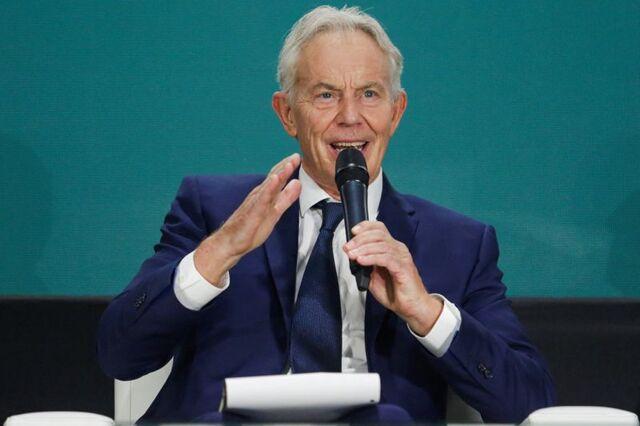
Tony Blair published a more than 5,000-word essay attacking Labour’s time in office under Keir Starmer and urging the party to become the “Radical Centre,” while also warning that “Whether there is a leadership change or not is irrelevant if it doesn’t start with a policy debate.” In the essay, Blair called for Labour to shun moving left or reversing Brexit, and he argued the government should signal it is on the side of business while navigating the AI revolution and focusing on cheaper energy rather than cleaner energy.
“Whether there is a leadership change or not is irrelevant if it doesn’t start with a policy debate.”
Blair’s intervention landed as Labour gears up for a possible leadership contest, with Greater Manchester mayor Andy Burnham and former health minister Wes Streeting named as rivals to Starmer. Burnham and Streeting quickly hit back, with Burnham telling the Observer that Blair “doesn’t mention inequality once,” and Streeting arguing in the Guardian that “Inequality – the economic, social and democratic fracture running through modern Britain – is treated as peripheral rather than fundamental.”

Burnham, Streeting, and replies
Burnham, who is widely expected to challenge Sir Keir if he wins a by-election next month, told the Observer that “If you don't get how that's driving politics now, if you are not rooting your analysis in the fact that people are unable to live and that things that were taken for granted are no longer affordable, then you are not understanding what's going on.” Streeting, writing in the Guardian, said the “striking weakness” in Blair’s intervention was that “the defining issue of our age is barely confronted at all,” and he argued inequality is “actually their cause.”
Blair’s essay also drew a curt response from the government, with Treasury Minister Dan Tomlinson telling Times Radio that Blair’s argument was “essentially about new Labour versus old Labour,” and “is just not where we are today.” Torsten Bell, described by the BBC as the pensions minister, said Blair’s rebuttal was an “impressive attempt to engage with some of the big forces shaping our future,” but argued it “doesn't have a project that remotely fits the time and place we are living in.”
By-election stakes and policy
The BBC said Burnham is seeking to become an MP again on 18 June in the Makerfield by-election, on the outskirts of Wigan, in what it described as a closely-fought contest with Reform UK's Robert Kenyon. Blair’s essay urged Labour to avoid a drift to the left and to embrace the “radical centre,” while also calling on Labour MPs to avoid a “personality contest” or backing a change at the top without first deciding on policy direction.
“Inequality, rather than being incidental to the crises reshaping western democracies, is actually their cause.”
In the same exchange of arguments, Blair told broadcasters on Wednesday that he was aiming to start a debate in the party about serious policy, saying “Whether it’s a psychodrama or not, you can debate, but it’s definitely a moment of crisis for the country,” to LBC. The Guardian’s account of the debate also framed the policy stakes through Streeting’s response to Blair, with Streeting saying “Inequality, rather than being incidental to the crises reshaping western democracies, is actually their cause,” and warning that “The answer to global disruption cannot be a longing for the Britain of the 1970s.”