Technology and Science27 May, 20262 min read
Apple Adds Advanced Tracking Protection and Private Browsing Changes in iOS 17, iPadOS 17, macOS Sonoma
This article is an automated aggregation of coverage from news outlets. Our editorials offer in-depth analysis curated by the NewsCord team.
Apple extends advanced tracking protection and anti-fingerprinting across iOS 17, iPadOS 17, macOS Sonoma. Safari updates target identity theft by reducing fingerprinting and cross-site tracking.
Safari privacy and codes
With iOS 17, iPadOS 17, and macOS Sonoma, Apple continued changes it began to Safari aimed at strengthening users' privacy and personal data protection, including advanced tracking protection and protection against fingerprint theft. Safari will boost its Private Browsing mode to automatically strip out any tracking attempts by some websites you visit, and when a reference to a tracking feature is detected during navigation or when copying a link, Safari will remove that part of the link without hindering navigation.
Apple also added an option in Settings > Passwords > Password Options for automatically deleting one-time verification codes sent to both Mail and Messages, and the option is disabled by default. In Safari, Apple added a new option to listen to the page from the address bar, where tapping it makes Siri read aloud the content of the web page currently loaded.
Samsung T7 Touch security
Samsung presented the Samsung Portable SSD T7 Touch as a faster, more compact external storage solution wrapped in an aluminium case about the size of a credit card and sized for a palm. The T7 Touch offers data protection via password protection based on hardware encryption AES 256 bits and recognition of fingerprints as a practical but powerful security method.
For performance, the review says the T7 Touch provides read/write speeds up to 1,050 1,000/1.9 9.5 Mo/s and uses NVMe to leverage the USB 3.2 Gen2 interface for bandwidth up to 10 Gbps. In testing, the review reports that on BlackMagic the T7 Touch reached 861.1 Mo/s in reading and 817.2 Mo/s in writing, while on IOMeter it reached 800.6 Mo/s in reading and 643.4 Mo/s in writing.

SSD timing and tracking
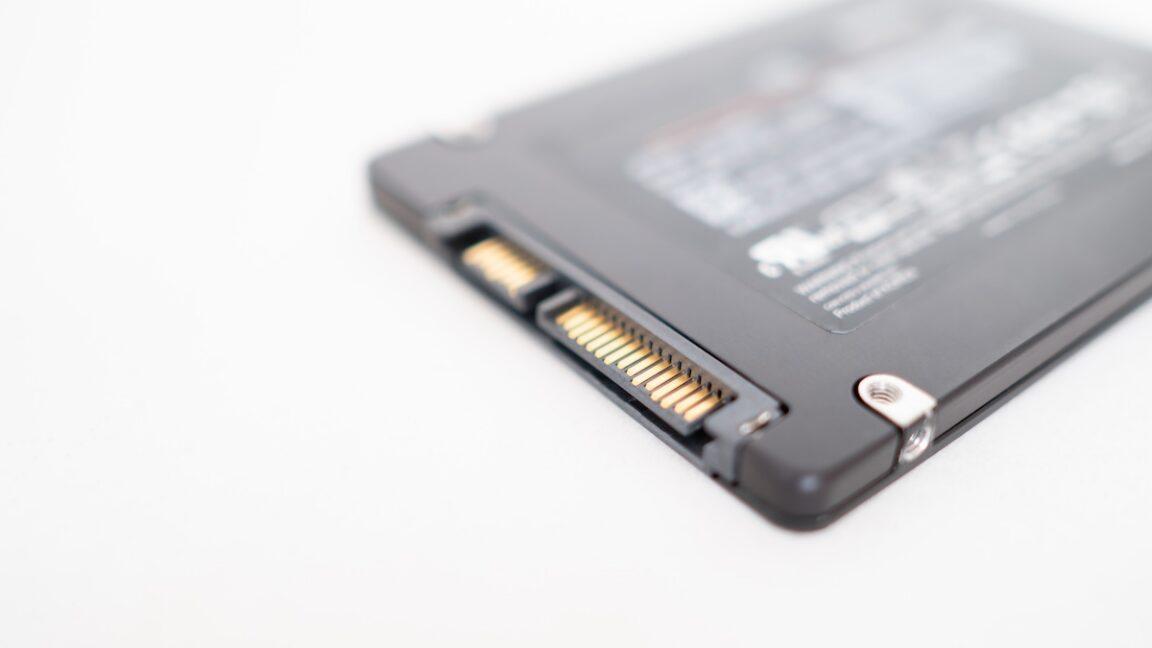
A research paper described a technique named FROST (fingerprinting remotely using OPFS-based SSD timing) that lets sites monitor other sites a visitor is viewing and what apps are open on their devices. Ars Technica reports that FROST uses a side channel—measuring subtle interactions with a solid-state drive—by timing certain I/O operations of the SSD a visitor is using.
The technique requires no interaction from the visitor other than opening the site hosting the attack, and it runs exclusively in the browser using JavaScript that interacts with the OPFS (origin private file system). Separately, the Futura article describes Google’s use of fingerprinting, saying it allows uniquely identifying an Internet user based on technical characteristics of their device and browser, including the version of their operating system, screen resolution, time zone, browser type, and IP address.