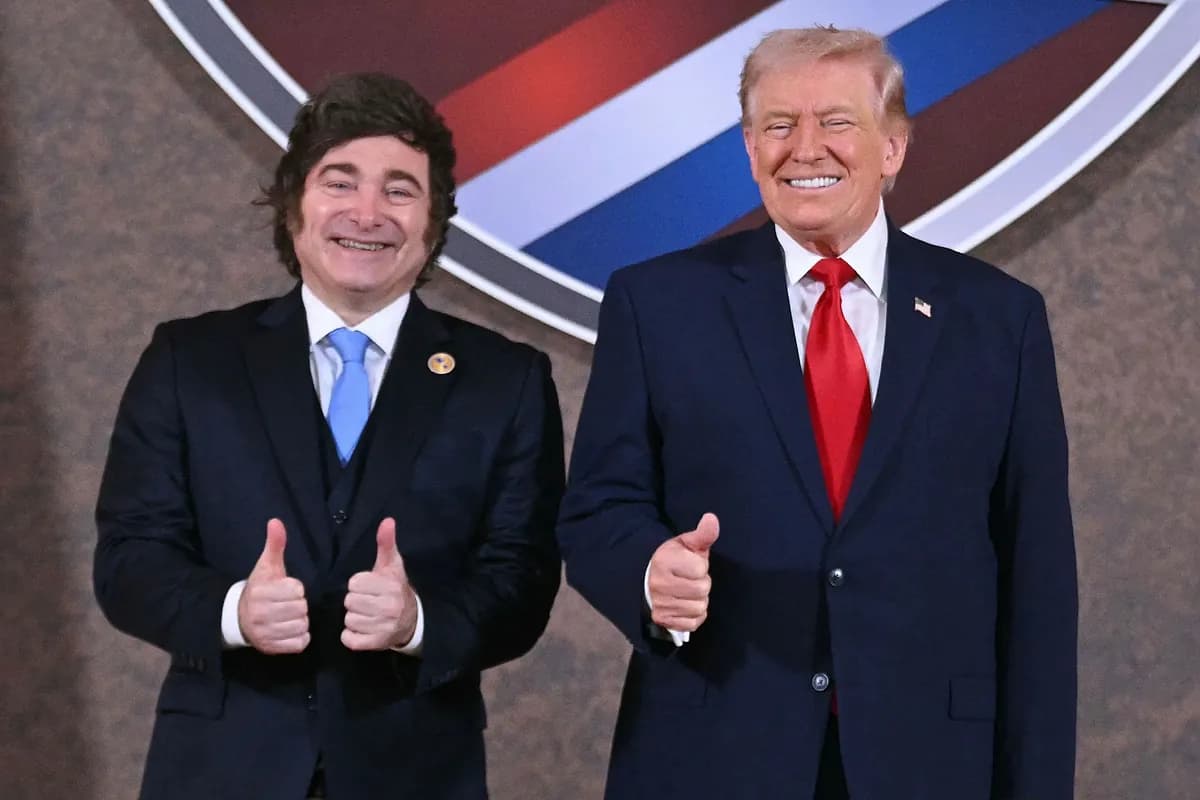
Argentina offers itself to the United States to send military support to the Persian Gulf.
Key Takeaways
- Argentina would militarily support the United States in the Persian Gulf if requested.
- Spokesperson Javier Lanari confirmed the offer to El Mundo.
- Washington has not formally requested such assistance yet.
Argentina offers US military support
Argentina will militarily support the United States in response to any request made by the government of Donald Trump, the Casa Rosada confirmed to EL MUNDO on Wednesday.
“Argentina will militarily support the United States in response to any request made by the government of Donald Trump, the Casa Rosada confirmed to EL MUNDO on Wednesday”
"If the United States requested it, yes. Any help they consider will be provided," said the government's spokesperson, Javier Lanari.
Although Lanari said he had no record that such a request has yet been made by Washington to Buenos Aires, the historical background and the unconditional alignment of the government of Javier Milei with that of Donald Trump open significant possibilities that the third-largest economy in Latin America will get involved in the White House's war effort.
Historical Gulf War alignment
In the early 1990s, with the war sparked by the invasion of Kuwait in August 1990, Argentina contributed four ships to the war effort of then-president George Bush (Sr.), though intended to ensure compliance with the trade blockade and protect supply lines in the conflict zone.
Argentina was governed by the Peronist Carlos Menem, who promoted a policy of "carnal relations" with the United States, according to the expressive metaphor used by what would be for several years his foreign minister, Guido Di Tella.
Today, the Milei government goes even further than that of Menem.
The Argentine president summarizes his foreign policy as "United States and Israel" and assumes without nuance or any differentiation all of Trump’s positions, unlike what happens with the European powers, increasingly distant from Washington.
This week, Argentina effectively left the World Health Organization (WHO), while ratifying Iran as its "enemy," which unleashed warnings and threats from Tehran.
On Tuesday night, as the 34th anniversary of the terrorist attack on the Israeli embassy in Buenos Aires, which left 29 dead, Milei explained his stance once again: "Argentina fights terrorism and we defend freedom. Israel is a strategic ally of our country and, therefore, we reaffirm our commitment because we believe it is the right thing. We carry morality as state policy."
Argentina was the only country in Latin America involved in the Gulf War in the early 1990s.
In recent days, in the midst of the war against the United States and Israel, Iran has cast its eyes on Argentina and launched a threat to the country, upset by a Milei who declared himself "the most Zionist president in the world".
"Argentina has officially presented itself as Iran's enemy and has aligned with the United States and the Zionist regime in the military aggression against our nation. This is an unforgivable red line that has been crossed. Iran cannot remain indifferent to the hostile positions of the current Argentine government," says an English-language article in the Tehran Times, a publication the Islamic regime routinely uses to send its messages abroad.
Last week, in New York, Milei defined Iran as "our enemy" and anticipated that his allies the United States and Israel will emerge victorious in the Gulf conflict.
"We are going to win the war," said the Argentine head of state, unconditionally aligned with Washington and Tel Aviv.
The Casa Rosada confirmed that it had received the message from Tehran and reaffirmed the unchanging stance of the Argentine government.
"No threat will change the president's position," Lanari, the communications head of the Milei administration, told EL MUNDO.
Saleh Abidi Maleki, who signs the article published Sunday in Tehran, is a columnist who routinely expresses the messages that the Iranian government wants to send.
The text includes a threatening message toward Argentina: Iran must give "a proportional response" to Milei's words.
That Iran and Argentina confront each other is no small matter: in 1994, an attack in Buenos Aires on the Jewish mutual AMIA left 85 dead, the deadliest attack against Jewish targets outside Israel since World War II.
Argentine justice regards as proven that Iran organized the attack, which occurred two years after the attack on the Israeli embassy.
Iran denies being behind the attack.
In 2015, the then special prosecutor for the AMIA case, Alberto Nisman, died in his apartment—allegedly murdered, according to the docket—one day before appearing before Parliament to explain his accusation against President Cristina Kirchner for treason.
Nisman’s accusation was based on the agreement signed by the Kirchner government with that of the ayatollahs for Iranian justice to take testimony in Tehran from those accused of the attack, in a process supervised by an impartial international legal authority.
The agreement, which drew severe criticism from Israel and the Argentine opposition, never entered into effect, since the Argentine Parliament approved it, but the Iranian side never did.
But the Tehran regime, which at that time was negotiating a nuclear agreement with the Obama administration, managed to achieve its objective of presenting itself as dialogue-friendly before the international community.
Years after that, relations between the Argentine and Iranian governments have again become extremely strained following Milei's statements in New York: "We will win. I don’t like Iran. They have planted two bombs, one at AMIA and another at the Israeli Embassy. Therefore, they are our enemies. But I also have a strategic alliance with the United States and Israel."
The Tehran Times article considers that a "hostile policy, implemented by Milei" has turned Argentina into "the Israel of Latin America" and into "a base to design and execute plots against Iran."
Iran-Argentina tensions and Milei
Last week, in New York, Milei defined Iran as "our enemy" and anticipated that his allies the United States and Israel will emerge victorious in the Gulf conflict.
“Argentina will militarily support the United States in response to any request made by the government of Donald Trump, the Casa Rosada confirmed to EL MUNDO on Wednesday”
"We are going to win the war," said the Argentine head of state, unconditionally aligned with Washington and Tel Aviv.
The Casa Rosada confirmed that it had received the message from Tehran and reaffirmed the unchanging stance of the Argentine government.
"No threat will change the president's position," Lanari, the communications head of the Milei administration, told EL MUNDO.
Saleh Abidi Maleki, who signs the article published Sunday in Tehran, is a columnist who routinely expresses the messages that the Iranian government wants to send.
The text includes a threatening message toward Argentina: Iran must give "a proportional response" to Milei's words.
That Iran and Argentina confront each other is no small matter: in 1994, an attack in Buenos Aires on the Jewish mutual AMIA left 85 dead, the deadliest attack against Jewish targets outside Israel since World War II.
AMIA, Nisman, and Iran
That Iran and Argentina confront each other is no small matter: in 1994, an attack in Buenos Aires on the Jewish mutual AMIA left 85 dead, the deadliest attack against Jewish targets outside Israel since World War II.
Argentine justice regards as proven that Iran organized the attack, which occurred two years after the attack on the Israeli embassy.
Iran denies being behind the attack.
In 2015, the then special prosecutor for the AMIA case, Alberto Nisman, died in his apartment—allegedly murdered, according to the docket—one day before appearing before Parliament to explain his accusation against President Cristina Kirchner for treason.
Nisman’s accusation was based on the agreement signed by the Kirchner government with that of the ayatollahs for Iranian justice to take testimony in Tehran from those accused of the attack, in a process supervised by an impartial international legal authority.
The agreement, which drew severe criticism from Israel and the Argentine opposition, never entered into effect, since the Argentine Parliament approved it, but the Iranian side never did.
But the Tehran regime, which at that time was negotiating a nuclear agreement with the Obama administration, managed to achieve its objective of presenting itself as dialogue-friendly before the international community.
Years after that, relations between the Argentine and Iranian governments have again become extremely strained following Milei's statements in New York: "We will win. I don’t like Iran. They have planted two bombs, one at AMIA and another at the Israeli Embassy. Therefore, they are our enemies. But I also have a strategic alliance with the United States and Israel."
The Tehran Times article considers that a "hostile policy, implemented by Milei" has turned Argentina into "the Israel of Latin America" and into "a base to design and execute plots against Iran."
More on USA

Trump threatens to deploy ICE agents to US airports amid DHS funding standoff
46 sources compared

ICE Detainee Royer Perez-Jimenez Dies in Florida Detention Center; Officials Suspect Suicide
10 sources compared
Elon Musk Offers to Pay TSA Salaries During Partial Government Shutdown
50 sources compared

California lawmakers rename Cesar Chavez Day to Farmworkers Day amid sexual abuse allegations.
17 sources compared