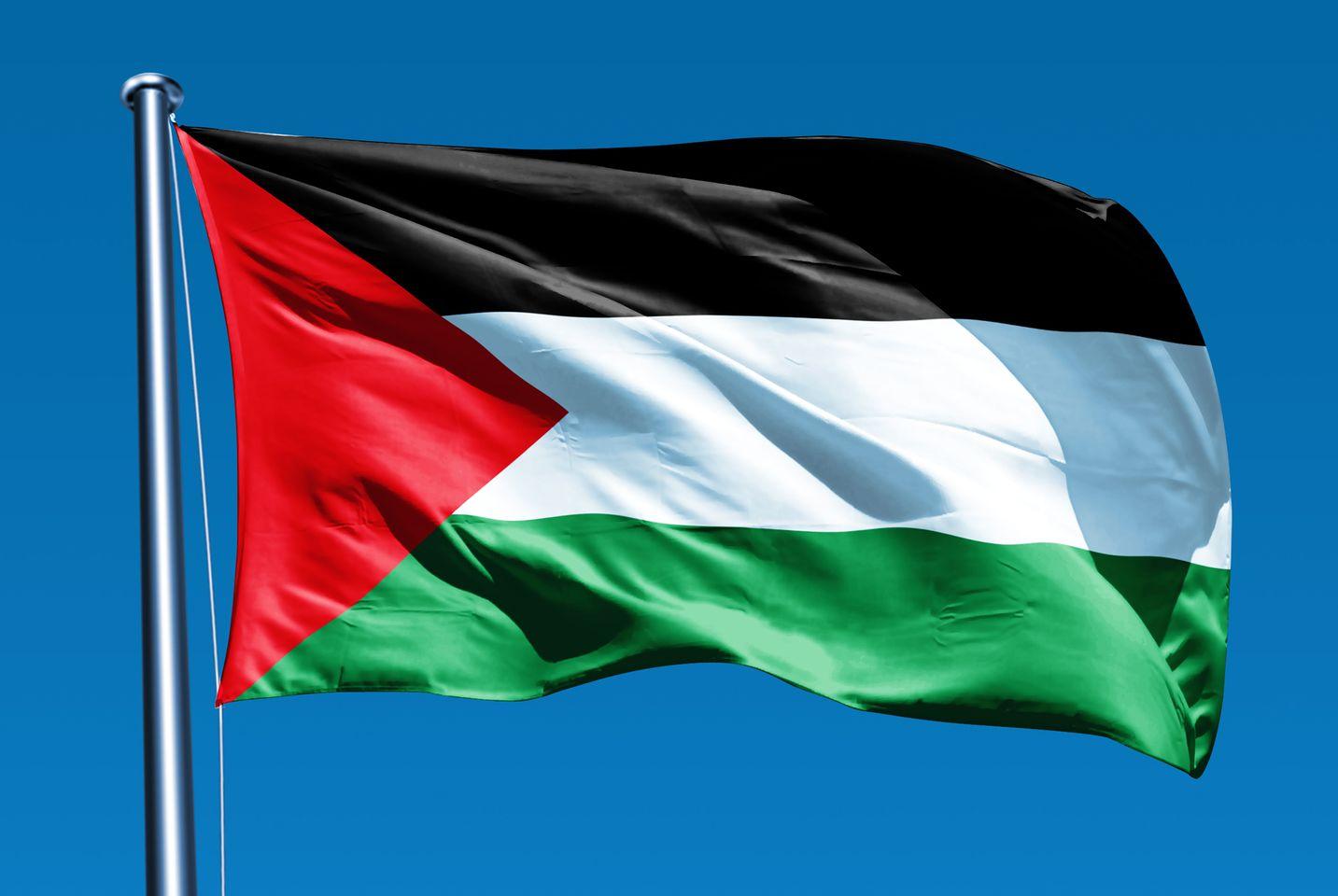
Arizona Lawmakers Urge State Agencies To Use “Judea And Samaria” Instead Of “West Bank”
Key Takeaways
- Arizona Senate approved resolution urging agencies to use 'Judaea and Samaria' in all documents.
- Move replaces the term 'West Bank' with 'Judaea and Samaria' in state communications.
- The coverage spans Al-Jazeera Net, Middle East Monitor, Amad lil-i'lam, and Al-Jarida.
Arizona renames West Bank
Arizona lawmakers approved a resolution urging state institutions to use the term “Judea and Samaria” instead of “West Bank” in official documents, a move that multiple outlets tie to Israeli settlement politics and U.S. foreign-policy influence.
“The Arizona State Senate's decision to use the term Judaea and Samaria instead of the West Bank was not a passing one; it is a clear product of Israeli domestic and foreign policy that has sought to erase the Palestinian identity for decades, through settlement expansion, as well as mobilizing lobbies around the world to distort the narrative about the land, so that Judaea and Samaria becomes an imposed reality”
The Middle East Monitor says the Arizona Senate passed the measure after earlier approval by the state’s House of Representatives, with “broad backing in both chambers,” and it frames the action as a shift in official terminology.

The Middle East Monitor also reports that the initiative followed lobbying efforts led by Yossi Dagan, “in coordination with the council’s foreign relations unit,” and that the legislation was introduced by David Livingston.
Al-Jazeera Net describes the Arizona decision as “a clear product of Israeli domestic and foreign policy” aimed at “erase the Palestinian identity,” while also arguing the timing “coincides with an unprecedented settlement drive.”
The Kinanah News outlet similarly says the Arizona State Senate approved a declarative resolution urging state agencies to use “Judaea and Samaria” in all official documents, instead of “the West Bank.”
Amad للإعلام likewise reports that the Arizona Senate approved a declarative resolution urging state agencies to use “Judaea and Samaria” in all official documents, instead of “the West Bank,” and it identifies Representative David Livingston as the sponsor after his visit.
Across the accounts, the resolution is described as declarative and non-binding, with the Middle East Monitor and Kinanah News both emphasizing that it is an official-use change rather than a legal annexation.
Lobbying, drafts, and visits
Several outlets describe the Arizona resolution as the product of organized lobbying and a legislative draft that closely tracks a model from a U.S. Christian advocacy group.
The Middle East Monitor reports that the measure “followed lobbying efforts led by Yossi Dagan, in coordination with the council’s foreign relations unit,” and it says the legislation was introduced by David Livingston, who promoted the measure after visiting settlements in the occupied West Bank as a guest of Dagan.

The same outlet adds that the ArizonaDaily Star reported the text of Resolution HCR 2047 “closely mirrors a draft produced by the National Christian Legislators’ Union,” and it identifies Livingston as the organization’s president in Arizona.
Kinanah News similarly says the resolution text “HCR 2047” “almost exactly mirrors the draft from the National Association of Christian Legislators (NACL),” and it states that Livingston serves as the head of that organization in Arizona.
Kinanah News also says Livingston’s organization funded his trip to Israel and his wife’s trip for Thanksgiving last year, while Amad للإعلام adds that Livingston’s organization funded his trip to Israel with his wife last Thanksgiving.
Al-Jazeera Net provides a different chain of influence, saying the Arizona decision coincides with an interpretation of what the Israeli newspaper Yedioth Ahronoth published in January last year about “a political movement led by Israeli settlement leaders in the United States” to promote what it calls the “Judaea and Samaria Law.”
The Middle East Monitor and Kinanah News both attribute the push to shaping international discourse, with Dagan welcoming the decision and claiming “more US states are adopting similar positions.”
Livingston’s rationale and CAIR’s reply
In the Arizona debate described by the outlets, David Livingston is presented as emphasizing “ideological and historical” motivations after visiting Samaria, and he is quoted explaining that the trip made the region feel like “Israel.”
“Amad Alert: Without delay, without indifference, far from traditional work, let there be a comprehensive Palestinian confrontation against the 'New Balfour' Gianni Infantino”
Kinanah News says Livingston told lawmakers: “I was in Israel and we went to Samaria, and it was clear—it's very clear that this is Israel. The people, the culture, the history— it affected me a lot, and it was important for me to push for passage of this law,” attributing the statement to a “statement from the Samaria Council.”
Amad للإعلام repeats the same quoted reasoning, stating: “I was in Israel and we went to Samaria, and it was clear — it is very clear that this is Israel. The people, the culture, the history — it affected me a lot, and it was important for me to push for the passage of this law.”
Kinanah News also quotes Yossi Dagan framing the terminology as a media and propaganda battle, saying: “Judaea and Samaria are the heartland of the Land of Israel, not the West Bank. State after state in the United States is adopting this clear law,” as he claims.
The same outlet quotes Martin Kisada, legal counsel for the Arizona chapter of the Council on American-Islamic Relations (CAIR), saying: “The situation Palestinians face today is not just a political debate for many residents of our state. It is a humanitarian crisis that people around the world, including many in Arizona, are grappling with on moral grounds.”
Amad للإعلام similarly quotes Martin Kisada describing the situation as “not just a political debate” but “a humanitarian crisis that people around the world, including many in Arizona, are dealing with with deep moral concern.”
Middle East Monitor does not include Kisada’s quote, but it does describe Dagan’s claim that “more US states are adopting similar positions.”
Opposition inside Arizona
The outlets also record internal opposition in Arizona, particularly from Senate Minority Leader Bria Sundarshan, who is described as warning lawmakers not to intervene and as raising concerns about precedent and naming claims.
Kinanah News says Sundarshan argued that lawmakers should not intervene “regardless of the region’s naming history,” and it describes her as a “Tucson Democrat.”
In Kinanah News, Sundarshan is quoted asking: “Do you really want to open Pandora’s box and start dedicating laws to such things?” and she adds that “We are happy to discuss the original names of the land we stand on today.”
Amad للإعلام similarly quotes Sundarshan warning: “Are you really going to open Pandora's box and start enshrining such things in law?” and it says she and her colleagues emphasized the importance of discussing “the original names of the land we stand on today.”
Kinanah News also frames her critique around an “implicit claim” in Livingston’s legislation that “the names 'Judaea and Samaria' appear in the Torah and on various historical maps,” and it says she argued that “what is called today 'Arizona' did not always bear that name either.”
Al-Jazeera Net, while not quoting Sundarshan, describes the broader political aim as influencing U.S. foreign policy set in Washington, saying the Arizona decision carries “a political dimension aimed at influencing the United States' foreign policy.”
Middle East Monitor likewise frames the resolution as a move that “has drawn political attention,” and it notes that the term “Judea and Samaria” is used in Israeli political and historical contexts while the area is internationally recognized as occupied Palestinian territory under international law.
Broader claims and future push
The outlets connect Arizona’s terminology shift to a wider campaign they describe as part of settlement expansion and a push to change how the U.S. and other institutions talk about the territory.
“The Arizona State Senate's decision to use the term Judaea and Samaria instead of the West Bank was not a passing one; it is a clear product of Israeli domestic and foreign policy that has sought to erase the Palestinian identity for decades, through settlement expansion, as well as mobilizing lobbies around the world to distort the narrative about the land, so that Judaea and Samaria becomes an imposed reality”
Al-Jazeera Net argues the timing of the Arizona decision “coincides with an unprecedented settlement drive and Israeli expansion in the West Bank,” and it says the move is aimed at influencing U.S. foreign policy because “the international community and the official U.S. administration still generally define the area as the West Bank.”
It also links the Arizona decision to statements by Israeli Finance Minister Bezalel Smotrich, quoting Smotrich as saying: “all actions taken in the West Bank have been coordinated with U.S. President Donald Trump, alongside U.S. Secretary of State Marco Rubio and the U.S. ambassador to Israel Mike Hakabi.”
The Kinanah News outlet similarly says Dagan expressed “cautious optimism” and claims: “I believe more than 20 states will enact this law soon.”
Amad للإعلام repeats that claim, stating: “I believe more than 20 states will enact this law soon.”
Middle East Monitor, meanwhile, reports that Dagan welcomed the decision and claimed “more US states are adopting similar positions,” without specifying a number.
Kinanah News adds that it is “noted that in 2025 the Knesset's Ministerial Committee for Legislation approved in the first reading a bill to rename the West Bank as Judaea and Samaria,” and it says the chair of the Foreign Affairs Committee in the U.S. House of Representatives issued orders to staff to use the name “Judaea and Samaria” in official correspondence and documentation.
More on USA

Trump Says U.S.-Iran Memorandum Will Be Signed Sunday, Strait of Hormuz Reopens
10 sources compared

Donald Trump Says U.S.-Iran Deal Will Sign Sunday, Reopen Strait of Hormuz Immediately
23 sources compared
Judge Angel Kelley Orders Trump Administration To Restore National Park Signs By July 3
24 sources compared

Trump Says US Killed Tren de Aragua Leader Niño Guerrero in Joint Strike With Venezuela
34 sources compared