As Trump’s attacks on science escalate, Big Oil moves to avoid legal accountability
Key Takeaways
- SCOTUS agreed to hear Boulder v. Exxon and Suncor.
- The case could allow communities harmed by climate change to sue polluters in state courts.
- Exxon and Suncor are central defendants in the case.
SCOTUS climate-case context
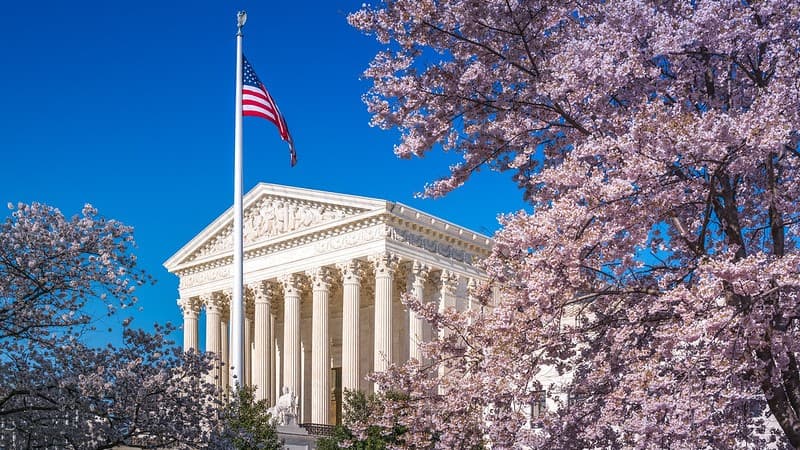
SCOTUS recently agreed to hear arguments in Boulder v. Exxon and Suncor, a case that could decide whether communities harmed by climate change can hold polluters accountable in state court.
“Carly Phillips is a research scientist with the Science Hub for Climate Litigation at the Union of Concerned Scientists”
Originally brought against the fossil fuel giants in 2018 for their decades of disinformation and other contributions to the climate crisis, the case points to a wide range of challenges the Boulder community is facing due to a changing climate, including unprecedented flooding, prolonged drought, extreme heat conditions, unreliable snow pack and worsening air quality.
In 2021, the Marshall Fire underscored the urgency of the case as Colorado’s costliest wildfire in history, destroying over a thousand homes in Boulder County and causing approximately $2 billion in damages.
Legal battle and science censorship
Lower courts have consistently recognized that state courts are the appropriate venue for state-law claims about deception and local damages.
However, this Supreme Court decision could impact whether climate accountability lawsuits filed by states and municipalities across the country can move forward in state courtrooms.
While scientific evidence clearly shows that fossil fuel emissions are the primary driver of climate change and that industry actions, including a well-documented decades-long campaign of deception, have delayed climate action, this decision jeopardizes the possibility of that sound science being heard in court.
The legal question under consideration – whether such lawsuits belong in federal or state court – could shape the future of dozens of science-backed cases brought by US cities, counties and states that argue the industry long knew their products were driving climate change while they deliberately misled the public to boost their profits.
SCOTUS is no stranger to this question, having declined to intervene at least four times in previous, similar cases, instead allowing them to play out in state courts.
What has changed, however, is the identity of the plaintiffs.
In this case, his former recusals have been preempted on a technicality and as a result, the court is now willing to reconsider a long-standing request for a federal accountability escape hatch.
Such procedural jousting and legal gamesmanship obscures Big Oil’s end game: to evade accountability by ensuring the scientific evidence in these cases never has its day in court.
Attacks on science during the Trump administration are nothing new – from withdrawing from the Intergovernmental Panel on Climate Change and promoting a sham report commissioned by the Department of Energy to repealing the Endangerment Finding, trying to discredit attribution science, and undermining judicial education.
But this recent decision clarified precisely what’s at stake in the ongoing battle for a livable climate.
The science underpinning these cases is clear, robust and consistent.
Yet the fossil fuel industry and its political allies are doing everything in their power to neutralize threats by neutering science, even as communities face the costly and sometimes deadly consequences of the sector’s products.
Gas flaring soars in Niger Delta post-Shell, afflicting communities.
The fossil fuel industry and their trade groups are also lobbying to escape legal liability through the introduction of state immunity legislation and congressional intimations of a federal liability waivers should this procedural maneuver fail.
These waivers, if signed into law, would grant fossil fuel companies immunity from both existing and future lawsuits, effectively eliminating access to justice and accountability for communities across the country.
If litigation moves forward in state court, attempts by industry allies to delegitimize science itself are already obstructing judicial access to robust scientific information and riding the wave of Big Oil’s decades-long disinformation.
One of the most flagrant examples of this strategy took place last month, when the Federal Judicial Center – the independent research arm of the federal counts, responsible for educating judges on complex scientific issues – removed its entire chapter on climate science from its Reference Manual on Scientific Evidence in response to pressure from attorneys general aligned with industry interests.
This is not about judicial neutrality or substantive debate over research methods that have been developed over decades and reviewed and revised by countless scientists.
Rather, these attacks on science function as another layer of Big Oil’s already comprehensive insurance policy to protect their profits and power at the expense of people already reeling from the impacts of their products.
The broader goal of a multi-pronged approach to change venues, legislate immunity and erase access to scientific information isn’t to win on the merits, but to ensure no merits are ever considered.
No trial. No day in court. No consideration of the scientific facts that Big Oil knew about the severe harm its products would cause and chose to lie at the expense of global climate stability and local communities’ lives and livelihoods.
Gulf oil and gas crisis sparks calls for renewables investment.
Should their attempts to legislate immunity flounder and their procedural maneuvering fail to yield dismissal or relocation to federal court, they will nonetheless have obstructed access to reliable, scientific information through decades of their own disinformation.
Courts and legislatures need access to the best available evidence.
Obstructing facts limits pathways to justice and only serves the interests of the powerful, polluting few.
Climate science is not on trial, but it is under siege.
As long as Big Oil can delay, distort, and deny, they win – no matter what the evidence shows.
The public deserves well informed judges to make decisions grounded in data.
Editorial framing & outreach
Climate Home News frames the issue as a battle over access to science and accountability for Big Oil.
“Carly Phillips is a research scientist with the Science Hub for Climate Litigation at the Union of Concerned Scientists”
It notes that its reporting is trusted by the UN, World Bank, and governments around the world, and that the publication provides experts and professionals globally with analysis and insight to navigate the most important climate issues.
The article also promotes subscriptions, highlighting weekly climate coverage and various access options as part of its editorial framework and authority in climate reporting.
More on Technology and Science

Facebook launches Creator Fast Track, guaranteeing up to $3,000 monthly for three months.
10 sources compared

Meningitis B outbreak in Kent triggers vaccination of about 5,000 University of Kent students
32 sources compared

Nintendo Switch 2 Enables Original Switch Games to Run at 1080p in Handheld Mode
11 sources compared

Argentina Exits WHO Under President Javier Milei
23 sources compared