
Austria's glaciers retreat as climate change triggers rapid disintegration.
Key Takeaways
- Most of Austria’s 96 glaciers have retreated in past two years due to climate change.
- Glaciers are disintegrating structurally, not just shrinking, according to scientists.
- Austrian Alpine Club reports glaciers shrinking dramatically in length, area, and volume.
Alarming Glacier Retreat
Austria's glaciers are experiencing unprecedented retreat and disintegration due to climate change.
“- Published Scientists are warning that glaciers in the Austrian Alps are not just shrinking, but are disintegrating, because of climate change”
Monitoring data reveals that all but two of Austria's 96 glaciers have retreated over the past two years.
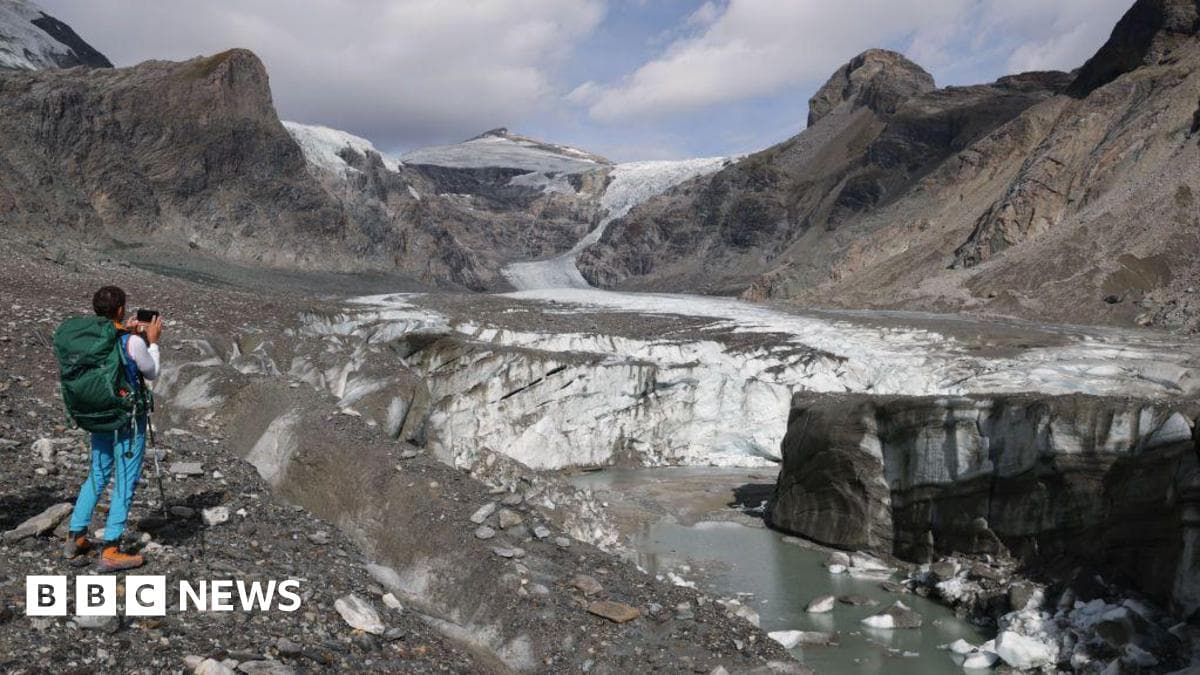
This represents a dramatic development highlighting the accelerating impact of climate change on European mountain environments.
Scientists emphasize this is not merely gradual shrinkage but represents fundamental structural breakdown of glacier systems.
The situation serves as a critical wake-up call for policymakers and the public regarding climate action urgency.
The current retreat ranks as the eighth-largest in the 135-year history of systematic measurements.
Severe Glacier Losses
The retreat rates are particularly severe for specific glaciers, with some experiencing losses exceeding 100 meters.
The Alpeiner Ferner glacier in Tyrol and Stubacher Sonnblickkees in Salzburg have the greatest losses.
Each of these glaciers retreated by more than 100 meters (approximately 330 feet).
Precise measurements show Alpeiner Ferner shrunk by 114.3 meters.
Stubacher Sonnblickkees lost 103.9 meters according to scientific data.
The average retreat across all measured glaciers exceeded 20 meters (65 feet).
Structural Disintegration
The disintegration process involves complex structural changes beyond simple length reduction.
“- Published Scientists are warning that glaciers in the Austrian Alps are not just shrinking, but are disintegrating, because of climate change”
Glaciers are entering a phase of fundamental breakdown according to scientific observations.
Exposed rock ledges, sections of ice breaking away, and glacier tongues collapsing are shaping the landscape.
This represents a qualitative shift in glacier behavior, moving from gradual retreat to systemic collapse.
The Austrian Alpine Club notes disintegration of Pasterze glacier tongue is progressing.
University of Graz experts confirm glaciers are entering structural disintegration phase.
Climate Drivers
Multiple environmental factors are driving accelerated glacier retreat.
Poor weather conditions including low snowfall and above-average temperatures contribute significantly.
The exceptionally hot June 2025 was nearly 5°C above average.
This combination of reduced snowfall and increased melting creates perfect conditions for glacier loss.
Austrian Alpine Club vice president Nicole Slupetzky emphasized the urgency of the situation.
She stated 'It's no longer a question of whether we can still save the glaciers in their old form; it's about mitigating the consequences for ourselves.'
Societal Impacts
The retreat of Austria's glaciers carries profound implications for multiple sectors.
“- Published Scientists are warning that glaciers in the Austrian Alps are not just shrinking, but are disintegrating, because of climate change”
Changes impact drinking water supplies, power generation, agricultural systems, infrastructure, recreation, and Alpine landscape.
The Pasterze glacier, Austria's largest, is particularly concerning.
Scientists predict its glacier tongue will break off in coming years, splitting the glacier in two.
This represents a critical threshold in glacial systems.
The Alpine Club calls this a 'wake-up call' for policymakers and the public.
More on Technology and Science

Judge Blocks Health Secretary Robert F. Kennedy Jr.'s Vaccine Policy Overhaul
12 sources compared
United States-Imposed Blockade Causes Cuba's Nationwide Blackout
10 sources compared

Britannica and Merriam-Webster Sue OpenAI for Copyright and Trademark Infringements
10 sources compared
Trump Announces White House Chief of Staff Susie Wiles Has Breast Cancer
26 sources compared