
Bitcoin Falls Below $74,000 as US Seizes Iranian Cargo Ship Amid US-Iran Ceasefire Pressure
Key Takeaways
- Bitcoin falls below $74,000 as US-Iran ceasefire tensions intensify.
- Markets react to potential crypto tolls for Strait of Hormuz by Iran.
- Iran proposes crypto-based transit fees, drawing international attention and security concerns.
Ceasefire jitters hit BTC
Bitcoin’s price action on Sunday reflected renewed pressure on a US-Iran ceasefire, with multiple crypto outlets tying the move directly to military developments in the Gulf region.
Cointelegraph said Bitcoin “erased its weekend gains” and fell “below $74,000 on Sunday” after the US military “seized an Iranian cargo ship,” while also noting that Bitcoin had “soared above $78,300 late Friday on Coinbase.”
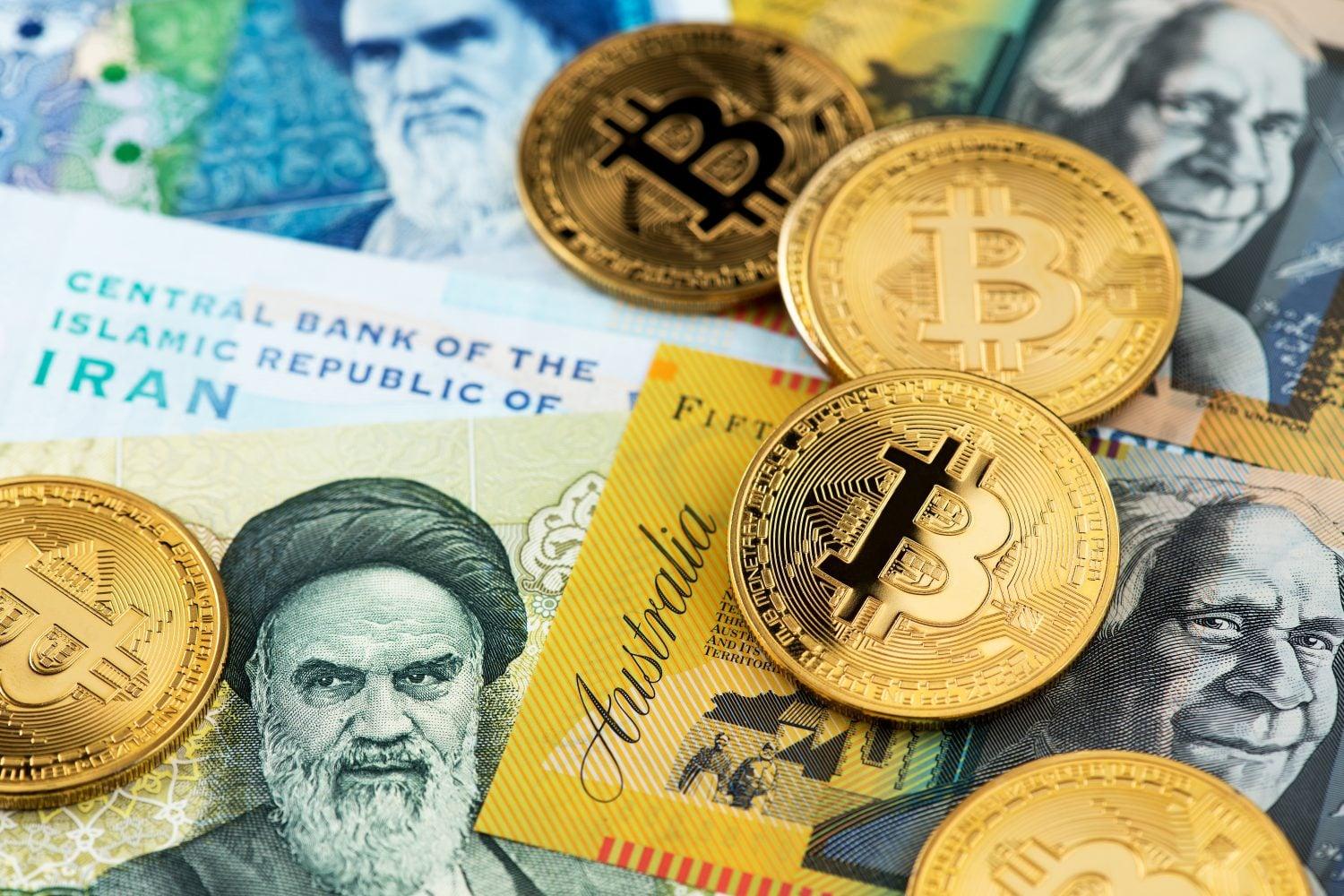
Cointelegraph linked the earlier weekend retreat to Iran’s statement that it would “close vital oil routes in the Strait of Hormuz,” and it described a late Sunday drop after the US military “opened fire on, and later seized, an Iranian cargo ship.”
MEXC similarly described a Friday surge “above $78,300 on Coinbase” followed by a weekend retreat to “the $75,000–$76,000 zone,” and it said BTC “briefly dip[ped] below $74,000” after a “U.S. military operation in the region.”
Bloomingbit put the same sequence in dated terms, saying Bitcoin “had earlier climbed to as high as $78,300 on Coinbase on April 18” and then “fell back into the $75,000 to $76,000 range on April 19.”
Across these reports, the ceasefire’s timeline also anchored the market narrative: Cointelegraph said “The two-week ceasefire between the US and Iran… is set to end on Wednesday,” while MEXC said the ceasefire “is due to expire this week.”
In parallel, Cointelegraph and MEXC both tied the risk-off mood to broader markets, with Cointelegraph citing US stock futures and MEXC repeating that “S&P 500 futures down about 0.8%” and oil trading above “$95 a barrel.”
Markets, oil, and fear
Crypto price moves were repeatedly framed as part of a wider macro reaction, with outlets pointing to stock futures, oil futures, and a sentiment gauge that stayed in “fear.”
Cointelegraph said “US stock futures sank Sunday night” and gave specific moves, including “S&P 500 futures dropping 0.8%, Nasdaq-100 futures falling 0.6% and Dow Jones futures declining 0.9%,” while also stating “Oil futures also soared” with “crude oil futures rising over 4.5% to over $95 a barrel.”

It also reported that the “Crypto Fear & Greed index rose by two points to a score of 29 out of 100 on Monday,” adding that the index “still indicated a sentiment of ‘fear.’”
MEXC echoed the same sentiment shift, saying the “Crypto Fear & Greed Index edged higher to 29 out of 100 on Monday,” and it described the move as “a return to fear after a period of relative calm.”
Bloomingbit likewise said the “Crypto Fear & Greed Index stood at 29, remaining in the ‘Fear’ zone,” and it added that it was “the highest level since late January.”
Benzinga provided a different but related market-mechanics picture, saying “trading volume spiked 20% over the last 24 hours,” and it reported “Over $415 million was liquidated in the past 24 hours, with $335 million in long positions alone wiped out.”
Benzinga also tied the move to derivatives positioning, stating “Open interest in Bitcoin futures fell 3.76% over the last 24 hours.”
In the same Benzinga report, the geopolitical trigger was described through a statement by President Donald Trump, saying he said the US “attacked and took ‘full custody’ of an Iranian-flagged commercial vessel” trying to get past a “naval blockade in the Gulf of Oman.”
Even where the outlets differed on the exact framing of the trigger, they converged on the same sentiment and volatility indicators: a fear index at 29, oil surging above $95, and BTC retreating from the $78,300 area toward the mid-$70,000s.
Voices: Trump, Iran, and analysts
The reports also carried direct statements and named figures that shaped how traders interpreted the ceasefire and the Strait of Hormuz.
Cointelegraph said Tehran “has vowed to retaliate over the US military’s seizure of the ship” and that it “has rejected a new round of peace talks slated for Monday in Islamabad, Pakistan,” citing “Iranian state media.”
MEXC similarly described Tehran’s stance as “signaled retaliation and reportedly rejected a new round of peace talks slated for Monday in Islamabad,” and it framed the combined posture from “Washington and Tehran” as showing “the fragility of a de-escalation path.”
Benzinga added a named US political voice, quoting President Donald Trump as saying the US “attacked and took ‘full custody’ of an Iranian-flagged commercial vessel,” and it also named Iran’s president, saying “Iran president Masoud Pezeshkian said U.S. actions are a ‘clear violation’ of the ceasefire understanding and that Iranian forces are ready for a comprehensive defense.”
Benzinga then brought in crypto market voices, including “widely followed cryptocurrency analyst and trader Killa,” who said BTC’s positive momentum was “fading,” adding: “Green bars are gradually weakening, suggesting momentum is stalling,” and “With the market still range bound, it's plausible delta shifts red from here, leading to late longs being flushed out.”
Benzinga also quoted “Rekt Capital,” saying on X there was a “potential retest of Bitcoin's support at $73,000,” with “a successful hold confirming the upside breakout pattern.”
In a separate report, the Middle East-focused outlet “معلومات مباشر” described a different set of named actors and policy constraints, saying Trump “continued to take a hard line toward Iran” and that he said the US would keep a military presence near Iran until a “real agreement” is reached.
It also quoted Michael Saylor, executive chairman of Strategy, saying Bitcoin’s pullback was tied to “forced selling by highly leveraged miners and weaker investors,” and it added that Saylor dismissed “concerns about the quantum computing threat to the network in the near term.”
Across these voices, the same themes recurred: retaliation and rejection of talks, a hard-line posture, and crypto-specific interpretations of momentum and selling pressure.
Different takes on the same move
While the core narrative—BTC retreating from the $78,300 area and fear returning—was shared, the outlets diverged in how they emphasized causes and what they highlighted as the next market driver.
Cointelegraph and MEXC both centered the immediate trigger on the US military’s action involving an Iranian cargo ship and the ceasefire’s expiration, with Cointelegraph saying the ceasefire “is set to end on Wednesday” and MEXC stressing that “the end-date of the current two-week ceasefire looms large.”
.png&w=3840&q=75)
Bloomingbit, however, anchored its timeline to specific dates, stating Bitcoin “had earlier climbed to as high as $78,300 on Coinbase on April 18” and then “fell back into the $75,000 to $76,000 range on April 19,” before accelerating after Iran said it could block shipping routes through the Strait of Hormuz.
Benzinga framed the move through a combination of macro and market microstructure, highlighting “trading volume spiked 20% over the last 24 hours,” “Over $415 million was liquidated,” and “Open interest in Bitcoin futures fell 3.76%,” while also naming Killa and Rekt Capital’s technical views.
In contrast, “معلومات مباشر” described a different time slice, saying “Bitcoin steadies on Thursday after pausing the recent rally” and giving a specific quote-level price point: “Bitcoin slipped 0.1% to $70,746.60 by 10:05 a.m. ET (14:05 GMT).”
That report also broadened the lens beyond Iran by referencing “a U.S. bill aimed at more regulatory clarity for the crypto industry, the 'Clarity' Act,” while still tying the market to the ceasefire’s status and Tehran’s demands about Lebanon and Israel.
The Coin Republic report took yet another angle, linking a later rebound to Iran’s reopening of the Strait of Hormuz, saying Bitcoin “surpassed the $78,000 mark” after Iran’s Foreign Minister Abbas Araghchi stated the strait “has been fully reopened to commercial navigation.”
It also cited Polymarket probabilities, saying “the Polymarket forecasting platform gives a 90% chance that the current ceasefire extends beyond April 21” and that “probability of Bitcoin rising above $80,000 by month-end increased to 65%.”
Taken together, the outlets show different emphases: some foreground the immediate ship seizure and ceasefire end date, others foreground liquidation and derivatives, and others foreground regulatory developments or later reopening signals.
What comes next for crypto
The sources consistently tied near-term crypto direction to whether the US-Iran ceasefire holds, how the Strait of Hormuz is treated, and what happens in diplomacy and markets immediately after the ceasefire window.
Cointelegraph said “The two-week ceasefire… is set to end on Wednesday,” and it described Tehran’s “vow of retaliation” and rejection of “a new round of peace talks slated for Monday in Islamabad, Pakistan,” while also stating that the ceasefire had “helped boost the markets and temper oil prices.”

MEXC similarly framed the “key question for traders” as whether “the ceasefire holds long enough for markets to re-price risk more calmly” or whether “renewed escalation magnifies volatility,” and it said “Traders will likely weigh potential upside toward prior resistance levels against the risk of renewed volatility if tensions intensify or the ceasefire breaks down again.”
The “معلومات مباشر” report added that markets were awaiting “whether the U.S.-Iran ceasefire will hold,” and it described Tehran’s position that the US and Israel had violated “several provisions of its 10-point proposal,” while also stating that Iran demanded “Lebanon be included in the ceasefire agreement” and that Israel “halt its military operations there.”
It also said Trump reiterated calls for Iran to “halt its nuclear activities and reopen the Strait of Hormuz,” and it reported that “The Financial Times reported that Iran would require shipping companies to pay transit fees in cryptocurrency for oil tankers passing through the Strait of Hormuz,” with fees “could be charged in Bitcoin.”
In a different direction, the Coin Republic report said Bitcoin’s rebound followed Iran’s reopening, and it cited Polymarket odds that “the current ceasefire extends beyond April 21” and that “Bitcoin rising above $80,000 by month-end” had a “65%” probability.
Benzinga, meanwhile, pointed to continued technical uncertainty and liquidation risk, quoting Killa’s view that “Green bars are gradually weakening” and Rekt Capital’s “potential retest of Bitcoin's support at $73,000.”
Finally, Cointelegraph and MEXC both emphasized that macro signals were still driving crypto, with Cointelegraph noting oil futures rising “over 4.5% to over $95 a barrel” and MEXC describing a “risk-off mood” across cryptocurrency markets.
Taken together, the sources depict a market waiting on ceasefire renewal or breakdown, with the Strait of Hormuz and diplomatic signals in Pakistan and beyond acting as the immediate catalysts for volatility.
More on Crypto

Trump Extends Iran Ceasefire, Driving Bitcoin Past $78,000
15 sources compared
Letitia James Sues Coinbase and Gemini Over Unlicensed Prediction Market Gambling in New York
14 sources compared

DoorDash Partners With Tempo To Deliver Stablecoin Payouts Across More Than 40 Countries
23 sources compared

Arbitrum Security Council Freezes 30,766 ETH Linked to Kelp DAO Exploit
12 sources compared