
Crypto · 04 May, 2026 · 8 min read
Bitcoin Jumps to $93,000 After US December CPI Rebound and Fed Rate Outlook
Bitcoin jumps toward $93,000 following December CPI rebound and Fed rate outlook. Inflation-related momentum prompts discussion of Bitcoin as an inflation hedge.
Interpretation of Bitcoin’s move alongside inflation data (risk asset vs inflation hedge).
9 of 10 outlets skipped it: iranians withdrew over $10M in BTC from exchanges during internet blackouts/bombardments, with Chainalysis timing suggesting complex causes (including possible state/platform actions)..
11outlets compared
Same story, two versions
tap a side to read it in full
CoinDesk
““Bitcoin is rallying along with inflation signals, challenging the traditional macroeconomic playbook.””Read the original ↗
Negocios
““In recent months, Bitcoin has again behaved largely as a risk asset, with moves aligned with tech stock markets.””Read the original ↗
This split changes how investors should interpret correlations with inflation: as hedging demand (CoinDesk) or liquidity/risk appetite (Negocios).
Inflation signals lift BTC
Bitcoin’s latest surge has been tied, in multiple ways, to inflation signals and the macro backdrop, with CoinDesk describing a rally that “is rallying alongside inflation signals, defying the traditional macro playbook.”
“is rallying alongside inflation signals, defying the traditional macro playbook”
In its account, Bitcoin rose “19% in just over a month,” topping “$80,000 on Monday for the first time since January,” as oil “hovers above $100” and Bloomberg’s commodity futures index “has jumped to a decade high.”

CoinDesk also frames the move against a standard macro expectation that higher inflation would be bearish for Bitcoin because “Higher inflation means the Federal Reserve is likely to keep interest rates higher for longer,” and higher rates would make “yield-less assets like bitcoin” less attractive.C
The same CoinDesk reporting quotes Bitfinex exchange analysts warning that “Macro signals remain divided, with commodities pricing supply-side stress while risk assets continue to trade higher,” adding that “This divergence highlights a growing disconnect across asset classes and raises questions about the durability of the current risk-on environment.”C
That “disconnect” theme is echoed in CoinDesk’s discussion of a “real test” that would come “during a stock market sell-off,” because the inflation-hedge thesis depends on whether Bitcoin holds up when equities fall.
CoinDesk’s framing is not purely about inflation data; it also links the rally to “renewed inflows into the spot ETFs,” arguing that ETF flows are supporting a shift in how Bitcoin is being positioned.
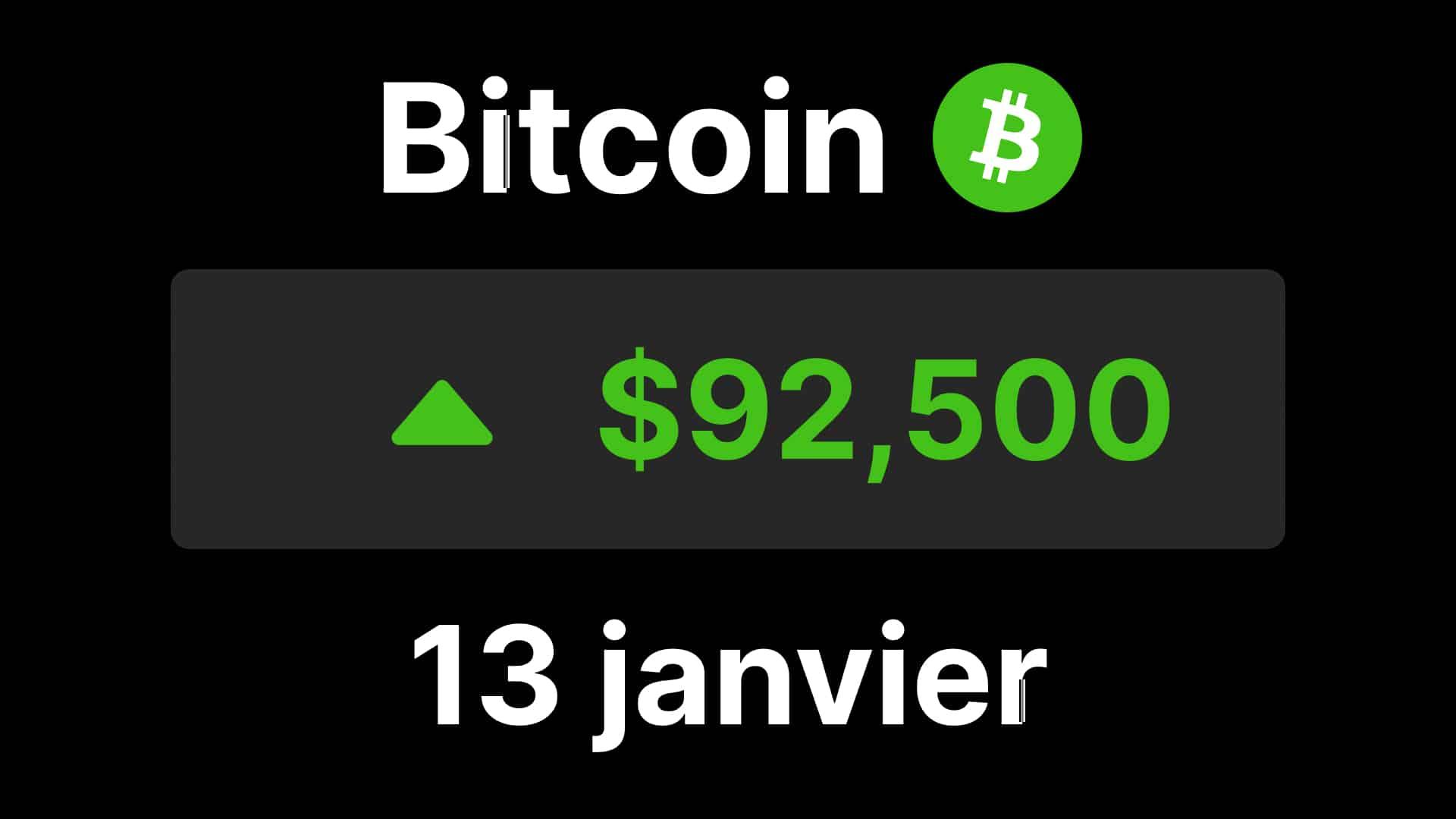
In parallel, TradingView’s market write-up ties Bitcoin’s rebound to December CPI details, saying Bitcoin “rose back to $93,000 after a 0.3% increase in US inflation in December,” and noting that the move “reinforc[ed] expectations that the Federal Reserve will hold rates later this month.”
ETF inflows and hedge debate
A central thread in the CoinDesk account is that Bitcoin’s behavior is being reinterpreted through ETF inflows and a possible change in its role from “risk asset” to “inflation hedge.”
CoinDesk says the move is “raising questions about whether BTC is shifting from a risk asset to an inflation hedge, with inflows into spot ETFs supporting that view,” and it quantifies those flows as “about $4.45 billion” since March into “the 11 physically backed Bitcoin ETFs listed in the U.S.”C
CoinDesk adds that the inflows “nearly reversing the sizable outflows from the autumn that had weighed on the spot price at the time,” and it characterizes most inflows as “directional bets on BTC rather than non-directional arbitrage strategies.”C
The reporting also brings in named analysts, including a “senior analyst at Bitget Research” and a “senior director at the crypto liquidity provider Wincent,” with CoinDesk stating that Wincent sees Bitcoin as an inflation hedge and has a “price target” implying “3.5x over the next three years.”C
CoinDesk further broadens the hedge debate beyond crypto circles by citing Paul Tudor Jones, stating that “Last week, Paul Tudor Jones… offered strong support for Bitcoin as an inflation hedge, arguing it is better than gold.”
In the CoinDesk text, Jones’s reasoning is described as structural, emphasizing that “Bitcoin has a finite supply that can be mined, unlike gold whose supply increases a few percentage points each year.”C
TradingView’s write-up, while focused on CPI, also ties the market’s reaction to Fed expectations, stating that the CPI readings “align with market expectations that the Fed will hold rates steady at the FOMC meeting on January 29, 2026.”
Coin Academy similarly describes a market that reacts quickly to macro signals, saying Bitcoin “briefly accelerated Tuesday above $92,000, reaching a peak around $92,500 in the minutes following the December US inflation release.”
CPI prints and immediate price moves
The inflation-hedge debate is being tested in real time by CPI releases and the immediate market response described by Coin Academy and TradingView.
“CPI inflation rose 2.7% year over year and 0.3% month over month”
Coin Academy reports that “CPI inflation rose 2.7% year over year and 0.3% month over month,” describing the release as “no surprise,” and it says Bitcoin “briefly climbed to $92,500” after the data “came in as expected.”
It adds that “Before the release, Bitcoin traded just below $92,000,” and “After reading the data, it immediately jumped to $92,500,” while also stating that “Over 24 hours, the asset was up about 1.7%.”
Coin Academy ties the macro reaction to specific U.S. data sources, stating that “According to data released by the Bureau of Labor Statistics, the Consumer Price Index (CPI) rose 2.7% year over year in December, exactly as in November and perfectly in line with consensus expectations.”
TradingView provides additional CPI detail, stating that “The Bureau of Labor Statistics reported that the consumer price index rose 0.3% month over month in December and 2.7% year over year,” and that “The core CPI… rose 0.2% month over month and 2.6% year over year.”
TradingView also quotes a specific CPI component, saying “The shelter index rose 0.4% in December and was the biggest contributor to the monthly increase in the all-items index,” and it connects these readings to Fed timing by stating they “reinforcing expectations that the Federal Reserve will hold rates later this month.”
Beyond the CPI numbers, TradingView describes market positioning and probabilities, noting that “Public CME FedWatch probability snapshots… showed a bias to hold in January,” with “no change” clustered around the high 70% range.
It also reports that QCP Capital, “based in Singapore,” said markets would track “how the U.S. Supreme Court rules on Trump’s tariff policies,” with a decision “possibly as soon as Wednesday.”
Risk-on, risk-off and macro tests
While CoinDesk’s inflation-hedge narrative emphasizes ETF inflows and the possibility that Bitcoin is behaving differently, other parts of the crypto coverage stress that Bitcoin still moves with broader risk sentiment and that macro catalysts can reverse momentum quickly.
CoinDesk itself frames a “sober caveat” that “the bullish inflation hedge narrative must consider,” because “Right now, U.S. stocks are higher, which is providing positive signals for Bitcoin and the risk complex overall,” making it “hard to conclude that BTC has become a pure inflation hedge.”C

It then reiterates the conditional nature of the thesis by saying “The real test of the inflation-hedge narrative would come if and when equities fall,” and it warns that “But if it falls alongside equities, the inflation-hedge label will endure.”
Negocios, in a separate market account, describes a different phase in which investors reduce risk ahead of “nonfarm payrolls” and “consumer price index (CPI) data,” saying Bitcoin “fell 2.55% to around $85,926” and Ethereum “dropped 3.42% to $2,957.”N
Negocios attributes the pullback to the possibility that “a labor market more resilient than expected or persistent inflation could reinforce the idea that the Fed will maintain a restrictive stance for longer,” which it calls “a headwind for assets like cryptocurrencies.”N
The same Negocios piece states that the Fed’s prior “decision to cut interest rates by 25 basis points” was “broadly priced in,” but that the central bank’s message left “caution about the future path of inflation and employment.”
TradingView adds that sentiment is cautious even after CPI, saying “The Crypto Fear and Greed Index improved from extreme fear a month ago but remained in fear on Tuesday,” and it notes that “Rate expectations remain the main gateway to risk assets.”
In Coin Academy’s account, the market is “constructive but nervous,” and it says “For the markets, these figures reinforce the dominant scenario: a Federal Reserve keeping policy unchanged in the near term.”
Together, the sources depict a market where Bitcoin’s inflation-hedge framing competes with its ongoing sensitivity to equities, rates, and risk appetite.
Geopolitics, oil, and withdrawals
Beyond U.S. inflation prints and ETF flows, other crypto reporting in the provided sources links Bitcoin to geopolitical shocks and energy-market channels, while also describing large withdrawal behavior during conflict and internet disruptions.
“Oil prices can indirectly influence crypto markets by altering inflation expectations, the outlook for interest rates, and the overall appetite for risk”
Phemex’s market framing argues that “Oil prices can indirectly influence crypto markets by altering inflation expectations, the outlook for interest rates, and the overall appetite for risk,” and it describes the Strait of Hormuz as “one of the world’s main energy chokepoints,” warning that “any disruption there can quickly impact macro markets.”
Phemex connects this chain to a specific timeline, stating that “After the US-Iran conflict that disrupted the Strait of Hormuz, Brent and WTI rose,” and then adding that “on April 7-8, 2026, news of a two week ceasefire and the reopening of Hormuz triggered a sharp reversal.”
In that same passage, Phemex reports that “Brent fell about 13-15 percent, WTI 15-16 percent,” and it says “cryptocurrencies also joined in the relief, with Reuters reporting Bitcoin up 2.9 percent and Ether up 5.6 percent.”
Separately, Cryptoast describes a conflict-driven withdrawal episode in Iran, saying “Iranians are withdrawing their Bitcoins from exchanges amid Internet censorship and bombardments,” and it cites Chainalysis data that “more than $10 million was withdrawn in a few days.”
Cryptoast provides a more granular breakdown, stating that “between February 28 and March 2, about $10.3 million of BTC were withdrawn,” and that “hourly volumes reaching as high as 873% above the average seen since the start of the year.”
It also gives a sequence of events, including “First strikes around 6:10 UTC (9:40 a.m. local time in Tehran),” “Internet outage: around 7:10 UTC (10:40 local),” and “Withdrawals from platforms: more than $3 million of BTC are withdrawn between 6:00 and 7:00 UTC (9:00–10:00 local).”
Cryptoast’s narrative also references a prior “22-day Internet shutdown” and states that “Since January, the price of BTC has gained more than 2,000% against the Iranian currency, trading at over 100 billion rials per BTC.”
Finally, the same Cryptoast piece notes that the timing “invites nuance,” and it suggests that withdrawals could include “internal platform reorganizations” or “seizures or transfers orchestrated by the state,” while still emphasizing the scale of withdrawals and the role of connectivity disruption.