Business31 May, 20263 min read
Brian Sandberg Says NSF and NIH Ban Keywords Threaten U.S. Research Funding
This article is an automated aggregation of coverage from news outlets. Our editorials offer in-depth analysis curated by the NewsCord team.
Whistleblowers leaked a list of banned keywords shaping U.S. research funding criteria. Keywords such as historical and socio-economic are reportedly crossed out from funding considerations.

Funding, words, and power
In the United States, Brian Sandberg said the criteria for funding research are beginning to take shape after whistleblowers leaked to the press a list of banned keywords, with the historian describing how even words like "woman" and "historical" can be crossed out. Sandberg, a historian who has taught history at North-Illinois University for about twenty years, said the keywords disseminated by someone working for the National Science Foundation (NSF) and also within the National Institutes of Health (NIH) show how the DOGE (the Department for Governmental Efficiency, of Elon Musk) targets funding or research deemed problematic. He told Radio France that it is "impossible to conduct research on humans in the past and also currently under such keywords," and he said he is currently rewriting a research proposal that competes for federal funding.
Sandberg said he does not know "if it would be changed completely" and that he believes thinking about climate has become a problem to the point that he does not know if it would be possible to send a project to federal humanities agencies now. Aix-Marseille University (AMU) launched on Wednesday, March 5, a call to American researchers saying it was ready to welcome those whose academic freedom could be threatened by the policy pursued by Donald Trump, and Radio France said the university received about fifty inquiries after that call.

Universities in a legal fight
The tug-of-war between the Trump administration and universities centers on affirmative action and what La Presse describes as an orientation deemed too "woke" by elite institutions in the United States. La Presse quoted Edward Blum, founder of Students for Fair Admissions, saying "Lowering the bar for candidates because they come from disadvantaged backgrounds is perfectly legal and justifiable," and it said Blum prevailed before the Supreme Court in 2023 so universities can no longer legally take a candidate's ethnicity into account. The article also quoted Harry Feder, executive director of FairTest, describing how the majority of American colleges and universities use essays, tests, grades, and extracurricular involvement, while Feder opposes standardized tests and predicts that universities might rely on them to avoid being accused of considering ethnicity.
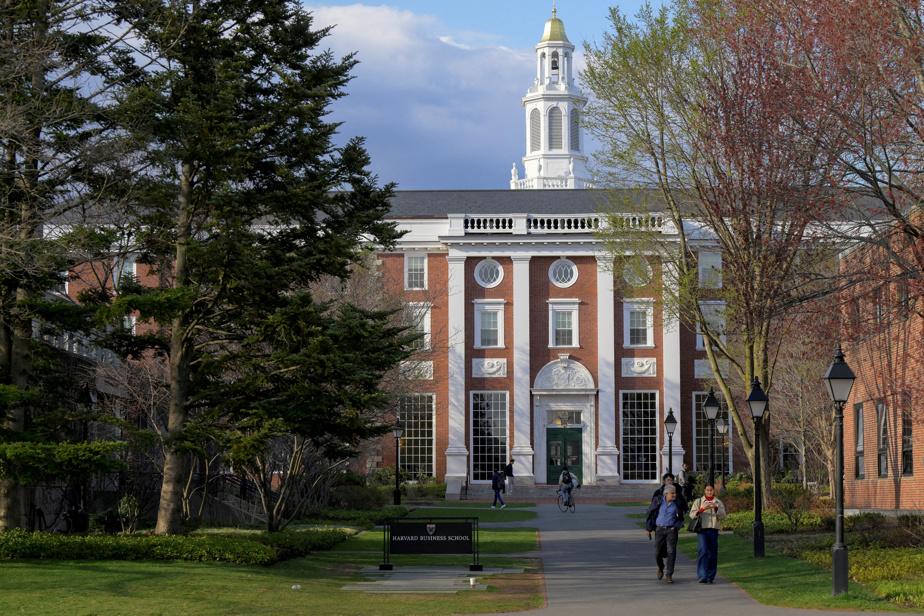
Lynn Pasquerella, president of the American Association of Colleges and Universities, said "What is at stake for us is not only a reform of higher education, but its dismantling, to replace it with a specific ideological program," as La Presse described the removal of all equity, diversity and inclusion (EDI) policies from all institutions receiving federal funds. La Presse reported that dozens of lawsuits were filed against the government since Donald Trump took office in January, including Harvard University filing in April a suit opposing a $2.6 billion funding freeze.
Startup capital and its limits
In the venture market, TechCrunch reported that $643 million has poured into US Black-founded startups since the beginning of the year, a figure not seen since 2022 when Black founders raised $653 million in funding. TechCrunch said the $643 million is driven by a handful of deals, including the $350 million Series E raised by AI hardware company SambaNova, and it added that Crunchbase’s head of research Gené Teare pointed to "access to networks, relationships, and early introductions" as factors holding back many Black founders. Even with the record sum, TechCrunch said Crunchbase noted it is still quite small compared to the $252 billion U.S startups have raised overall in the same period, and it reported that Crunchbase data shows a persistent decline in funding to Black-founded companies that outpaces the overall decline.
Teare told TechCrunch that it’s "quite small compared to the $252 billion U.S startups have raised overall in the same period," and she said the market is "increasingly concentrated, AI-centric" while the industry is eight to nine quarters into a venture funding downturn. TechCrunch also quoted Teare saying "One has to wonder if the abundance of caution that’s now prevalent in the industry has prevented investors from taking chances on first-time founders who are more likely to be diverse," as it described the possibility of 34 more big deals this quarter or literally nothing.