
British Parliament Ban Led To Forced Labor For Rescued Africans, Historian Jake Richards Says
Key Takeaways
- Britain banned the slave trade in 1807, but forced labor followed for rescued Africans.
- About 12.5 million Africans were exploited; roughly 200,000 were rescued.
- Scholars urge acknowledging injustices and repairing legacies of abolition-era policies.
Abolition’s Aftermath
In 1807, the British Parliament banned the trade of enslaved people in the Empire, but historian Jake Richards argues that the year was “not the final chapter of the transatlantic slave trade nor of the exploitation of about 12.5 million Africans.”
“The year 1807, when the British Parliament banned the trade of enslaved people in the Empire, was not the final chapter of the transatlantic slave trade nor of the exploitation of about 12”
Richards, a British professor described as “34 years old, London,” says the ban marked “the beginning of another little-known episode about the hell of forced labor” for people “rescued — according to the most conservative estimates — by the Royal Navy or other naval patrols between 1807 and 1880.”

In Richards’s account, the “more than 200,000 people rescued” were not simply freed when their ships were intercepted, because the 1807 law treated a slave ship “as an enemy vessel in a war context.”
That meant “both the vessel and all its ‘cargo’, including the captives, were treated as enemy property,” and when they reached port they were “handed over to a Crown official.”
Richards says the Crown official could “assign them as recruits to the army or the navy, or send them to forced labor in domestic service, agriculture, or construction of public works for up to 14 years.”
He frames this as a legal and administrative continuation of coercion, saying “All these ‘liberated Africans’ had to work to ‘pay the debt’ of having been rescued.”
From 1807 to 1833
The sources place British abolition in a longer arc that includes both gradual and incomplete measures, rather than a single decisive end.
One French overview describes abolitionism as “a very gradual abolition that primarily seeks a prohibition of the slave trade by all the western countries concerned,” and it notes that “ban on the trade in 1807” was followed by “gradual abolition from 1833” in British colonies.
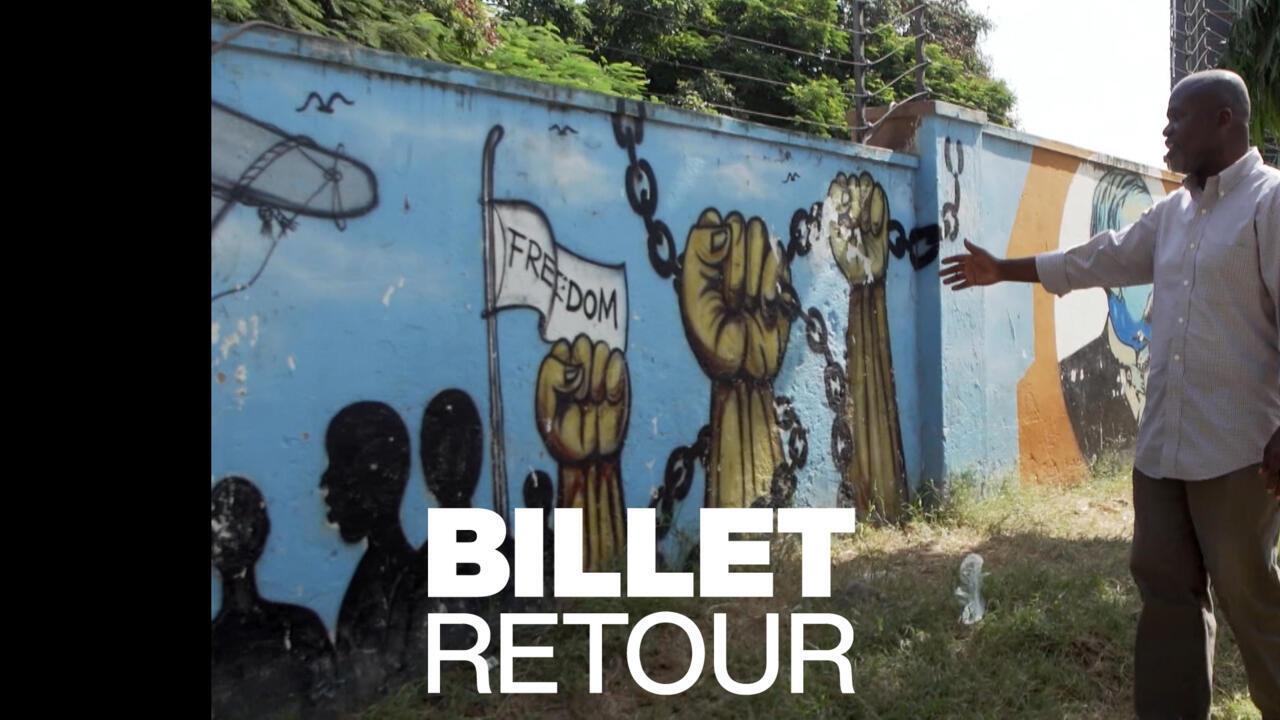
That same overview links disruption to “the war between France and England” and to “the vicissitudes of the revolutionary process, especially in Saint-Domingue.”
It also contrasts gradualism with “immediate abolition, directly carried by the people of color,” and says “From 1843 in France, the immediate demand becomes dominant.”
A separate local account of the French press in the face of abolition in Great Britain describes the British law that received royal assent on “August 28, 1833” to take effect on “August 1, 1834.”
That law is presented as freeing only a limited number at first, because it “is in fact a law of gradual emancipation” in which “only children under the age of 6 are immediately emancipated,” while other enslaved people had to continue “for a period of 4 to 6 years” as “apprentice labor.”
The same source says “this status would be abolished on August 1, 1838,” and it adds that the law provided compensation to slave owners, with the Crown borrowing “about a ‘half‑billion’ francs (roughly ‘20 million sterling’ of the time).”
It also states that “in the end, this law nevertheless frees about 800,000 slaves,” mainly in Caribbean colonies such as “Trinidad, Jamaica, and Barbados.”
Debates, Revolts, and Control
The sources connect British abolition policy to political struggle, parliamentary debate, and colonial unrest, while also emphasizing how emancipation was structured to manage risk.
“A Brief Overview of the History of the French Abolitionist Movement (1770–1848)”
The French press account says the 1833 act followed “years of political struggle waged by various anti-slavery and abolitionist societies, and numerous heated debates within the British Parliament,” and it frames the law as a response to fear of uprisings after the Haitian slave revolution and Haiti’s independence in 1804.
It states that “planters began to fear slave revolts more—and rightly so,” and it cites “the Barbados uprising in 1816” and “the very violent Jamaica revolt of December 1831–January 1832 (also known as the Baptist War or Christmas Uprising).”
In that account, the Jamaica revolt involved “60,000 of the island’s 300,000 slaves,” with “14 whites were killed and 207 black rebels were killed,” and it adds “about 300 slaves executed in the aftermath.”
The same source links the unrest to parliamentary dynamics, saying “the pro‑slavery lobby had lost two‑thirds of its seats after the 1832 reform,” and it notes that “the British Anti‑Slavery Society had been founded in 1823 under the impulse of William Wilberforce and Henry Brougham.”
It also describes how French newspapers analyzed the British decision as tied to economic difficulties, quoting Le Constitutionnel’s view that England would “welcome the opportunity to put an end to its colonial system.”
The El País interview adds a different mechanism of control by describing what happened after 1807: Richards says authorities treated “liberated Africans” as “a political threat” and “tried to control them to prevent uprisings.”
He also says the law’s structure meant people had to work “to ‘pay the debt’ of having been rescued,” and that the “1807 law treated a slave ship as an enemy vessel in a war context.”
Voices of the Liberated
While the British legal framework described in the El País interview emphasized control, Richards’s research also foregrounds the agency of people who were described as “liberated Africans.”
He says his work is based on “more than a hundred documents” and that it took “more than a decade to complete research,” with the goal of explaining “how, during abolition, new forms of violence were exercised and deep inequalities were created.”
Richards tells EL PAÍS that he consulted “about 14 archives in the United Kingdom, Sierra Leone, South Africa, Brazil, Cuba, and the United States,” and he describes finding “court cases from the 1860s in which freed Africans testified in trials as survivors.”
In those cases, Richards says the testimonies were “incredibly powerful,” with people “describing how they hid captives or burned ships to destroy evidence.”
He also argues that the liberated people “never accepted their situation passively,” saying “they always had a policy, a vision.”
Richards frames access to courts as both an opportunity and a threat, explaining that “Although they were no longer technically enslaved in their new destination and could access courts, this marked them as a political threat.”
He adds that “Therefore the ‘liberated’ created forms of economic collaboration to build an independent life,” and he says “often in Brazil and Cuba, the women managed to do it faster than the men.”
The El País interview also ties this to documentation and family survival, stating that they “knew they had to prove their independence and obtain documentation to protect their children.”
Memory, Europe, and Britain’s Reach
The sources also show how British abolition reshaped histories far beyond Britain, including along the Swahili coast and in the commemorations of communities formed after British actions.
“The year 1807, when the British Parliament banned the trade of enslaved people in the Empire, was not the final chapter of the transatlantic slave trade nor of the exploitation of about 12”
France 24 describes the Swahili coast as “at the heart of the slave trade” and says that “Between the 16th and the early 20th centuries” the city-states were central to trade among “Africa, Oman, India, and Europe.”
It names “Tippo Tip” as a merchant who traveled inland to capture people and says that at the height of his enterprise he forced “up to 10,000 people to work on the archipelago's lands.”
The report then ties British intervention to a timeline, stating “in 1873, the British Empire banned the slave trade,” and it adds that “the practice ultimately ended in the early 20th century.”
It also describes a specific British-linked moment in Kenya, saying that “slaves transported on an Omani ship disembarked and were freed by Britain in 1875,” after which “the colonists then allotted them land where they formed the Freretown community - named after Bartle Frere, a British government envoy who negotiated the end of the slave trade in the region.”
The report says descendants still gather and seek recognition, and it notes that “Today, their descendants are still gathered and they want the community to be recognized and to have a greater place in regional history.”
It contrasts that with the Lamu archipelago, where “memories of slavery have almost disappeared,” and it says a “slave trade is no longer mentioned” in the museum’s presentation.
In the El País interview, Richards connects abolition to contemporary legal and economic reparations, saying that after the United Nations General Assembly recognized African slavery as ‘the gravest crime against humanity’ he hopes abuses committed after 1807 against the ‘liberated’ can be considered “as damages to repair.”
More on Britain
King Charles III Says Queen Elizabeth II Would Have Been Deeply Troubled By Today’s World
10 sources compared

Baroness Jacqui Smith Moves To Make Phone Bans Statutory In England Schools
10 sources compared

UK Police Arrest Two Over North London Synagogue Arson, Iran Links Under Investigation
43 sources compared
Iran-Linked Group Ashab Al-Yamin Claims Arson Attack on Kenton United Synagogue in London
20 sources compared