Crypto28 April, 20265 min read
Canaan Announces Follow-On Tether Order For Immersion-Cooled Bitcoin Mining Modules In South America
This article is an automated aggregation of coverage from news outlets. Our editorials offer in-depth analysis curated by the NewsCord team.
Follow-on order from Tether for immersion-cooled hash board modules to a South American facility. Modular immersion-cooled mining system co-developed with ACME Swisstech; separates compute, power, enclosure.
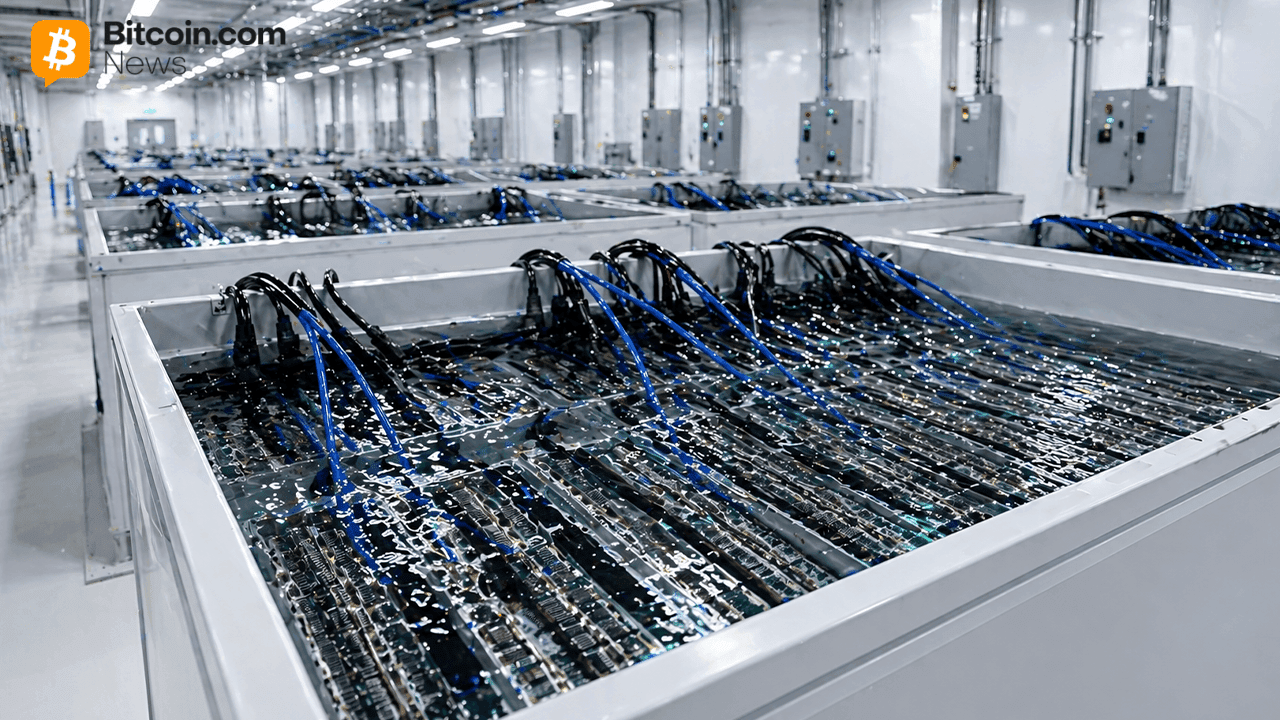
Tether and Canaan expand
Tether and Canaan are deepening their partnership on Bitcoin mining infrastructure with a follow-on order for custom high-density mining hash board modules designed for immersion-cooled mining systems. Cointelegraph reports that the announcement came a day after Tether said it was expanding into Bitcoin mining infrastructure by releasing an open-source framework that lets operators manage their mining hardware and software through a single system. Bitcoin News says Canaan “landed a follow-on order from Tether for custom high-density mining hash board modules” for deployment at a Tether-affiliated facility in South America, extending collaboration beyond a 2025 research and development effort.
Cryptonews.net similarly describes the new order as high-density hash board modules “designed for immersion-cooled systems,” with usage planned at a Tether-linked facility in South America. TipRanks adds that on April 28, 2026, Canaan announced the follow-on order for custom high-density hash board modules, extending a collaboration that began with a 2025 proof-of-concept R&D project involving ACME Swisstech. Across the coverage, the deal is framed as a modular, component-level approach rather than sealed mining rigs, with Canaan and Tether aiming to integrate compute, cooling, and control more tightly.
How the modular system works
The partnership centers on a modular architecture that separates compute from other components and is designed to fit into customer-designed systems. Bitcoin News says the modular design “separates the compute layer from the power supply and enclosure components,” which it says “reduces infrastructure complexity” and “supports optimized thermal management in immersion-cooled environments.” Blockonomi describes Tether’s modular Bitcoin mining system as one where Tether “redesigned mining hardware to separate compute, power, and enclosure components,” and says the company integrates the modules into “its own control architecture and cooling systems.”
Blockonomi also states that Tether “manages the software stack to coordinate performance and power use,” and that the company “separates compute units from power supply and enclosures to optimize each element independently.” In the same vein, Stock Titan emphasizes that the modules support immersion-cooled mining and compute systems and that the agreement emphasizes “modular architecture, system-level integration, and optimized thermal and hash-rate control for large-scale operations.” Across the sources, the system is repeatedly contrasted with “sealed, fixed units,” with Tether leadership arguing that modular compute changes scaling and operational efficiency.
Voices behind the deal
The sources attribute multiple direct statements to executives and partners describing why Tether is pursuing modular mining hardware and how it expects the approach to operate in practice. Bitcoin News quotes Canaan CEO Nangeng Zhang saying, “Leveraging our strong ASIC design expertise and flexible development platform, we are delivering customized hash board solutions that enable partners to optimize system architecture at the component level,” and it adds that Zhang said the Avalon hash board enables “on-demand deployment while cutting operational complexity, particularly in immersion cooling setups.” Bitcoin News also quotes Tether CEO Paolo Ardoino: “Most mining infrastructure is still built as sealed, fixed units, which makes it expensive to scale and inefficient to run,” and it continues with Ardoino explaining that Tether’s approach centers on modular compute that can be “tuned, upgraded, and cooled independently.”
Blockonomi repeats Ardoino’s line that “Most mining infrastructure is still built as sealed, fixed units, which makes it expensive to scale and inefficient to run,” and adds that Tether is “revisiting that concept” with modular compute that operators can tune and upgrade. Blockonomi quotes that Tether’s modular approach allows operators to “replace or upgrade hash boards without discarding entire machines,” and it says the company expects this design to support “higher system availability in large facilities.” Stock Titan includes ACME Swisstech President Giv Zanganeh saying the collaboration “allows us to design and deliver mining systems that are radically different from today’s plug-and-play, retail-oriented products in the market” and that it takes “a holistic, industrial co-design approach aimed for large-scale operations.”
Industry context and market reaction
The reporting places the Canaan-Tether hardware expansion within a wider Bitcoin mining environment that is being reshaped by diversification and by shifts in revenue pressures. Cointelegraph says BTC miners are in the midst of a broad industry shift that has seen established miners, including HIVE Digital, TeraWulf and MARA Holdings, diversifying into data centers and artificial intelligence workloads to offset pressure on mining revenues. Cointelegraph also cites analysts at Bernstein saying IREN could eventually phase out much of its mining business to focus on AI cloud infrastructure, adding that AI cloud services are expected to become IREN’s primary source of revenue in the coming years.
Cointelegraph reports market movement around the announcement, saying Canaan’s Nasdaq-traded shares were down about 1% mid-day on Tuesday and that CoinShares Bitcoin Mining ETF (WGMI) was down about 5.7%, with holdings including CAN shares at less than 0.6% weight. Stock Titan adds that peers on Argus saw CAN fell 3.37% while UMAC and CRSR showed gains and DDD slipped modestly, and it notes that no financial terms were disclosed for the follow-on order or option. Blockonomi situates the modular hardware initiative within Tether’s broader mining strategy, saying Tether disclosed an 8.2% stake in Antalpha and that earlier this year it open-sourced its Bitcoin Mining OS, known as MOS.

What comes next
The sources describe the partnership as including an option for Tether to purchase additional module volume in future phases, which would allow scaling if the immersion-cooled design performs as expected. Bitcoin News says the agreement includes an option for Tether to purchase additional module volume, signaling potential multi-phase expansion of the partnership, and it describes the modular system as co-designed with ACME Swisstech. Cryptonews.net similarly says the agreement includes an option for additional purchases, giving Tether flexibility to scale its infrastructure if the new system design performs as expected, and it frames the deal as a potential step toward more customized, data center–style Bitcoin ($BTC) mining.
TipRanks adds that the modules “will be deployed at a Tether-affiliated South American facility” and that they “can be integrated into partner-designed units to boost compute density and optimize thermal management,” while also stating the deal includes an option for Tether to purchase additional module volume in future phases. Stock Titan emphasizes that deployment scale and revenue impact remain unspecified in the announcement, even as it highlights the follow-on order and expansion option. Blockonomi ties the initiative to Tether’s stated mining strategy, including Ardoino’s 2024 plan for Tether to become the world’s largest bitcoin miner by the end of 2025.
