Sports02 May, 20267 min read
Canada Opposition Demands Who Issued Mehdi Taj’s Permit After IRGC Ties
This article is an automated aggregation of coverage from news outlets. Our editorials offer in-depth analysis curated by the NewsCord team.
Canada banned entry for IRGC-affiliated individuals, affecting Taj’s delegation. Iranian federation officials did not enter Canada and were turned back.

Taj’s entry controversy
Mehdi Taj, president of the Iranian Football Federation, became the focus of a Canada-wide political dispute after reports surfaced that he was granted special permission to enter Canada despite being inadmissible because of ties to the IRGC. Iran International reported that an IRGC-linked Iranian football official was granted special permission to enter the country despite being inadmissible, and the case triggered political backlash in Ottawa. The Canadian opposition accused the government of bypassing its own rules, with Conservative Party deputy leader Melissa Lantsman saying, “We need to know who did it, when it happened, how it happened, why it happened, and why it’s never going to happen again.”
Lantsman also argued that the permit showed the issue was not simply a screening failure, saying, “Somebody actively made this decision to circumvent our own rules,” and adding, “I can’t believe that I work in a place with a minister who would issue a terrorist a permit.” The reporting was followed by Mehdi Taj being turned back within hours of landing in Canada, and the controversy quickly reached Parliament.

Conservative MP Frank Caputo pressed Immigration Minister Lena Diab at a Thursday meeting of the Standing Committee on Public Safety and National Security in Ottawa, asking “who gave him a visa,” and saying “the rule of law demands transparency.” Prime Minister Mark Carney declined to comment on Taj’s case citing privacy laws, but defended the government’s position on the IRGC, saying, “Members of the [Iranian] Revolutionary Guard rightly have been prohibited from entering this country and they will not enter this country.”
What happened at airports
The dispute played out around Taj’s travel for FIFA-related events and the way Canadian authorities handled his delegation at airports. The BBC reported that reports surfaced of Mehdi Taj and his accompanying delegation returning from Toronto airport, after they traveled to participate in a FIFA-related meeting on the eve of the World Cup but “without entering the country,” returned from Toronto airport to Istanbul. The BBC also said the Immigration and Refugee Board of Canada stressed that visa applications are examined on a case-by-case basis and by trained officers, while also stating that due to privacy laws it cannot comment on individual cases.
The BBC further quoted the government’s position that “IRGC officials are not allowed entry to Canada and have no standing in our country either.” In contrast, Iranian domestic media described a dispute after an “insult to one of the pillars of the Islamic Republic's armed forces,” without providing further details, according to the BBC.

Haaretz, citing Iranian media, reported that Taj said Canadian officials cleared him to enter the country for the FIFA Congress, but that Iran’s delegation chose to turn back after being held for three hours and questioned at a Toronto airport. Another account, from آفتاب نیوز, said the Canadian foreign minister announced the reason for Taj’s return and that the Football Federation wrote that “the indecent conduct by immigration authorities at the airport and the insult to one of Iran's armed forces organs” caused the Iranian delegation to return on the first flight to Turkey.
Competing explanations and safeguards
Canada’s officials and opposition figures offered sharply different emphases on what the episode meant for immigration safeguards and the IRGC ban. The BBC said the Immigration and Refugee Board of Canada responded to a BBC Persian question by stating that visa applications “are examined on a case-by-case basis and by trained officers,” while also saying it cannot comment on individual cases due to privacy laws. The BBC also quoted the Immigration Department of Canada saying, “this country has taken serious steps to hold the IRGC accountable and will continue to do so, while also remaining committed to protecting the safety of its citizens and the integrity of its immigration system.”
In the Iran International account, Prime Minister Mark Carney declined to comment on Taj’s case but defended the government’s position, saying, “Members of the [Iranian] Revolutionary Guard rightly have been prohibited from entering this country and they will not enter this country,” while Foreign Affairs Minister Anita Anand suggested the permit may have been granted and later revoked. Opposition figures rejected that framing, with Melissa Lantsman saying, “If they unintentionally gave him a permit, then we need to know how that happened and why it happened,” and adding, “And if the unintentionality of it was about the revocation, that’s even worse.”
Gamereactor France added that Taj had obtained special authorization to enter Canada solely for the FIFA event, “otherwise he would not have been permitted to enter,” and it described Canadian Foreign Minister Anita Anand saying the officials had been denied entry involuntarily. The Raoul Wallenberg Centre for Human Rights, a Canadian NGO, said the decision to grant entry at all was troubling, warning that it “undermines Canada's designation of the IRGC as a terrorist entity and runs counter to our country's commitment to combat impunity for grave human rights violations in Iran.”
FIFA event and Iran’s World Cup path
The episode unfolded against the backdrop of FIFA planning and Iran’s participation in the 2026 World Cup, with multiple outlets describing how Taj’s travel intersected with FIFA meetings in Vancouver. Iran International said Taj had been expected to travel to Vancouver for the FIFA Congress on April 30 at the Vancouver Convention Center, and it described the permit as a Temporary Resident Permit, or TRP, that allows Canadian authorities to admit a person who would otherwise be barred under immigration law. Gamereactor France said the 76th FIFA Annual Council is being held in Vancouver this week, with representatives from the 211 member associations, and it described Iranian officials as failing to attend the FIFA meeting and being denied entry by Canadian immigration officers.
آفتاب نیوز similarly said Taj, along with Hedayat Mombini and Hamed Momeni, traveled to Canada to attend the FIFA World Congress in Vancouver but returned to the country without taking part in the session. Looking ahead, آفتاب نیوز stated that the 2026 FIFA World Cup will be held in the United States, Mexico, and Canada, and it said Iran’s national team is in Group G with Belgium, Egypt, and New Zealand.
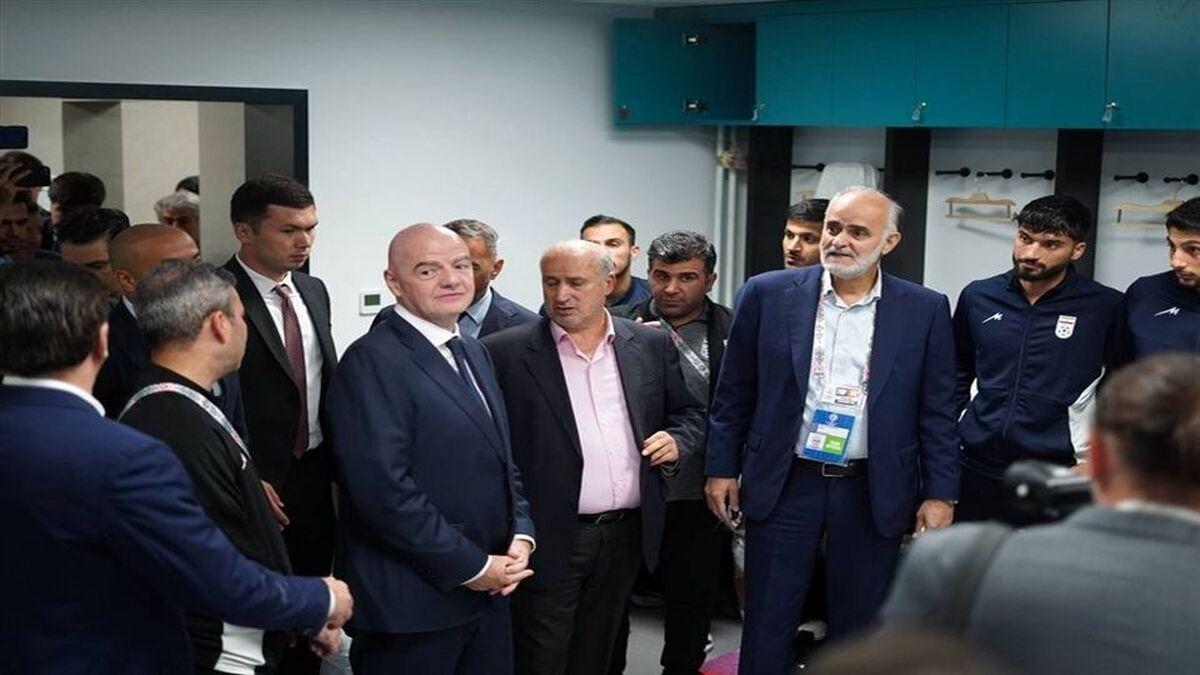
Gamereactor France added that FIFA insists that they will go, and it said Iran is one of 48 countries qualified for the World Cup next summer, with its presence widely discussed because it must play the three group-stage matches on U.S. soil. Amnesty International, according to Gamereactor France, warned about the danger and risk to supporters, players, journalists, workers, and local communities from the United States' abusive immigration policies and called on FIFA President Gianni Infantino to take a stand and to urge Trump to stop deportations during the tournament.
How outlets frame the same episode
The same Canada-Iran football delegation episode is framed differently across outlets, with some emphasizing immigration process and others emphasizing alleged insults, revoked authorizations, or broader implications for FIFA and human rights. The BBC centers its account on Canada’s stated policy that “visa applications, including those related to sports events like the World Cup, are examined on a case-by-case basis and by trained officers,” and it repeatedly points to privacy laws as the reason it cannot comment on individual cases. The BBC also highlights Canada’s clear stance that “IRGC officials are not allowed entry to Canada and have no standing in our country either,” and it describes Iranian domestic media attributing the dispute to “an insult to one of the pillars of the Islamic Republic's armed forces.”
By contrast, Iran International foregrounds the question of who approved a special permit and why, quoting Melissa Lantsman’s demand for answers and her claim that “Somebody actively made this decision to circumvent our own rules.” Gamereactor France emphasizes the FIFA meeting in Vancouver and says Iranian officials were denied entry by Canadian immigration officers, while also quoting the Raoul Wallenberg Centre for Human Rights that the decision to grant entry at all was “deeply troubling.”
آفتاب نیوز focuses on the Canadian foreign minister announcing the reason for Taj’s return and says the Football Federation blamed “the indecent conduct by immigration authorities at the airport and the insult to one of Iran's armed forces organs,” while also reporting that foreign media said “the licenses of three federation members had been revoked.” Haaretz, meanwhile, reports Taj’s claim that Canadian officials cleared him to enter but that the delegation chose to turn back after being held for three hours and questioned at a Toronto airport, according to Iranian media.