Car Crash Kills Two U.S. Embassy Officials and Two AEI Investigators in Chihuahua
Key Takeaways
- Two CIA officers and two Mexican officials died in Chihuahua after a drug-lab raid.
- The four victims were returning from a clandestine laboratory destruction operation.
- Mexican officials included the Chihuahua State Investigations Agency director and a police officer.
Crash After Drug Lab Raid
A car crash in northern Mexico killed two U.S. embassy officials and two Mexican officials from Chihuahua’s State Investigation Agency (AEI) as they returned from a counternarcotics operation to destroy clandestine drug labs in the state of Chihuahua.
“Sheinbaum said she wanted to ensure that no law had been violated after Sunday’s deaths, which, according to the state attorney general, occurred when officials were returning from an operation to dismantle clandestine laboratories in a rural area”
BBC reported that the crash happened on Sunday morning when the car “skidded off the road and fell into a ravine, where it exploded,” killing the two U.S. nationals and two AEI members.
The BBC said the two Americans were described by Chihuahua officials as “instructor officers” from the U.S. embassy who were engaging in “training work as part of the general and normal exchange we have with the US authorities.”
The New York Times similarly said the two Americans were killed “when their vehicle crashed while returning from a counter-cartel operation led by Mexico’s armed forces” to dismantle clandestine methamphetamine labs.
NBC News reported that the four were returning from an operation to destroy drug labs in the municipality of Morelos in Chihuahua, and that the U.S. staffers were described as instructors who train and collaborate with Mexican law enforcement.
The El Paso Times added that the crash occurred Sunday morning, April 19, near the town of Morelos, and that the U.S. Embassy instructors were returning after taking part in U.S.-Mexico training in anti-narcotics operations with state police.
Chihuahua Attorney General César Jáuregui Moreno told reporters that the truck “appears to have skidded at some point and fell into a ravine, exploding,” and he identified the Mexican victims as Pedro Román Oseguera Cervantes and Manuel Genaro Méndez Montes.
What Led to the Operation
Multiple reports tied the crash to a sequence of actions aimed at dismantling clandestine drug production sites in Chihuahua, including the destruction of synthetic-drug labs and the use of drones to locate facilities.
BBC said the operation involved destroying illegal drug labs and that the crash occurred as the officials were “on their way back from an operation to destroy illegal drug labs,” with Chihuahua officials describing the victims as returning from that mission.
ABC7 San Francisco reported that, according to Chihuahua’s prosecutor César Jáuregui, an investigation had begun “two or three months earlier between the state investigative agency and Sedena (the Secretariat of National Defense),” and that “when we had certainty via drones about the location, we jointly went to secure the facilities.”
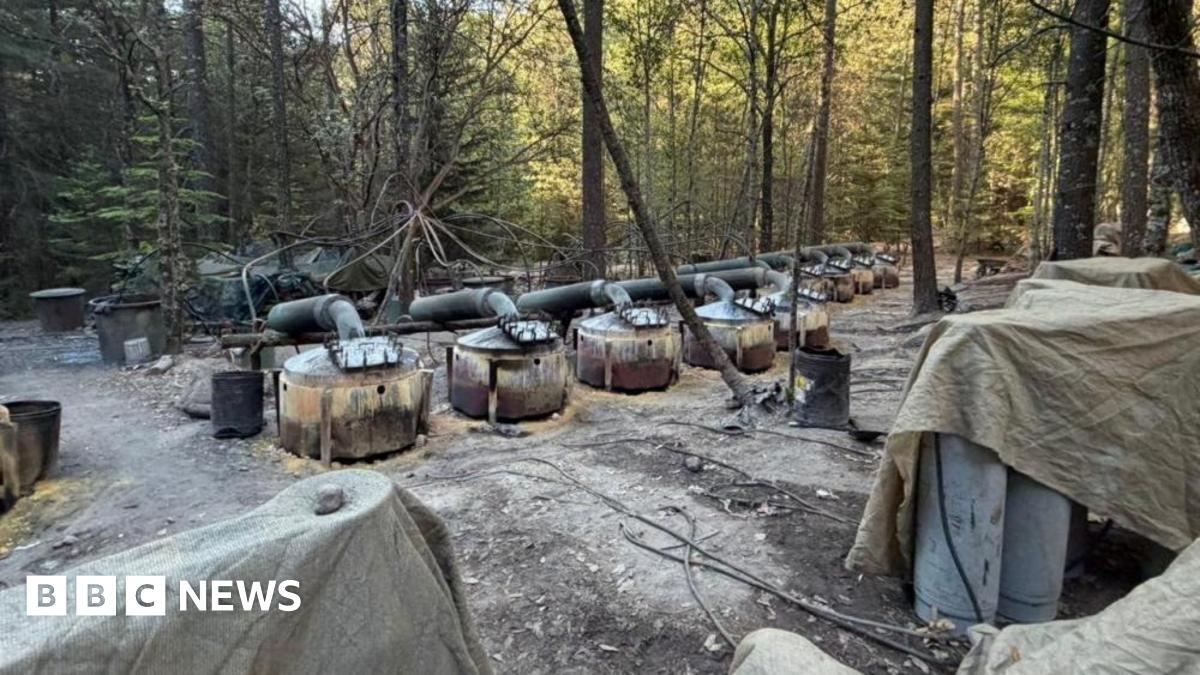
ABC7 also said that in the operation, authorities found “tons of materials for making synthetic drugs but no people,” and that the people were “presumably warned beforehand and fled.”
The CBS News account said the crash followed an operation to destroy a clandestine drug lab in a rural area, and it described the officials as returning through “rugged mountain territory connecting Chihuahua to the state of Sinaloa.”
The El Paso Times described the meth lab raids in the mountains between Guachochi and Morelos, saying the narcolab was “divided into five sections, featuring more than a dozen ovens, scores of gas cylinders and campgrounds for crews.”
The Guardian likewise said the Mexican officials were on an operation to destroy clandestine laboratories in the municipality of Morelos, and it quoted the U.S. ambassador’s condolence message about risks faced by those dedicated to protecting communities.
Sheinbaum Demands Answers
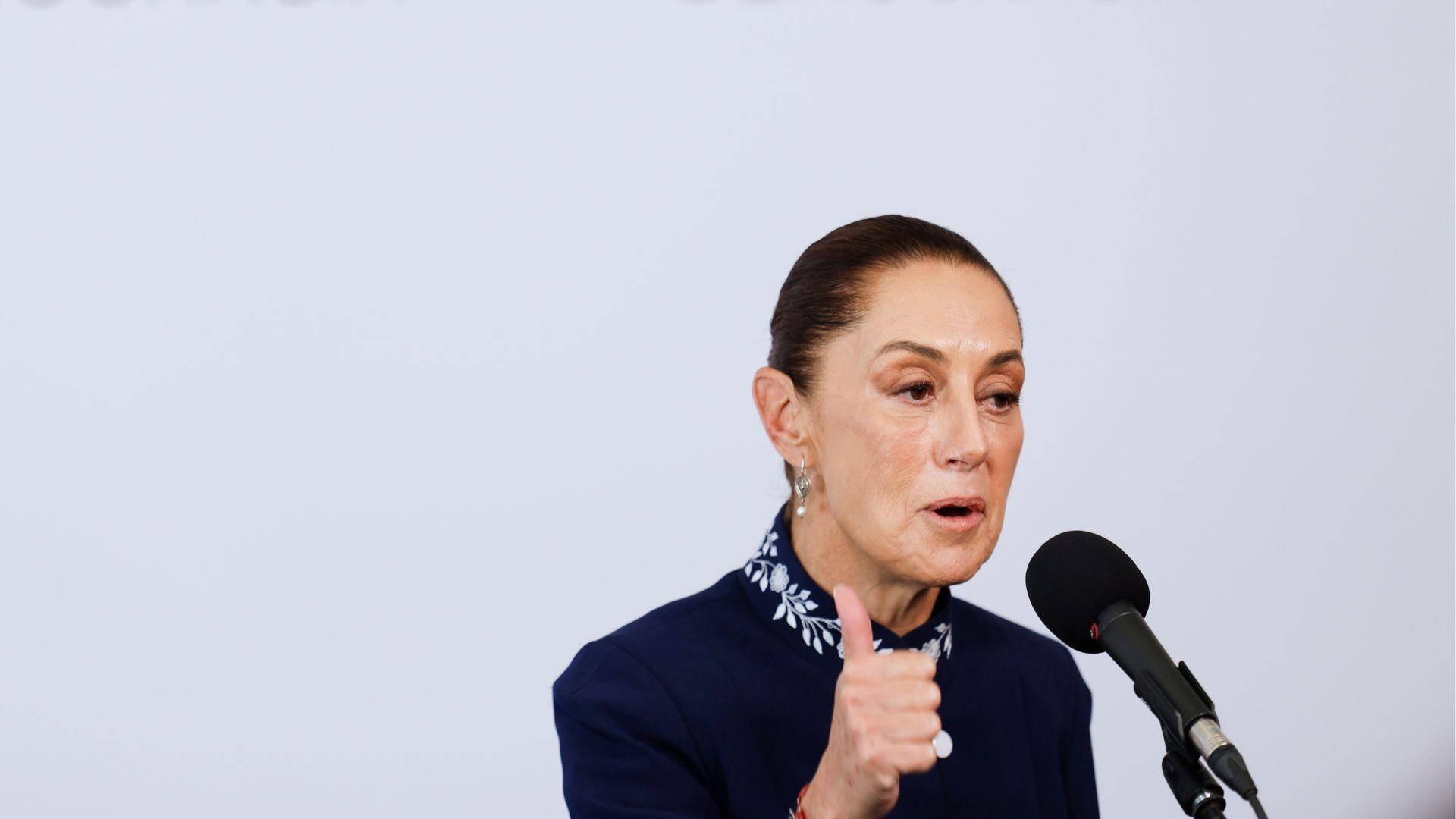
Mexican President Claudia Sheinbaum moved quickly to demand explanations about what she said her government knew about the U.S. officials’ role in Chihuahua.
“Mexican President Claudia Sheinbaum said Monday she would demand explanations over what U”
BBC reported that Sheinbaum ordered an investigation into the role played by two U.S. officials in a counter-narcotics operation in Chihuahua and said that neither she nor senior members of the federal security team had been informed about any joint US-Mexican operations.
BBC quoted Sheinbaum saying, “we did not have knowledge of any direct work between Chihuahua state and personnel from the US embassy,” and it said she stressed that foreign officials can only operate on Mexican soil if given prior clearance at the federal level.
CBS News likewise quoted Sheinbaum telling journalists, “It was not an operation that the security cabinet was aware of,” and “We were not informed; it was a decision by the Chihuahua government.”
NBC News reported that Sheinbaum said she was unaware state authorities in Chihuahua were collaborating with U.S. embassy personnel and that she had requested more information, adding, “We were not aware that there was any direct collaboration between the state of Chihuahua and U.S. Embassy personnel in Mexico.”
In the same NBC News account, Sheinbaum said she was reviewing whether there had been “any violation of national security law,” and she reiterated that such collaboration was “everywhere” in the past but limited it in the present.
The U.S. side, through Ambassador Ronald Johnson, offered condolences without identifying the U.S. officials, with the ambassador saying in a statement posted on X that “We are deeply saddened by the tragic loss of two U.S. Embassy employees, the director of AEI Chihuahua and an AEI officer, in this crash.”
CIA Role and Competing Accounts
As the crash investigation unfolded, reporting diverged over what the U.S. officials were doing and which U.S. agency they represented.
The BBC described the two Americans as “instructor officers” from the U.S. embassy engaged in “training work as part of the general and normal exchange we have with the US authorities,” and it said Chihuahua’s attorney-general César Jáuregui described the accident as occurring while they were driving back from an operation destroying clandestine labs for synthetic drugs.

In contrast, the Washington Post reported that two U.S. embassy officials who died worked for the Central Intelligence Agency as part of a “significantly expanded role in battling narcotics trafficking in the Western Hemisphere,” citing “two people familiar with the matter.”
CNN and the New York Times likewise said the two Americans were CIA officers, with CNN reporting that “three people briefed on the matter confirmed to CNN” that the two U.S. embassy officials worked for the CIA and collaborated with Mexican officials on expanded counternarcotics operations.
The New York Times stated that the two Americans were “officers of the Central Intelligence Agency,” and it said the CIA declined to comment.
Meanwhile, the U.S. embassy’s public posture in multiple accounts emphasized training and support rather than agency identity, with NBC News saying the U.S. staffers were described as instructors and that the U.S. ambassador called the deaths a “tragic loss” and a “solemn reminder of the risks.”
The U.S. ambassador Ronald Johnson also posted on X that “We honor their dedication and tireless efforts to confront one of the greatest challenges of our time,” while the U.S. Embassy declined to identify the deceased officials in response to a request from the Associated Press, according to ABC7.
Broader Security Cooperation Stakes
The crash has become a focal point for broader questions about U.S.-Mexico security cooperation, including how intelligence sharing differs from “joint operations” and how federal authorization applies to state-level involvement.
“✕ Home News Analysis Agro-Forestry Art & Culture Technology Economy & Business Education Energy & Extractives Politics Law & Governance Health Science & Environment Social & Gender Sports Transport Urban Development WASH Research LogIn/SignUp Close the sidebar Diplomatic Tensions: U”
BBC said Sheinbaum insisted that while Mexico works with the U.S., including intelligence sharing, there “are no joint operations on land or in the air,” and it reported that Sheinbaum was under pressure from Donald Trump to do more to stem the flow of drugs from Mexico to the United States.

The New York Times quoted Sheinbaum describing the agreed framework as “information shared and there is extensive joint intelligence work that allows federal forces to operate within our country’s territory and U.S. forces within theirs,” while also saying, “there are no joint operations as such on the ground,” and that if an investigation confirms a joint operation, “the corresponding sanctions would have to be reviewed.”
CBS News similarly reported that Sheinbaum said any joint collaborations between the local government and the U.S. without federal permission would violate Mexican law, and it quoted her: “We were not informed; it was a decision by the Chihuahua government.”
CNN and mezha.net both described the CIA’s expanded role under Director John Ratcliffe, with CNN saying the CIA has “significantly expanded its operations in Mexico under Director John Ratcliffe” and that the Trump administration broadly shifted counterterrorism authorities and resources to counter-cartel work along the border and inside Mexico.
CNN also reported that “The CIA began covertly flying MQ-9 Reaper drones over Mexico to spy on drug cartels last year” and that the agency reviewed its authorities to use lethal force against drug cartels.
In the immediate aftermath, Sheinbaum said her government would investigate whether the involvement of the U.S. officials violated Mexico’s national security laws, while the U.S. ambassador Ronald Johnson framed the deaths as a reminder of risks faced by both Mexican and American officials.
More on Mexico
Stampede Kills At Least 30 at Haiti's Historic Laferrière Citadel During Easter Gathering
57 sources compared

Trump's God Squad Clears Gulf Drilling, Exempts TSA from Flight Deck
42 sources compared
Pentagon Ramps Up Military Planning For Possible Operation In Cuba If Ordered By Trump
22 sources compared

Mexican Navy Locates Missing Aid Sailboats, Crew Safe in Cuba
62 sources compared