China calls for end to Middle East war, warns of global economic impact
Key Takeaways
- Beijing urges end to Middle East conflict, warning of global economic consequences.
- Global energy, shipping, and trade would be affected.
- Conflict is nearing three weeks with no sign of slowing.
China's Ceasefire Call
China has issued urgent calls for an immediate end to the Middle East war, framing the conflict as an 'unjust war' that must stop.
“March 20, 2026 China has called for an end to the Middle East war, warning that armed conflict breeds hatred and raising concerns over rising energy costs”
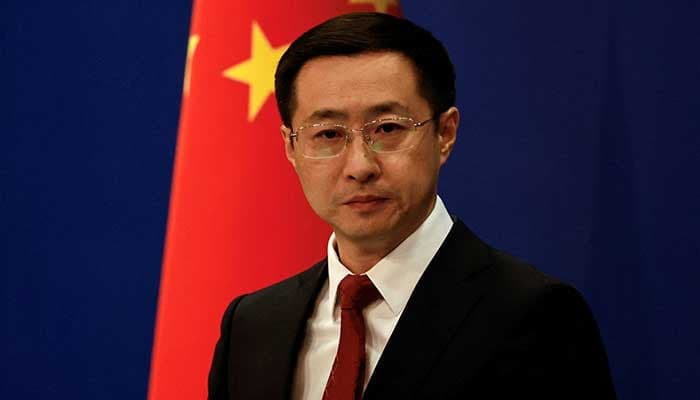
Chinese Foreign Ministry spokesperson Lin Jian delivered this message during a press conference in Beijing, emphasizing that the continued violence serves no constructive purpose.
Lin Jian stated that the 'still widening war' harms the common interests of all countries.
The Chinese foreign minister further declared that the conflict amounts to an injustice that should not be allowed to persist.
These remarks came as the nearly three-week-old conflict shows no sign of slowing.
China reiterated its consistent position that all parties should pursue peace rather than continued military action.
Economic Impact Warnings
Beijing is particularly concerned about severe economic repercussions of the Middle East conflict.
Rising energy costs are affecting global markets and supply chains.

China, as one of the world's largest oil importers, has direct stake in stability of energy supply routes.
The Chinese Foreign Ministry underscored that economic impact extends beyond conflict zone to international markets.
Higher energy costs threaten Chinese manufacturers and could trigger inflation.
Uncertainty threatens to disrupt Xi Jinping's 'Belt and Road' initiative.
Parts of this project run through region, helping move Chinese goods to Gulf, North Africa and Europe.
Historical Context
China's latest statements were made on 23rd anniversary of Iraq War that began in 2003.
“By Joe Cash and Xiuhao Chen China called for an end to the war in the Middle Easton Friday, warning of the impact on global energy, shipping and trade, with the nearlythree-week-oldconflict showing no sign of slowing”
The Iraq War involved U.S.-led forces invading Iraq to oust Saddam Hussein.
This historical context shows Beijing's view on negative consequences of military intervention.
The Iraq War resulted in years of chaos and instability.
It created power vacuum that led to rise of Islamic State terrorist group.
Chinese officials reflect concern that current conflict follows similar pattern of creating instability.
This shapes China's diplomatic approach as voice for de-escalation.
Strategic Positioning
The Middle East conflict presents China with both challenges and strategic opportunities.
War creates economic difficulties through higher energy costs and supply chain disruptions.
It also gives Beijing opportunity to cast itself as more reliable superpower compared to United States.
Conflict has led to meeting between Xi Jinping and U.S. officials.
China's advocacy for dialogue positions it as voice for de-escalation.
This stance reinforces diplomatic approach of calling for peace over military action.
China's calls add to growing chorus of international demands for cessation of hostilities.
More on Gaza Genocide

Trump Administration Sues Harvard University Over Civil Rights Violations Against Jewish and Israeli Students
50 sources compared

Protesters heckle Australian PM Albanese at Sydney mosque over Israel stance
18 sources compared

Iran Fires Missiles at Israel, Killing Three Palestinian Women and a Foreign Worker
23 sources compared

UEFA Cancels Finalissima as Argentina Rejects Alternatives Amid Middle East War
11 sources compared