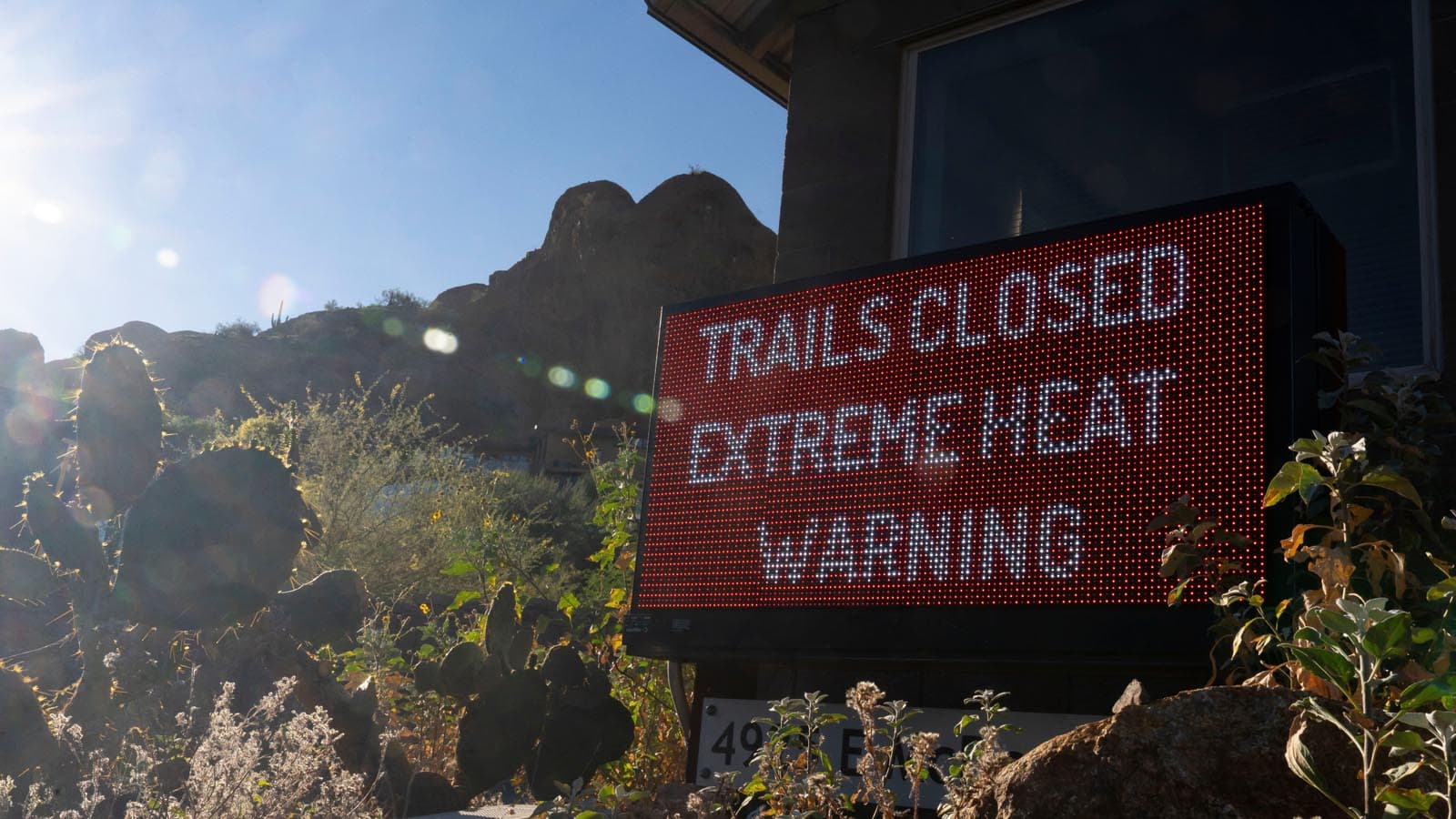
Climate Change Drives US Southwest March Heat Record
Key Takeaways
- Southwest March heat wave sets multiple all-time records across the region.
- Arizona's Martinez Lake area peaked at 110°F, the hottest March in US history.
- Experts connect the March heat to climate change, noting widespread record temperatures.
Historic Heat Records
An unprecedented March heat wave shattered temperature records across the US Southwest and Mexico during March 18-19, 2026.
“Graphics show the scale of extreme heat hitting the US A burst of unusual March heat is hitting the United States this week and into next, busting previous monthly heat records by wide margins”
This event marked one of the most extreme weather events in world history with multiple locations experiencing their earliest 100-degree Fahrenheit temperatures ever recorded.

The extreme ridge of high pressure reached 3.5 to four standard deviations above normal, creating extremely unusual atmospheric conditions.
Temperatures soared to 110°F at Martinez Lake, Arizona, breaking the previous US March record of 108°F set in 1954.
In Mexico, Hermosillo recorded 42.5°C (108.5°F), breaking Mexicali's previous record of 40.9°C (105.6°F) set just the day before.
This heat wave extended from Southern California all the way to the Great Plains and from Canada to Mexico.
The heat affected roughly a quarter of March heat records at 400 weather stations across the United States.
Climate Attribution
Climate scientists have definitively linked this extreme heat wave to human-caused climate change.
A rapid attribution study concluded the event would be 'virtually impossible in a world without human-induced climate change.'

The World Weather Attribution study found that temperatures during this heat wave have risen about 1.4°F higher than they would have just a decade ago.
Temperatures are about 4.7°F higher than they would have been in a preindustrial world.
Such extreme events are still rare - expected to occur about once every 500 years at any given location.
They have become four times more likely in just the past decade due to climate change.
Climate Central's Climate Shift Index showed Level 5 results, indicating climate change increased the odds of such conditions fivefold.
The affected region is warming more dramatically than many other parts of the world.
Water Resource Impacts
The unprecedented heat is already triggering significant impacts on California's water resources.
“The most destructive wildfires in Southern California history”
Particularly affected is the vital Sierra Nevada snowpack that provides about a third of the state's water supply.
Climate change is shifting snowmelt runoff earlier in the year.
This leaves less water available for homes, farms, fish, hydropower, and forests during warmer months.
Levi Johnson, operations manager for the Central Valley Project, expressed concern that 'we're not going to have' the ideal scenario of full reservoirs with additional snowpack.
Just two months ago, California achieved zero areas of abnormal dryness for the first time in 25 years thanks to winter storms.
Now, abnormal dryness has already returned to Northern California.
Without dramatic increases in precipitation, the state could reenter drought conditions by spring.
This 'weather whiplash' exemplifies thermodynamic changes scientists expect to see more of as climate change worsens.
Broader Climate Patterns
Climate scientists emphasize that this extreme heat wave represents a clear manifestation of broader climate change patterns.
UC climate scientist Daniel Swain notes that 'all of the superlative extremes we've seen in recent years — from extreme heat to extreme dryness to extreme wetness, and even the severe wildfires — they all have clear links to climate change.'

The heat wave is notable not just for its intensity but also for its duration and scale.
It affects vast regions simultaneously across multiple states.
Climate change warms the atmosphere, raising baseline temperatures and making heat-trapping weather patterns more intense and longer-lasting.
California's water infrastructure provides some buffer against immediate water supply threats.
However, sustained dryness can still cause significant damage to the agricultural industry.
The conditions also elevate wildfire risks in the region.
Temperatures across some parts of the region are reaching at least 20 degrees Fahrenheit above normal compared to the 1991-2020 average.
More on Technology and Science
Wahiawa Dam faces imminent failure, triggering evacuations across Oahu
11 sources compared

Trump administration unveils national AI framework to preempt state AI laws
31 sources compared

Social media damages youth well-being, World Happiness Report 2026 finds
34 sources compared

Meta Pays Creators Up to $3,000 to Post on Facebook, Launching Creator Fast Track.
25 sources compared