USA26 March, 20263 min read
Collapse In Net International Migration Slows Border Metro Growth; Webb County Drops About 95%
This article is an automated aggregation of coverage from news outlets. Our editorials offer in-depth analysis curated by the NewsCord team.
Metro-area population growth slowed nationwide in 2025. Border metro areas along the U.S.-Mexico border experienced the steepest declines due to declining immigration.
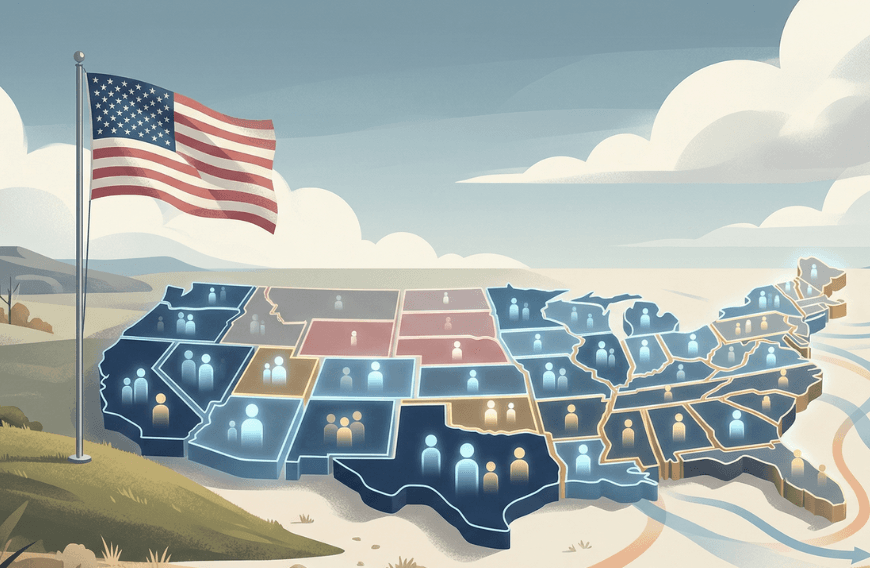
Border metros stall growth
Border metro growth slowed the most in 2025, driven by a collapse in net international migration, a development that rewrites the geography of U.S. population dynamics. In Webb County, Texas (home to Laredo), net international migration dropped by about 95%, and Laredo’s growth rate slid from 3.2% in 2024 to 0.2% in 2025. Yuma, Arizona fell from 3.3% to 1.4%, while El Centro, California declined from 1.2% into negative territory at -0.7%.
“In Webb County, Texas, which includes Laredo, net international migration dropped by about 95%.”
The Census results show nine out of ten counties had lower immigration in 2025 than 2024, underscoring a nationwide pullback in international arrivals that flattens previously fast-growing border zones. Even as the biggest immigrant hubs—Houston, Miami, and Los Angeles—remain leading destinations by absolute numbers, the inflows to these counties also declined, signaling a broad, country-wide cooling rather than a localized shock.

Hubs see declines, still lead
The year’s patterns also reveal a retreat of immigration from major hubs in absolute terms, even as they continue to attract large numbers. The Census notes that the top destinations for immigrants in pure numbers in 2025 were counties that host Houston, Miami and Los Angeles, but the inflows to those counties were markedly smaller than in 2024.
This contrasts with the prior year’s recovery narrative and suggests a recalibration of settlement choices as international mobility tightens and domestic outflows persist in some regions. The data imply that the country’s urban core growth remains tethered to immigration, but with a lower wind behind it, limiting the rebound that characterized the post-pandemic period.
Disasters compound border slowdown
Beyond border zones, the data show Hurricane-driven migration and aging demographics amplifying the slowdown. Florida’s Gulf Coast counties were hit by Helene and Milton in 2024, prompting residents to relocate and contributing to notable drops in county growth—Pinellas County alone lost almost 12,000 residents, trailing only Los Angeles County for the largest loss in the country. Taylor County, in Florida’s Big Bend, registered the steepest decline among U.S. counties at -2.2%.
“Two destructive hurricanes, Helene and Milton, tore through Gulf Coast counties in Florida in fall 2024, causing tens of billions of dollars in damage.”
These shifts illustrate how natural disasters interact with slower international inflows to suppress growth in both urban and rural areas. The pattern echoes across Latin American outlets noting the same hurricanes as pivotal factors in migration decisions and population counts.
Drivers and uncertainties
Aging demographics and a secular slowdown in natural increase further intensify the growth slowdown, with immigration becoming a smaller, more volatile driver of urban expansion. The Census framing stresses that 'with so little natural increase, migration determines whether an area grows or declines, particularly in the big metro cores' that rely on continued inflows. Non-border areas also show the dependence on migration, even where births exceed deaths, while many counties see immigration levels remain well below 2024 levels.
Latin American observers frame this as part of a multi-factor dynamic that includes climate shocks and policy shifts shaping where people relocate. Across the board, the message is clear: immigration is not reviving fast enough to restore pre-pandemic pace, and the pace of population growth remains historically tepid.

Policy signals and implications
Policy context matters for interpretation: several Western and non-Western outlets tie the census slowdown to ongoing immigration crackdowns and political signals from Washington. The American Bazaar notes the broad deceleration across counties and metros, highlighting links to policy shifts during 2025. El Diario emphasizes that the data reflect the early months of President Donald Trump’s second term and the administration’s immigration crackdown.
“Population growth across the country slowed sharply last year, marking its weakest pace since the Covid-19 period.”
Infobae adds that the two decisive factors behind the trend are a reduction in immigration and the damages from natural disasters. Taken together, the figures imply persistent headwinds for population growth and a reordering of which places can rely on migration to fuel expansion.