
Colorado Braces For Late-Spring Snowstorm With 2 To 6 Inches In Denver Metro
Key Takeaways
- Winter storm alerts issued for parts of Colorado and Wyoming ahead of late-spring snow.
- Denver metro expected to receive snow Tuesday night into Wednesday morning.
- May snowstorm could be among Colorado's largest, with significant travel impacts.
Colorado’s Late-Spring Snow Threat
Colorado is bracing for a significant late-spring snowstorm that forecasters say could make May feel like December in parts of the state, with winter storm alerts in place from Tuesday for parts of Colorado and neighboring Wyoming through Wednesday.
“Colorado braces for significant late-spring snowstorm Winter storm alerts are in place on Tuesday for parts of Colorado and Wyoming”
Multiple outlets tie the timing to the Denver metro area, where the expected snowfall is described as 2 to 6 inches on Tuesday night and into Wednesday.
The same reporting says the Mile High City is about 20 inches below average for snowfall this season, and that parts of the Central Rocky Mountains could receive 1 to 2 feet of snow.
ABC News similarly frames the storm as a “significant late-spring snowstorm,” saying the Denver metro area is expected to get 2 to 6 inches on Tuesday night and into Wednesday.
The Coloradoan adds that the I-25 corridor, including Fort Collins and Denver, is included in the warning area, and it says heavy snowfall is expected to impact travel, especially during the morning commutes on May 6.
In parallel, the Denver Post reports that the storm is on track to be one of Denver’s largest May snowstorms on record, while also warning it “won’t be enough to reverse the drought.”
Temperature Whiplash and Storm Setup
The forecast is built around a rapid temperature swing that begins with unusually warm conditions before the cold and snow arrive.
The ucvradio.pe report says the storm “llega un día después de que las temperaturas en Denver alcanzaran los 75 grados,” and it adds that on Tuesday Denver is only expected to reach 40 degrees, about 30 degrees colder than Monday.
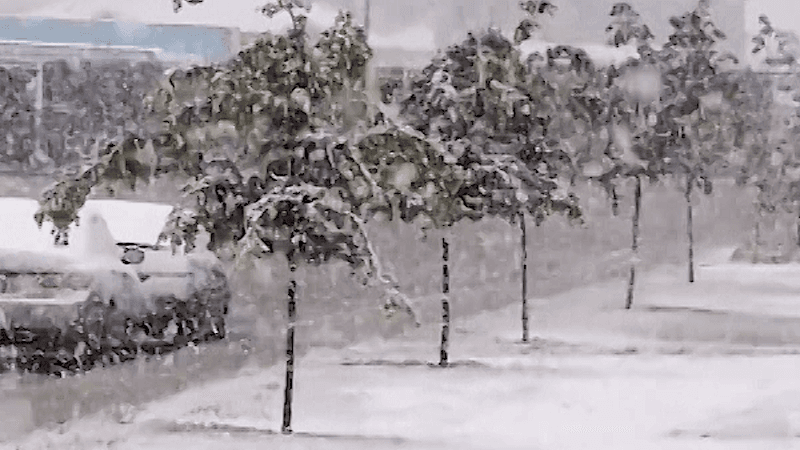
ABC News echoes this, saying “The snowstorm comes a day after the temperature in Denver hit 75” and that “On Tuesday, Denver is only expected to get into the lower 40s -- about 30 degrees colder than on Monday.”
CBS News describes the meteorological setup as “The combination of cold Arctic air oozing in over the Rockies from the north and Pacific moisture makers swinging in from the southwest,” and it says the storm is getting ready to “blast Colorado's Front Range with cold and snow starting on .”
The Denver7 report similarly describes a shift in the weather beginning Monday, with “Scattered showers and a few thunderstorms” starting after midday, then “a cold front from the north slides into the area.”
Across the same coverage, the storm’s impacts are repeatedly linked to wet, heavy snow and the timing around commutes, with CBS Colorado warning that travel conditions could become difficult as heavy bands of snow pass through the mountains.
Forecast Totals, Warnings, and Travel Risks
As the storm approaches, outlets lay out detailed snowfall expectations and the warning structure that governs when and where impacts are most likely.
“You Browser Working London Working www”
The Denver Post reports that the National Weather Service expects totals that range from 4 inches in Brush and Fort Morgan with up to 5 inches possible, to 10 inches in Winter Park with up to 20 inches possible, and it also lists 12 inches on U.S. 6’s Loveland Pass with up to 24 inches possible.
It further says 14 inches on U.S. 40’s Berthoud Pass near Winter Park with up to 28 inches possible, and it includes 27 inches at Bear Lake in Rocky Mountain National Park with up to 33 inches possible.
Denver7 describes localized snowfall amounts of “around 2 feet of fresh powder” in the Boulder/Larimer County mountains and says “Around 1-2 inches of snow per hour are possible when the main event begins.”
It also states that a winter storm warning will be in effect midnight Tuesday through 3 p.m. Wednesday for areas along the northern Front Range foothills, including Red Feather Lakes, Estes Park, Nederland and the I-70 mountain corridor above 9,000 feet.
Across these reports, the travel risk is tied to wet, dense snow that can damage trees and down powerlines, with the Denver Post warning that the wet, dense snow “may damage trees and power lines, potentially causing outages.”
Power Outage Preparedness and Road Guidance
Officials and utilities in Colorado are preparing for the possibility of power outages and hazardous driving conditions as the storm moves through.
The Denver Post reports that Xcel Energy plans to place crews on standby to respond to and repair any outages caused by the spring snowstorm, citing utility officials.

It also includes Xcel’s safety instruction: “If you see a downed or sagging power line, stay away,” and it adds, “Never touch or move a downed power line; instead, leave the area and report it immediately by calling 1-800-895-1999.”
CBS News says the storm may lead to “scattered power outages, especially for areas in and near the foothills,” and it warns that “Travelers should prepare for the storm's peak impacts during the Wednesday morning commute.”
The Denver7 report says CDOT officials expect the challenge to be “heavy wet snow possibly snapping tree limbs” that could fall onto roadways or power lines, creating potential power outages across major intersections.
TheTravel’s account of the storm’s effects on travel adds that the Colorado Department of Transportation issued advance warnings on Facebook about “heavy, wet snow” and the potential to bring down tree branches and power lines.
Air Travel Disruptions and Rebooking Rules
The forecast is also shaping airline and airport planning, with United Airlines issuing a travel alert tied to the storm’s timing and potential cancellations.
“DENVER — If Colorado’s lackluster winter left you feeling a bit cheated, it appears Mother Nature is making some amends by bringing what forecasters are calling a “significant snowstorm” to the area that’s expected to impact the Wednesday morning commute and could lead to power outages in certain areas due to downed tree limbs”
TheTravel reports that United Airlines is bracing for increased delays and cancellations on Tuesday and Wednesday due to a Rocky Mountain snowstorm that may affect hundreds of flights, and it says the airline extended flexible rebooking for passengers and waived change fees.

It states that United added a new travel alert affecting seven major U.S. airports for flights on May 6, 2026, and it specifies that the original ticket must be purchased on or before May 3, 2026 to be eligible for flexible rebooking.
TheTravel quotes United’s guidance: “If your flight is affected, here are your options: You can reschedule your trip and we’ll waive change fees and fare differences.”
It further says the new flight must be a United flight departing between May 3, 2026 and May 9, 2026, and that tickets must be in the same cabin and between the same cities as originally booked.
It adds that as of Tuesday morning, cancellations were still modest for United, with “ten cancelled flights” and “35 delays” according to FlightAware, while it says disruptions on Wednesday would depend on the severity of the snowstorm.
More on Technology and Science

PayPal Reorganizes Into Three Units To Accelerate AI Adoption And Save $1.5 Billion
13 sources compared

ShinyHunters Claims Instructure Breach Stole Data From Nearly 9,000 Schools And 275 Million Individuals
14 sources compared

Greg Brockman Testifies OpenAI Will Spend $50 Billion on Computing in Musk v. Altman Trial
12 sources compared

European Commission Says Meta Breaches Digital Services Act Over Instagram, Facebook Under-13 Access
20 sources compared