
Delcy Rodríguez Boasts of 100 Days Without Classism or Racism in Venezuela
Key Takeaways
- Delcy Rodríguez serves as acting president of Venezuela.
- She marked the first 100 days in office.
- Coverage frames the period as progress and political stability.
Delcy’s 100 Days
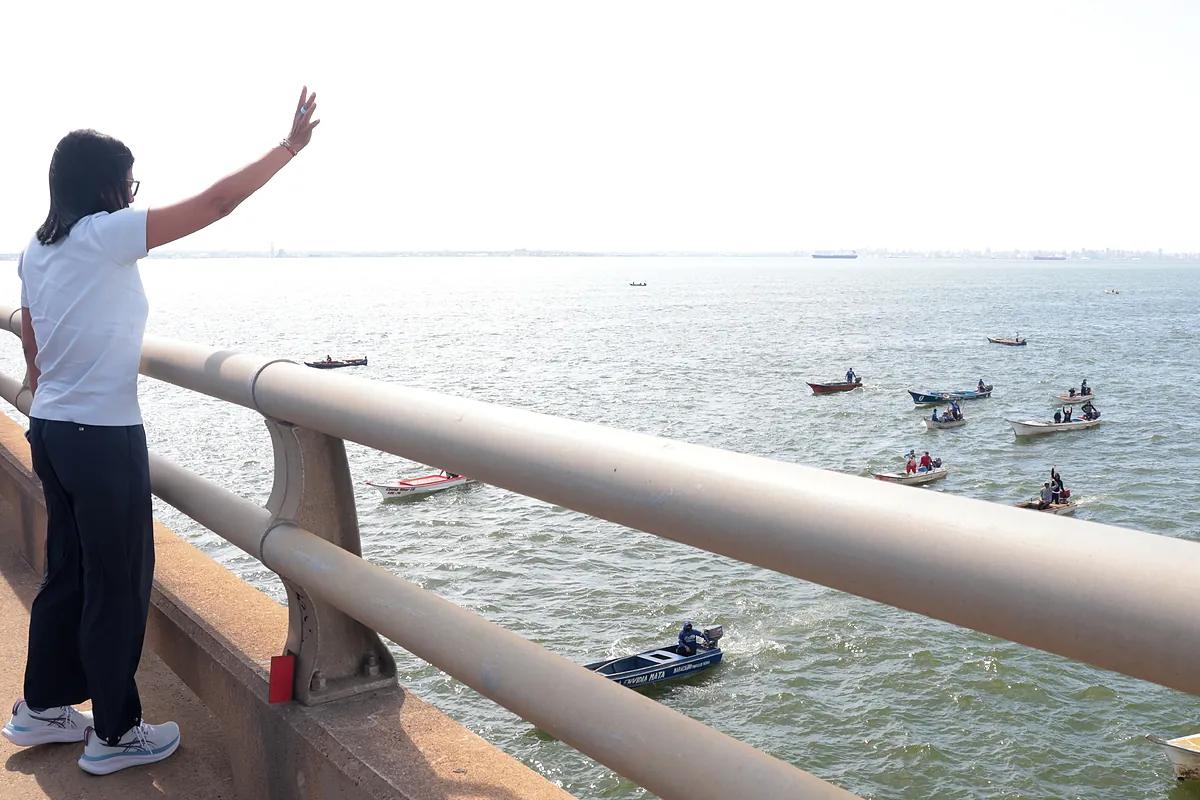
Venezuela’s acting president Delcy Rodríguez used the end of her first day on a nationwide tour to boast about her first 100 days at the helm of the de facto government, while omitting any reference to holding the general elections that society demands.
“The acting president, Delcy Rodríguez, used the end of her first day on a nationwide tour to boast about her first 100 days at the helm of the de facto government, in which she omitted any reference to holding the general elections that society demands”
In El Mundo’s account, Rodríguez framed the period as “a path devoid of classism and racism, a path that finds peace in itself,” and said, “These 100 days are not a point of arrival, they are the start of a new stage.”
The same El Mundo report said Rodríguez did not detail whether her reference to racism related to “the 27 years of Bolivarian revolution” or to “the forced controversy during the Venezuelan gathering in Madrid,” where racist shouts were heard from “a group of infiltrators,” echoed by the singer Carlos Baute.
El Mundo also reported that Rodríguez asserted the Amnesty Law ordered by Washington had benefited more than 8,000 Venezuelans, while Foro Penal data cited by the outlet said 470 political prisoners still remained behind bars after the release of around 700 inmates.
In teleSUR English’s version, Rodríguez addressed the Venezuelan nation on April 19, 2026, reflecting on her first 100 days after the U.S. kidnapping of President Nicolás Maduro on January 3, and she called for a “new historical moment” for the country.
teleSUR English said Rodríguez emphasized that Venezuela is forging “a path of national reunification”, “free from the divisions of classism and racism”, and rooted “in the pursuit of peace.”
Elections, Amnesty, and Deadlines
The question of elections and the legal timeline around Maduro’s absence ran through the reporting on Rodríguez’s first 100 days.
El Mundo said the acting president omitted any reference to holding the general elections that society demands, and it described how the initial constitutional deadline for the vice president to replace Nicolás Maduro in his absence—three months—had been “greatly surpassed.”
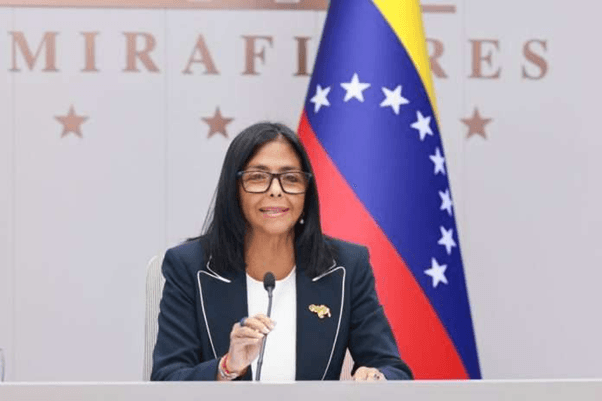
El Mundo added that the Magna Carta written in Chávez’s era allows another three months before the acting presidency calls presidential elections 30 days later.
In teleSUR English, Rodríguez’s narrative tied the 100-day period to the events around Maduro’s removal, stating that she addressed the nation after the “U.S. kidnapping of President Nicolás Maduro last January 3.”
teleSUR English also emphasized the amnesty law as a pillar of reconciliation, saying it “has already benefited over 8,000 Venezuelans.”
El Mundo, however, juxtaposed Rodríguez’s claim with figures from Foro Penal, saying “470 political prisoners still remain behind bars after the release of around 700 inmates,” and that many had not regained full freedom because “their cases remain open or because judges maintain precautionary measures.”
Oil, Sanctions, and Negotiations
Economic and energy claims formed another major strand of the 100-day narrative, with multiple outlets tying progress to U.S. agreements and sanctions relief.
“Delcy Rodríguez specified that in this month it is expected to recover the level of oil production of December 2025, interrupted by the U”
El Mundo said the acting president boasted that economic figures had improved “thanks to the agreements with the United States,” and it described her announcement during the first day in the border state of Zulia that Venezuela decided to open negotiations with the multinational General Electric and Siemens.
El Mundo framed the initiative as part of a “transitional plan imposed by Washington,” described as “the recovery and reconciliation,” and it said the U.S. plans to use part of the proceeds from the sale of Venezuelan oil to improve public services of the Caribbean country.
teleSUR English similarly said Rodríguez specified that in this month it is expected to recover the level of oil production of December 2025, interrupted by the U.S. blockade imposed on the nation, and it stated that “the state-owned oil company is producing 1.1 million barrels per day.”
teleSUR English also said Rodríguez highlighted Venezuela’s return to the international stage through regaining representation at the International Monetary Fund (IMF), and it described renewed access to “its own resources” to be allocated toward health services, basic public services, supporting strategic national production, and stabilizing international reserves.
St Vincent Times added a different set of energy figures, reporting that oil production reached 1.021.000 barrels per day in February, a 10% increase compared to January, and it said the state of Zulia exceeded 400.000 barrels.
Purge and Power Reshuffle
Beyond economic claims, South American reporting focused on internal power reshuffling after Maduro’s ouster, describing Rodríguez’s consolidation of authority.
Chosun’s account said that after Venezuelan President Nicolás Maduro was ousted, Delcy Rodríguez “launched a purge of the Maduro family and their associates,” and it said the purge drew attention because Rodríguez had risen to prominence under Maduro’s trust.
It reported that on the 18th, The New York Times highlighted Rodríguez’s restructuring of the power structure under the headline “Maduro is gone, and the purge has begun,” and it said Rodríguez replaced 17 ministers and replaced key military commanders with her loyalists over three months following Maduro’s ouster last January.
Chosun singled out the replacement of hardliner Defense Minister Padrino López, appointed during Maduro’s presidency and responsible for the Ministry of Defense for 12 years, and it said she also replaced Prosecutor General Tarek William Saab.
The outlet described arrests of “Emerging oligarchs who amassed wealth through ties to the Maduro family,” and it said Maduro’s relatives were “completely excluded from oil business rights and even banned from appearing in the media.”
Chosun also said Maduro’s associates and pro-Maduro figures who had not yet been purged “continue to live in fear under surveillance by the secret police,” and it added that the Rodríguez government detained businesspeople close to the Maduro family “without disclosing any charges.”
Brands, Compliance, and Consequences
While the Venezuelan coverage emphasized governance and sanctions, the regional stakes described by outlets also pointed toward how international engagement and oversight are being reshaped.
“The acting president, Delcy Rodríguez, used the end of her first day on a nationwide tour to boast about her first 100 days at the helm of the de facto government, in which she omitted any reference to holding the general elections that society demands”
El Mundo said Rodríguez claimed Venezuela had recovered its representation at the International Monetary Fund, and it connected that return to agreements with Washington, adding that the U.S. had “rolled back part of the Treasury Department sanctions to make this possible.”
teleSUR English, meanwhile, said Rodríguez announced that Venezuela currently ranks among the safest countries in the region, boasting a significantly reduced homicide rate of three per 100,000 inhabitants, and it attributed the improvement to the operation of over 6,000 active peace quadrants across the territory.
St Vincent Times framed the first 100 days as stability and sanctions relief, citing a management report by Hinterlaces that described “institutional stability, economic openness and strategic dialogue,” and it said the report’s first key point was “a sign of stability of the State and consolidation of political and judicial leadership.”
Chosun added a more coercive interpretation of the political environment, saying local sources described Rodríguez’s rule as “governing with a gun to the head,” and it reported that the Trump administration suggested “further military action could follow if Rodríguez is uncooperative.”
In the same Chosun account, White House spokesperson Anna Kelly confirmed support for Rodríguez, stating, “We are cooperating very well with President Rodríguez.”
More on South America

Marco Rubio Pushes Venezuelan Crude Exports to India Amid Strait of Hormuz Disruption
10 sources compared
Delcy Rodríguez Announces General Amnesty Law for Venezuela’s Political Prisoners Since 1999
10 sources compared

Cuba’s Power Grid Collapse Cuts Electricity From Guantánamo to Ciego de Ávila, Sparks Havana Protests
16 sources compared

Colombia Coal Mine Explosion Kills Nine In Sutatausa After Gas Buildup
13 sources compared