
Canada · 05 May, 2026 · 7 min read
Donald Trump Threatens 100% Tariffs on Canada Over China Trade Deal
Trump threatens 100% tariffs on Canadian imports over Canada-China deal. EU-Canada alliance strengthens at Armenia summit amid Trump threats.
Canada’s strategic positioning: Europe-outside-Europe integration vs defensive contingency planning for post-NATO.
11 of 12 outlets skipped it: policy/defense-architecture argument: Europe and Canada must plan for a post-NATO era (“NATO 3.0”-style) and assume primary conventional defense responsibility..
13outlets compared
Same story, two versions
tap a side to read it in full
TTV5MONDE
““We are in a rupture, not in a transition,” the prime minister said, referring to “the end of a pleasant fiction and the beginning of a brutal reality where the geopolitics of great powers knows no bounds.””Read the original ↗
La patrie news
““Trump does not merely threaten Canada economically; he denies it politically, claiming it would exist only ‘thanks to the United States,’ going so far as to prophesy that China would ‘devour’ it.””Read the original ↗
One framing treats the situation primarily as a geopolitical/strategic “rupture” requiring preparedness (security architecture collapse), while another frames it as explicit power-dynamics/blackmail and political denial—affecting how readers interpret intent, severity, and appropriate policy responses.
Tariffs, China, and a fight
Donald Trump threatened to impose 100% tariffs on products imported from Canada if Canada proceeds with its commercial agreement with China, escalating a verbal dispute with Canadian Prime Minister Mark Carney.
“Donald Trump a menacé samedi d'imposer des droits de douane de 100 % sur les produits importés du Canada”
In a Saturday message on social media, Trump said that if Carney “pense qu'il va faire du Canada un "port de dépôt" pour que la Chine envoie des biens et des produits aux États-Unis, il se trompe lourdement.”

The Euronews report places the threat in the context of Canada negotiating “ce mois-ci” an agreement to reduce tariffs on Chinese electric vehicles in exchange for a reduction in import taxes on Canadian agricultural products.
Euronews also says Trump had initially described the arrangement as what Carney “devrait faire et que c'était une bonne chose pour lui de signer un accord commercial”.
Dominic LeBlanc, the Canadian minister responsible for commerce with the United States, said Beijing and Ottawa had resolved “plusieurs questions commerciales importantes,” while adding that “aucun accord de libre-échange n'était envisagé.”
The same Euronews account links the tariff threat to a broader escalation of word battles involving Greenland, NATO strain, and Trump’s repeated questioning of Canada’s sovereignty.
It also reports Trump’s Truth Social claim that “la Chine va manger le Canada tout cru, le dévorer complètement, y compris en détruisant ses entreprises, son tissu social et son mode de vie en général,” followed by a later message saying “La dernière chose dont le monde a besoin, c'est que la Chine prenne le contrôle du Canada. Cela n'arrivera pas, et n'est même pas près d'arriver”.
Carney at Yerevan
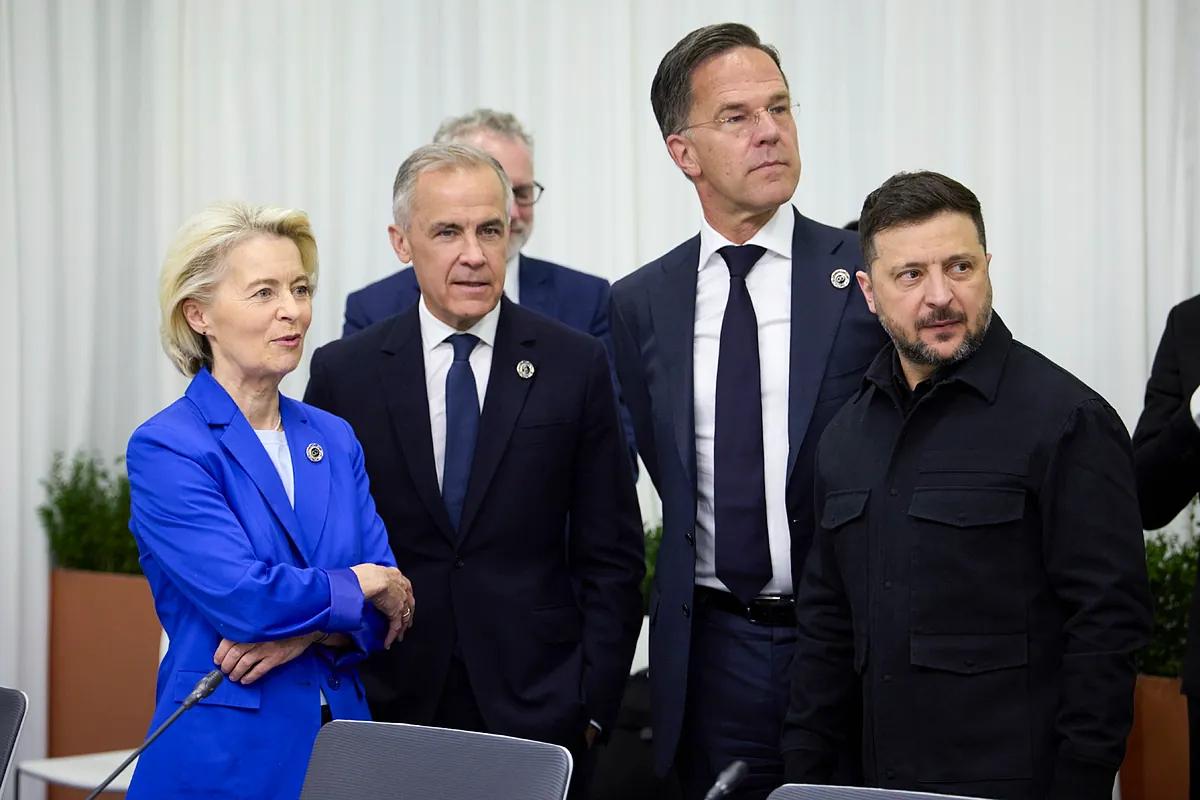
As Trump’s tariff threat and broader disputes with allies continued, Mark Carney appeared at a European Political Community summit in Armenia’s Yerevan, where he argued the world order could be rebuilt through Europe rather than submission to a “transactional and insular” approach.
The Australian Broadcasting Corporation reports that Carney said the international order could be “rebuilt out of Europe” as he joined other world leaders at the European Political Community (EPC) meeting in Yerevan.
The ABC account says the EPC gathering was held “en Armenia's Yerevan” and that it came “just days after Donald Trump pulled 5,000 troops out of Germany and slapped a 25 per cent tariff on cars from the EU.”
ABC also quotes Carney saying: “The world is undergoing a rupture across several dimensions, in technology, in energy, in commerce and in geopolitics,” and adding, “We don't think we're destined to submit to a more transactional and insular world.”
In the same ABC report, Carney described Canada as the “most European of non-European countries” and said he would “strive to deepen its relationship with Europe” on issues including the Ukraine war.
EUobserver similarly frames Carney’s Yerevan remarks, quoting him saying “We know nostalgia is not a strategy, but we don’t think that we’re destined to submit to a more transactional, insular, and brutal world,” and adding that “as the international order will be rebuilt, it will be rebuilt out of Europe.”
EUobserver also says Carney pledged to keep Canadian troops in Nato’s Russia-deterrent multinational battalion in Latvia and to work with Europe on “more secure supplies of energy, semiconductors, critical minerals, and vaccines,” as well as “digital sovereignty and on US-independent payment systems.”
NATO pressure and troop pullback
The Yerevan summit also served as a focal point for European reactions to the United States’ troop posture, with multiple outlets tying the discussion to Trump’s decision to pull thousands of troops out of Germany and to the question of NATO’s future role.
“The Pentagon announced last week it would pull some 5,000 troops out of Germany”
AP reports that European leaders on Monday said President Donald Trump’s decision to pull thousands of U.S. troops out of Germany was “just the latest signal that Europe must take more responsibility for its security,” and it says the Pentagon announced last week it would pull some 5,000 troops out of Germany.
AP adds that Trump told reporters on Saturday the U.S. plans on “cutting a lot further,” and it notes Trump offered no reason for the move, which “blindsided NATO.”
AP quotes Norwegian Prime Minister Jonas Gahr Støre saying, “I do not see those figures as dramatic, but I think they should be handled in a harmonious way inside the framework of NATO,” while British Prime Minister Keir Starmer said “there needs to be a stronger European element in NATO, I have no doubt about that.”
The AP report also includes statements from NATO Secretary-General Mark Rutte, who played down the significance of fewer U.S. troops while acknowledging U.S. “disappointment” about European support for the Iran war, and it quotes Rutte saying: “I would say the Europeans have heard a message.”
In the same AP account, Kaja Kallas is quoted saying the timing of Trump’s announcement came as a surprise, even though there has been “talk about withdrawal of U.S. troops for a long time from Europe,” and she adds, “I don’t see into the head of President Trump, so he has to explain it himself.”
El Correo similarly describes Rutte arguing that Europeans “have understood” the message from the United States after the announcement to withdraw 5,000 troops from Germany, and it says the announcement was among the most discussed issues at the EPC meeting in Yerevan.
Canada’s outreach to Brussels
Canada’s participation in the EPC summit is presented in multiple reports as a deliberate outreach to Europe amid clashes with the United States, including Trump’s demand that Canada become the 51st state.
ABC’s account says Canada will attend, for the first time, an EU meeting with its neighbors, and it reports that Prime Minister Carney will attend the European Political Community summit in Armenia as an invited guest.
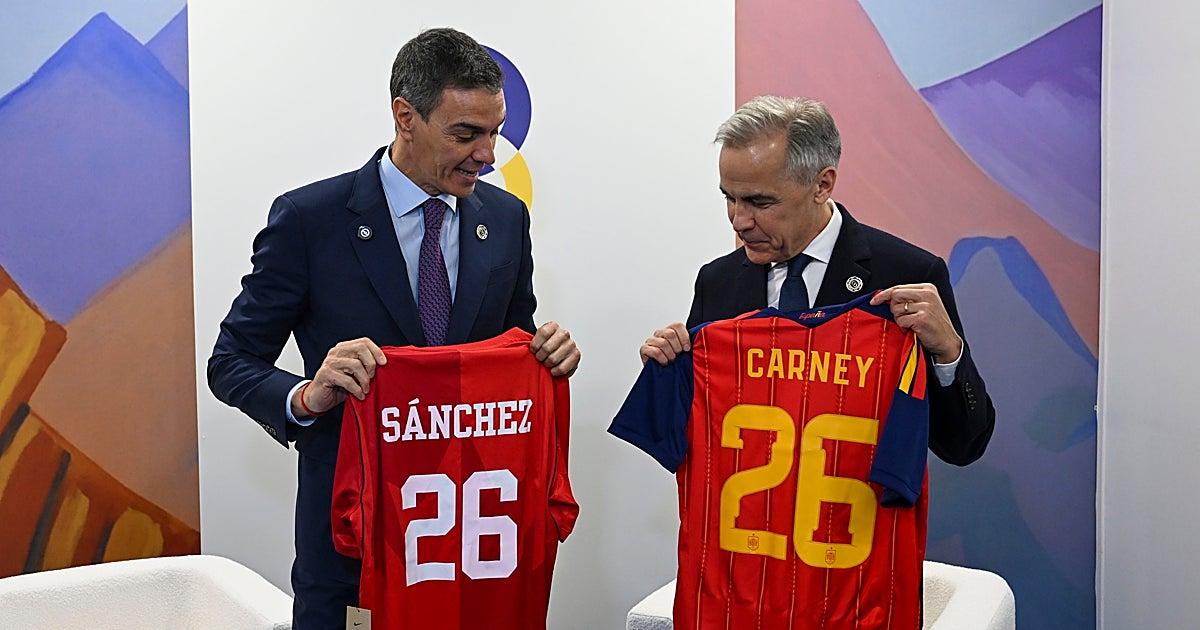
The ABC report states that “Canada is one of the countries with the most intense relationship with the EU from all points of view,” and it says Carney will be the first non-European leader to participate in an EPC meeting.
It also ties the decision to the “clash with the United States,” noting that Trump has “simply demanded that Canada become the 51st state of the United States.”
The Canadian government’s official statement, as quoted by ABC, says: “in a world more dangerous and divided, we focus on what we can control. We are strengthening our national position and diversifying our international alliances.”
ABC further says Carney has “strengthened and expanded Canada's relationship with Europe,” and it quotes him saying: “We have strengthened and expanded Canada's relationship with Europe to deepen cooperation in trade, technology, energy and security.”
The report also says that “Last year, we forged the ambitious New Strategic Partnership for the Future between the European Union (EU) and Canada, as well as the Security and Defense Alliance,” and that in February Canada became the first non-European country to join the EU's SAFE initiative.
Veterans, Afghanistan, and NATO
Beyond trade and summit diplomacy, Canadian reactions to Trump’s NATO remarks also surfaced through the testimony of a former Canadian veteran who said Trump’s comments about NATO partners in Afghanistan reflected a lack of respect for those who died in combat.
“Matthew Luloff was furious when he heard these comments.”
Radio-Canada reports that a former Canadian veteran, Matthew Luloff, was furious after hearing Trump’s Fox News remarks that NATO partners in Afghanistan were “minor,” that “we never needed them,” and that “we never really asked them for anything,” adding that they “stayed a little in the background, a bit off the front lines.”
Luloff, who was stationed at a combat outpost on the front lines of the war against the Taliban in Kandahar Province, said he was diagnosed with post-traumatic stress disorder and hearing loss in 2009 and that he left the Army then.
He told Radio-Canada: “Hearing President Trump describe the role we played as being somewhat back from the front lines is incredibly discouraging and shows a profound lack of respect toward my friends who were wounded and those who were killed.”
The report says Luloff spent eight months in Afghanistan in 2008 and recounted that “We were on the front lines and we often fought alongside our NATO partners.”
Radio-Canada also quotes Defense Minister David McGuinty saying Canadians will never forget the sacrifices made by their troops for the United States and NATO in Afghanistan, and it includes McGuinty’s reminder that “We joined the United States and other NATO allies on the very first day of operations in Afghanistan.”
The same Radio-Canada account provides casualty and deployment figures, stating that “From 2001 to 2014, more than 40,000 members of the Canadian Armed Forces served in Afghanistan” and that “158 Canadian soldiers were killed while supporting the United States.”