Crime · 21 April, 2026 · 6 min read
El Salvador Starts Mass Trial Of 486 Suspected MS-13 Members For 47,000 Crimes
Mass trial of 486 MS-13 suspects begins in El Salvador, covering 2012-2022 crimes. Group alleged to have committed over 47,000 crimes, including around 29,000 homicides.
Stage of proceedings (start of mass trial vs sentencing outcomes).
9 of 10 outlets skipped it: 454 deaths in prison were reported during the crackdown.
11outlets compared
Same story, two versions
tap a side to read it in full
BBC
“A mass trial of 486 suspected MS-13 gang members has begun in El Salvador, the country's attorney general's office has said.”Read the original ↗
Le Point
“Dozens of Mara Salvatrucha members, the MS-13, have thus been sentenced to cumulative terms reaching several centuries in prison.”Read the original ↗
Shows how outlets frame the case at different points in the judicial process (beginning of a mass trial vs outcomes/sentences), shaping perceptions of progress and severity.
Mass trial begins
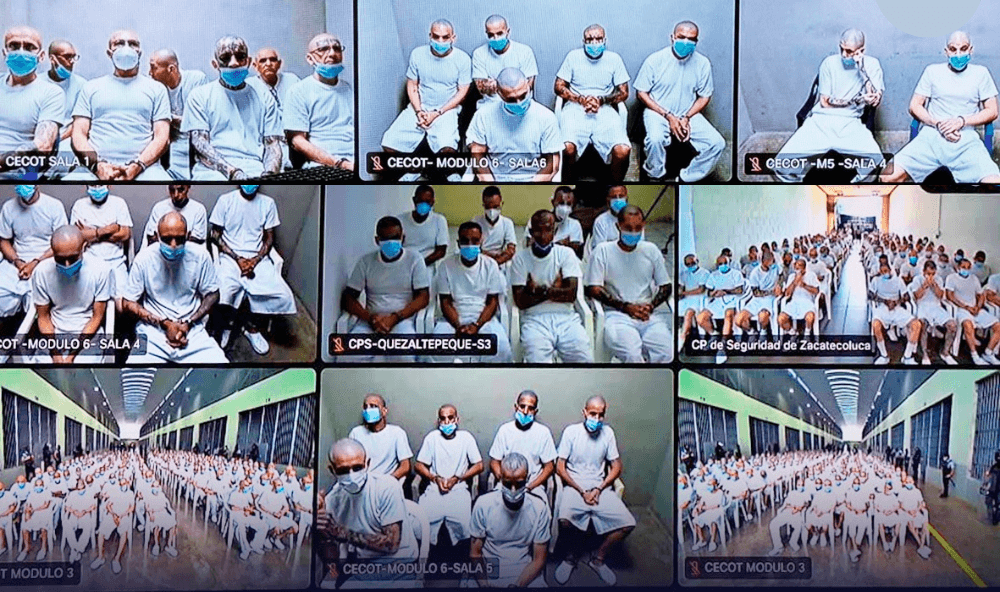
A mass trial of 486 suspected MS-13 gang members began in El Salvador, the country’s attorney general’s office said, with prosecutors collectively accusing the defendants of committing more than 47,000 crimes between 2012 and 2022. The BBC reported that the case involves a wave of gang violence in March 2022, when 87 people were killed in one weekend, and that President Nayib Bukele declared a “war on gangs” afterward. BCBS News said the trial opened on Monday with nearly 490 alleged MS-13 members, including several alleged leaders, facing accusations of thousands of murders.
The Attorney General’s Office said 486 suspected MS-13 members were on trial for 47,000 crimes, including 29,000 homicides, and the court system said the proceedings included “members of the national leadership, street-level leaders, program coordinators from across the country, and founders of” MS-13. The BBC also said the attorney general’s office did not provide details on the length of the trial, while it stated that 413 suspects were already in custody and arrest warrants had been issued for 73 others being prosecuted in absentia. BThe trial is taking place in the context of El Salvador’s anti-gang crackdown, including a controversial state of emergency that has been in place since March 2022.
What led to it
The mass trial is rooted in El Salvador’s shift toward sweeping anti-gang measures after the March 2022 killings, which prosecutors and officials link to MS-13’s alleged territorial control. The BBC said the March 2022 weekend violence killed 87 people and led Bukele to declare a “war on gangs,” while it also described a state of emergency that expanded powers to arrest those suspected of gang affiliation or support and suspended some constitutional rights. BCBS News similarly tied the crackdown to Bukele’s “war” declaration and said he imposed a state of emergency in 2022 that has been used to arrest more than 91,000 suspected gang members.
The BBC reported that since the emergency came into force, tens of thousands of suspected gang members have been arrested, and it noted that human rights groups argued it has led to arbitrary detentions. BThe charges in the trial also reflect that broader approach: the BBC said the attorney general’s office accused the defendants of “rebellion for attempting to maintain territorial control to establish a parallel state,” and CBS News said MS-13 is charged with rebellion “because they sought to ... establish a parallel state.” BThe BBC added that the attorney general’s office said it had “compelling” evidence that would allow “maximum penalties” to be imposed on those found guilty, even though it did not provide trial-length details.B
Voices and reactions
The trial has drawn sharply different reactions, with UN experts and rights groups criticizing the mass-prosecution model while prosecutors and supporters argue it is necessary to impose maximum penalties. The BBC said UN experts have criticised the use of mass trials, saying that they “undermine the exercise of the right to defence and the presumption of innocence of detainees,” and it also quoted the attorney general’s office saying it had “compelling” evidence that would allow “maximum penalties” to be imposed. BCBS News reported that prosecutors said, “We are going to put them on trial, and we are going to settle a historic debt,” and it described the judge’s opening statement that armed groups had disturbed “the peace of the Salvadoran population and the security of the state” for decades.
“"We are going to put them on trial, and we are going to settle a historic debt," prosecutors said.”
CBS News also said anonymous judges were handing down “one-size-fit-all punishments” to large groups of defendants after proceedings via video-link from prison, and it cited Human Rights Watch and Cristosal for criticizing the mass trials. The BBC similarly said supporters of Bukele’s hardline approach argue it has made El Salvador a safer place, while UN experts warned his government it “cannot trample on fair trial rights in the name of public safety.” BIn a separate Spanish-language report, Diario1 said the judge told the court that “cada una de las pruebas que desfilará, cada autopsia, peritaje balístico y testigo, son parte de la reconstrucción de los que no tuvieron voz y no pudieron defenderse,” and it added that the judge said the violence was ordered by a structure that “no tenía respeto por la ley” and “no le importaba lo sucedido” against the Salvadoran population.
How outlets frame it
While the core facts of the trial—486 defendants, 47,000 crimes, and the alleged March 2022 killings—appear across outlets, the framing differs in emphasis between legal scale, political context, and the mechanics of punishment. The BBC foregrounded the UN critique of mass trials and the attorney general’s claim of “compelling” evidence, stating that the trial is tied to a “war on gangs” declared by President Nayib Bukele and that a state of emergency has been in place since March 2022. BCBS News, by contrast, emphasized the mass-prosecution process itself, describing that many defendants have spent years in prison without charge or visiting rights and that anonymous judges handed down “one-size-fit-all punishments” after video-link proceedings from prison.
The Times described the trial as El Salvador’s largest criminal trial in its history and said it is the first mass prosecution targeting the “ranfla” — the highest echelon of the MS-13 hierarchy, while it also said a legal reform will soon allow life imprisonment without parole for convicted terrorists, murderers and rapists. The Australian Broadcasting Corporation similarly focused on the “one-size-fit-all” nature of the punishments and on the “Blanket convictions” described as anonymous judges handing down punishments following video-link proceedings. Diario1, writing in Spanish, emphasized the courtroom narrative by quoting the judge’s remarks about evidence and reconstruction for those who “no tuvieron voz y no pudieron defenderse,” and it described the judge’s view that violence was ordered by a structure that “no tenía respeto por la ley.”

Stakes and next steps
The stakes described by the sources extend beyond the opening of the trial, reaching into sentencing outcomes, detention policy, and the broader human-rights debate over the crackdown’s costs. CBS News said the fates of the detainees are being decided in mass trials, with anonymous judges handing down one-size-fit-all punishments to large groups of defendants following proceedings via video-link from prison, and it reported that rights groups have denounced gross human rights abuses including a lack of due process, reports of torture, and more than 500 deaths in prison. The Times added that prosecutors say they have overwhelming evidence and will seek the maximum permitted sentence, and it said the trial could last up to six months.
“The trial could last up to six months.”
Ouest-France reported that El Salvador’s Parliament extended the duration of pretrial detention for tens of thousands of presumed gang members, approving a reform of the Organized Crime law ten days before the expiration of the maximum two-year period to detain more than 88,000 people suspected of belonging to or aiding the 'maras,' with the extension at least until 2027. Le Point and 20 Minutes reported later sentencing outcomes tied to the same MS-13 prosecution framework, including a 1,335-year sentence and additional terms ranging from 463 to 958 years. LTogether, these accounts depict a system where detention rules, mass trials, and extremely long sentences converge, while rights groups continue to warn about due process and prison deaths.