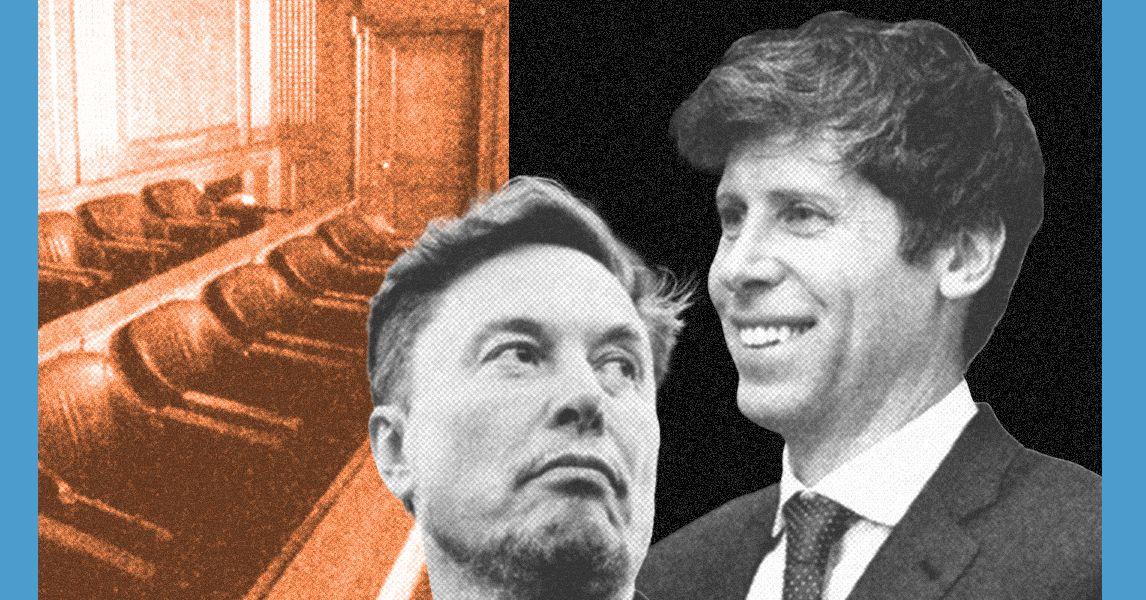
Elon Musk Testifies in Oakland Court Against OpenAI, Accuses Microsoft of Controlling AGI
Key Takeaways
- Musk sues OpenAI and Altman seeking Altman’s ouster over nonprofit misappropriation.
- Trial begins; nine-person jury seated in California federal court.
- Lawsuit alleges leaders looted the nonprofit mission OpenAI started.
Musk takes the stand
Elon Musk’s testimony in his lawsuit against OpenAI entered a tense, high-profile phase as he appeared in a US federal court in Oakland, California, before US District Judge Yvonne Gonzalez Rogers with guidance from a nine-person jury.
The Indian Express described day 2 of the trial as marked by “testy exchanges” during cross-examination, with Musk telling the court he was not opposed to a small for-profit subsidiary “as long as the tail didn’t wag the dog.”
“I could have started it as a for profit and I chose not to,” Musk said, according to The Indian Express, while also arguing that OpenAI’s leadership had not been honest with him.
NPR reported that Musk accused OpenAI’s leaders of “looting the nonprofit,” saying he was “a fool” for putting money into OpenAI after it started as a nonprofit but later created a for-profit arm.
The BBC framed the dispute as a toxic feud between Musk and Sam Altman that is now being decided in court, with Musk suing OpenAI, Altman, Greg Brockman, and Microsoft.
In the courtroom, Musk also described his view of AI’s trajectory, telling jurors that “AI could make us more prosperous, but it could also kill us all,” and comparing the goal to “a Gene Roddenberry movie, like Star Trek, not so much a James Cameron movie, like Terminator,” as reported by The Indian Express.
The Times of India added that Musk’s testimony included concerns about Microsoft’s role in controlling AGI, with Musk asking, “With all due respect to Microsoft, do you really want Microsoft controlling artificial general intelligence?”
Nonprofit mission vs profit
Across multiple reports, Musk’s central argument is that OpenAI abandoned its nonprofit mission and shifted toward a profit-driven structure, and his testimony tied that claim to specific moments in OpenAI’s history.
NPR said OpenAI was founded in 2015 as a nonprofit to develop AI for the benefit of humanity, and that Musk left its board in 2018 after a disagreement about how to structure and run the for-profit arm created to raise money and attract top talent.
The Indian Express reported that Musk sued OpenAI in 2024, accusing the company of abandoning its founding nonprofit mission “to develop artificial general intelligence (AGI) for the benefit of humanity,” and it described how Musk testified about his role in founding OpenAI and why he would not have contributed resources if the intent was to make a profit.
The Times of India described the dispute as centering on a 2020 deal with Microsoft that promised billions of dollars in investment and gave Microsoft exclusive rights to use OpenAI’s product, while Musk argued that Microsoft’s investments indicated it expected a potentially large return.
Newsweek added that Musk told a federal jury that he expected AI to become “smarter than any human” as soon as next year, and he warned that instilling values into AI systems before that point is critical.
In NPR’s account, Musk said establishing a company like OpenAI as a nonprofit gave it “the moral high ground,” and he argued that “But what you can't do is have your cake and eat it too,” reaping the “good association” with being a nonprofit and then switching to a for-profit model.
The BBC described Musk’s claim as that Altman “has swindled him out of millions of dollars and reneged on the ChatGPT-maker's original non-profit mission,” and it noted that Musk is seeking the ouster of Altman and Greg Brockman as part of his requested remedies.
Microsoft and the $10 billion
Musk’s testimony repeatedly returned to Microsoft’s financial backing and what he said it implied about control over AGI, with multiple outlets quoting his specific lines.
The Times of India reported that Musk said Microsoft’s investments indicated it expected a potentially large return and that he was concerned Microsoft could come to control the development of AGI, describing the moment when Musk asked, “With all due respect to Microsoft, do you really want Microsoft controlling artificial general intelligence?”
The same report quoted Musk saying, “Microsoft would only put $10 billion — which is a huge sum of money — into something if they feel like they will get a return,” and it added Musk’s view that “There's no way Microsoft is just giving that as a donation or any kind of charitable way.”
NPR similarly described Musk’s reaction to learning about “a later investment by Microsoft of $10 billion,” saying he was disturbed and felt the charitable trust had been violated because the size of OpenAI had grown beyond that of a charity.
In NPR’s account, Musk said he “texted Sam Altman and said 'What the hell is going on?' or something to that effect,” and it also quoted Musk’s framing of the Microsoft relationship as “This does seem like the opposite of 'open,'” in reference to the 2020 agreement.
The Indian Express described cross-examination that included text messages and emails showing Musk expressed openness to creating a for-profit entity and that Altman kept him apprised about Microsoft’s investments in OpenAI.
Beyond the courtroom narrative, The Times of India also described a revised partnership between OpenAI and Microsoft, stating that the revised partnership “ends Microsoft's exclusive license to OpenAI's technology” and that “Microsoft stays OpenAI's primary cloud partner,” with the license running through 2032 as non-exclusive.
Testy cross-examination and contradictions
Several outlets described the courtroom exchanges as combative and focused on contradictions between Musk’s public statements and his sworn testimony, especially regarding Tesla’s AI ambitions.
TechCrunch reported that Musk “can’t escape his own tweets,” saying he left having admitted, under oath, that Tesla is not currently pursuing artificial general intelligence (AGI), which it said directly contradicted a tweet he had posted just weeks earlier.
TechCrunch quoted Musk’s statement to the court: “We are not pursuing AGI right now,” after he said Tesla’s AI work was focused only on self-driving and not AGI.
The https source described Musk’s Wednesday testimony in a “San Francisco courtroom,” saying he accused OpenAI’s lead counsel of attempting to “trick” him into admitting he had abandoned his altruistic vision for AI in favor of commercial gain, and it quoted Musk’s retort: “It’s a cheap trick, and it ignores the fact that I was trying to prevent Google from having a total monopoly.”
The Indian Express also described “testy exchanges” with lawyers for OpenAI and Microsoft during cross-examination, and it quoted Musk telling Savitt, “Your questions are not simple. They’re designed to trick me essentially,” as reported on Wednesday.
The Indian Express further said jurors were shown an email Musk sent to Altman and Brockman in 2017 referring to himself as a “fool” for providing them funding for what he believed was a nonprofit venture.
In a separate thread, The https source said OpenAI’s lawyer, Justin Cassady, presented Slack messages from 2018 suggesting Musk was willing to merge OpenAI with Tesla to solve startup funding woes, and it quoted Musk responding to a question about whether his stance was “hypocritical” by saying, “You are trying to wrap a nuanced discussion about institutional survival into a neat little trap.”
What the trial could change
The sources also describe what is at stake if Musk’s claims succeed, and how the trial’s outcome could reshape OpenAI’s structure and its relationship with Microsoft.
Newsweek said the case could reshape OpenAI’s future, strain its ties with Microsoft, and influence how nonprofit AI research is allowed to transition into for-profit ventures, adding that “Structural reform” of OpenAI is “theoretically on the table” if Musk emerges victorious.
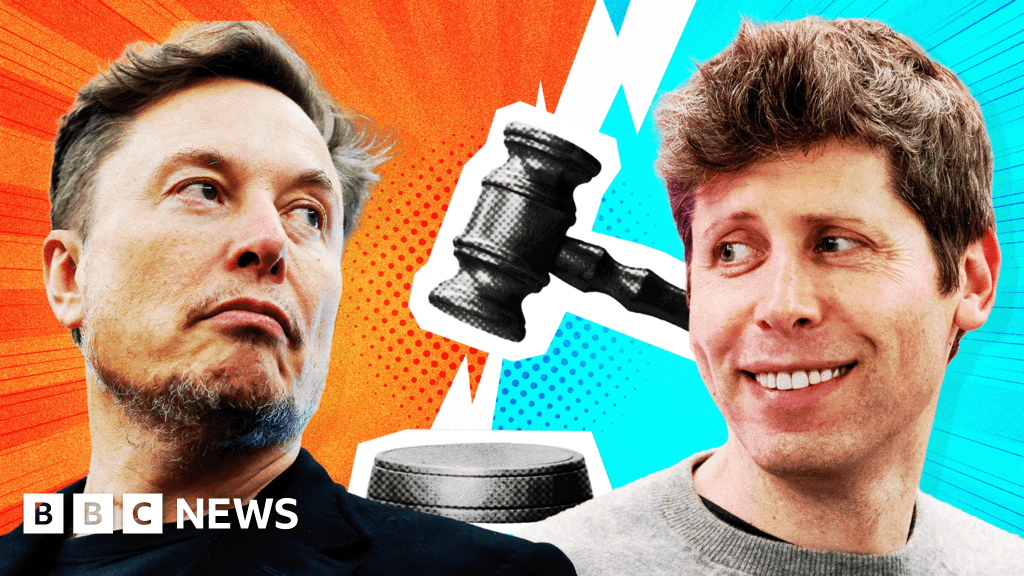
It quoted Professor Julia Powles of the UCLA Institute for Technology Law and Policy saying the reform could include leadership changes, a shift in its for-profit vs non-profit structure, or even a breakup of the company.
NPR reported that Musk is seeking the ouster of Altman and OpenAI president Greg Brockman and the rollback of the for-profit structure, describing those moves as potentially “radically” altering the competitive landscape for artificial intelligence.
The BBC said Musk is asking for billions of dollars in what his lawyers call “wrongful gains” and wants to see a shake-up at the company including the ousting of Altman, while OpenAI says Musk is motivated by jealousy and regret.
The Times of India added that Musk is seeking up to $140 billion in punitive damages from both OpenAI and Microsoft, and it described the revised partnership between OpenAI and Microsoft that ends Microsoft’s exclusive license to OpenAI’s technology.
Meanwhile, WION described the case as one that could influence how future AI companies are structured and regulated, framing the debate as whether organizations developing advanced AI should “Remain focused on public benefit” or “adopt commercial models to scale faster.”
More on Technology and Science
Mark Zuckerberg Says Meta Reels Hit $50 Billion Annual Revenue as Reality Labs Loses $6 Billion
13 sources compared
Satya Nadella Says Microsoft 365 Copilot Reaches 20 Million Paid Enterprise Seats
10 sources compared
Meta Launches USDC Stablecoin Payouts for Creators in Colombia and the Philippines via Stripe
12 sources compared

U.S. Supreme Court Hears Bayer Appeal Over Roundup Cancer Lawsuits Filed by John Durnell
14 sources compared