F1 Q&A: Can McLaren compete or will they just be best of the rest?
Key Takeaways
- Mercedes achieved a one-two finish at the Australian Grand Prix
- George Russell won from pole position, with Kimi Antonelli second
- Engines now have a near 50-50 split between internal combustion and electric
Australian Grand Prix recap
Mercedes secured a one-two at the Australian Grand Prix, with George Russell taking victory from pole ahead of team-mate Kimi Antonelli and the Ferrari of Charles Leclerc third, in the first race since the sport's biggest rule change that gives engines a near 50-50 split between internal combustion and electrical power.
“- Published Mercedes secured a one-two at the Australian Grand Prix to usher in the new era of Formula 1”
World champion Lando Norris, who finished fifth, called racing in 2026 "chaos" and warned a "big accident" could happen as drivers adapt to the new cars.
BBC F1 correspondent Andrew Benson filed this Q&A after the season opener in Melbourne.
McLaren's Australia performance
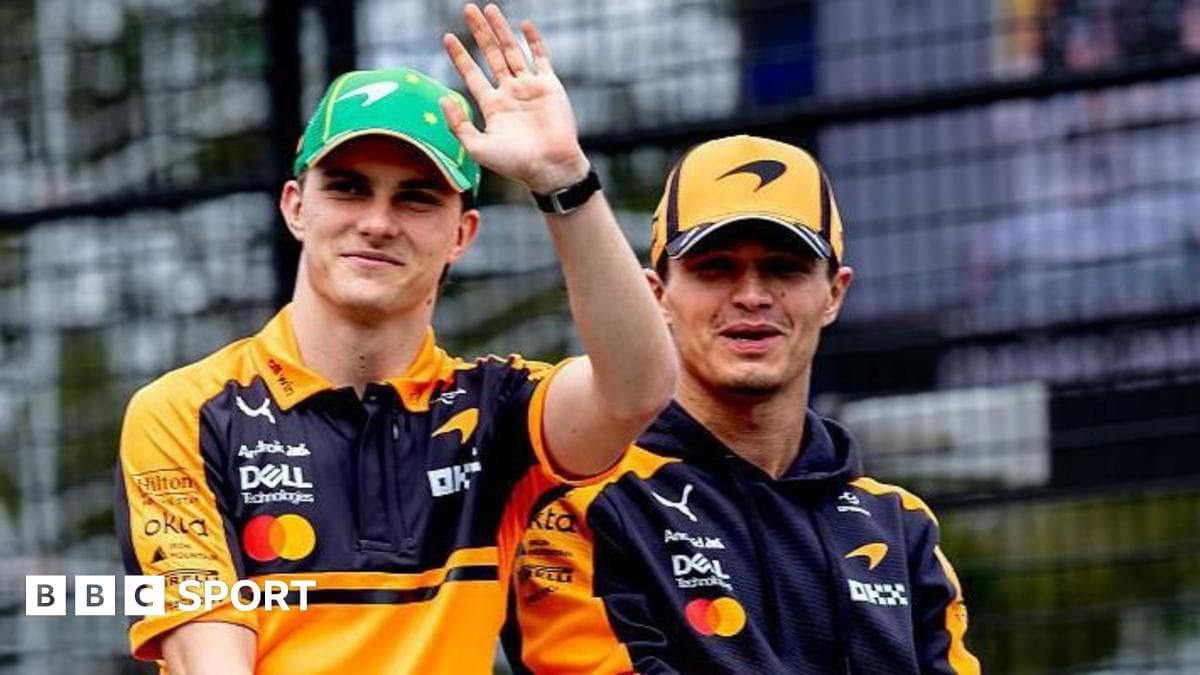
McLaren — world champions for the past two years — showed a sobering performance in Australia.
Their fastest car qualified more than 0.8 seconds slower than Russell's pole time, and Norris finished the race 51 seconds behind Russell.
Team principal Andrea Stella said GPS overlays showed Mercedes was faster in some corners and attributed the vast majority of the gap to usage of the power unit and the energy recovery system.
She argued the works team has more knowledge of how to exploit the engine.
In Melbourne, Mercedes were able to deploy significantly more energy on the long run from Turn Six to Turn Nine, where McLaren lost much of its lap time.
Stella expressed frustration at the information McLaren had received from Mercedes and engine company HPP, saying McLaren had been reacting to limited data rather than simulating and programming in advance.
McLaren acknowledged their car is believed to be a little overweight and that aerodynamic upgrades are in the pipeline.
Benson notes the key questions are how long it will take McLaren to learn to exploit the engine and whether Mercedes' early knowledge will keep delivering an advantage as car systems continue to learn.
Aston Martin Honda issues
Benson reports the Aston Martin-Honda partnership has 'got off to a terrible start'.
“- Published Mercedes secured a one-two at the Australian Grand Prix to usher in the new era of Formula 1”
Team principal Adrian Newey said the chassis was probably only a top-10 car and the new in-house gearbox is too heavy.
He added that the Honda engine is significantly down on power, with vibrations causing 'shocking' reliability problems.
Team owner Lawrence Stroll appeared close to tears during the final pre-season test in Bahrain.
Fernando Alonso said he had '100% faith that Honda will fix the problems' but warned the time required may not match his career timeline.
Stroll has considered dropping Honda but Benson reports that would be a bad look for F1 and for Honda, so for now the focus is on helping Honda improve.
Benson outlines the regulatory background: the removal of the MGU-H and a nominal 50-50 electric/ICE split were designed to attract manufacturers like Audi, Ford and General Motors and to keep Honda in the sport.
He said the changes left cars energy-starved, a proposed front-axle recovery was rejected, and a series of rule 'band-aids' were applied.
Benson says those rules will be in place until at least 2030 and suggests the next regulations could shift back toward a stronger internal combustion element with sustainable fuels.
He also noted debate over noise and the sport's purity.
Bahrain and Saudi GP status
Benson also reports that the US-Israeli war with Iran has put the Bahrain and Saudi Arabian Grands Prix in April in serious doubt.
F1 can take some time to decide but will likely need to commit not long after the Chinese Grand Prix.
Senior insiders tell Benson that if the Middle East races are cancelled they will not be replaced and the calendar will simply have a gap.
Rescheduling would be difficult because the northern hemisphere summer is too hot in Bahrain and Saudi Arabia and the calendar is already congested, and teams would not welcome attempts to shoe-horn races in later in the year.
Benson adds that if there is a gap there would be no on-track testing allowed, and teams would continue to work on improving their cars away from the track.
More on Sports

Mercedes Lock Front Row as Russell Takes Sprint Pole in Shanghai
21 sources compared

President Donald Trump Warns Iran Soccer Team Not to Attend World Cup Over Safety Concerns
10 sources compared

Indian-Owned Sunrisers Leeds Sign Pakistan Spinner Abrar Ahmed, Breaking IPL-Linked Teams' Boycott
10 sources compared
Miami Heat's Bam Adebayo Scores 83, Surpasses Kobe as NBA's Second Highest Single-Game Scorer
16 sources compared