
Hurricane Ian Braces Florida As Hurricane Fiona Devastates Puerto Rico, Floating Infrastructure Pitches Emerge
Key Takeaways
- Hurricane Fiona devastates Puerto Rico with winds >160 km/h, heavy rain, and blackouts.
- Florida braces for Hurricane Ian amid Fiona's devastation in Puerto Rico.
- Floating infrastructure proposals aim to protect coastlines from flood damage.
Floating Infrastructure Pitch
As Hurricane Ian and Hurricane Fiona intensified the pressure on coastal and island communities, a new technology-and-science pitch has emerged around floating infrastructure, with two approaches repeatedly described: retrofitting homes to be amphibious and building floating city blocks.
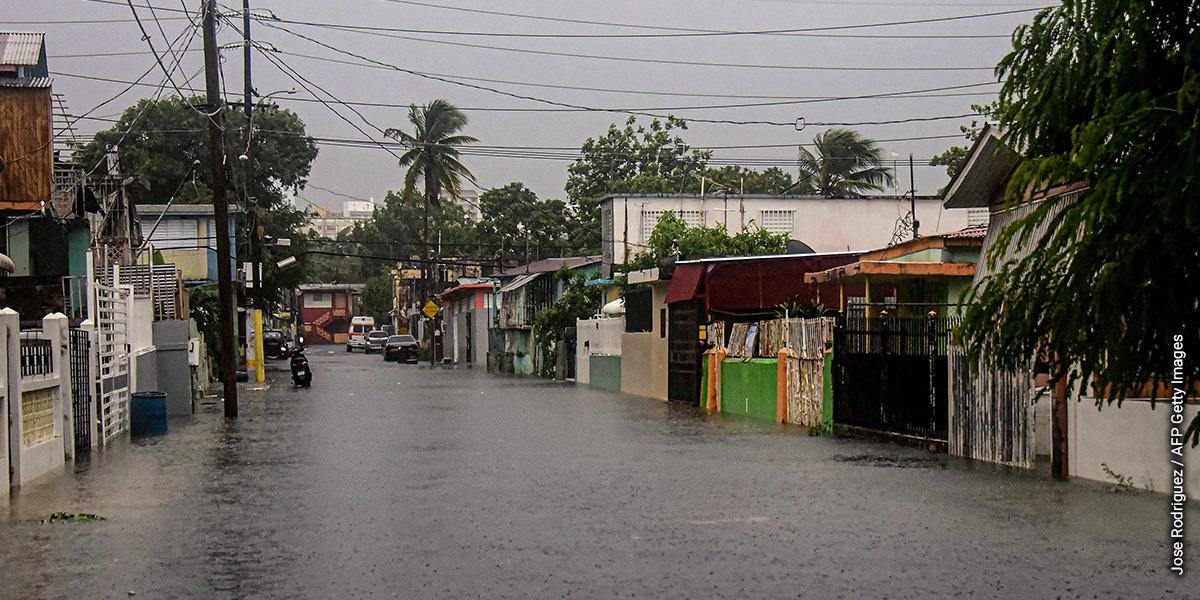
“On September 18, 2022, Hurricane Fiona struck Puerto Rico and the neighboring islands”
NBC4 Washington and NBC Bay Area both frame the problem in immediate terms, saying Florida is bracing for Hurricane Ian and that Hurricane Fiona has devastated Puerto Rico, flooding the island and leaving hundreds of thousands without access to electricity or running water.
They also connect the urgency to flooding in Pakistan, stating that flooding in Pakistan has taken over 1,600 lives.
The reporting then turns to the idea that “a new industry of floating infrastructure is emerging,” positioning amphibious homes and floating city blocks as possible solutions.
In the amphibious-home approach, Elizabeth English, founder and director of The Buoyant Foundation Project and professor of architecture at the University of Waterloo in Canada, describes a design that places a steel frame beneath a house and adds buoyancy elements in the crawl space.
English’s team recommends adding elements to prevent lateral movement so the home will not float away while on the surface of floodwaters, and the reporting says her design works best in shotgun-style homes without basements.
The second approach, floating city blocks, is described through Oceanix, a concept tied to architect Bjarke Ingels and a prototype being developed under the watchful eye of the United Nations Human Settlements Programme.
How Amphibious Homes Work
The amphibious-home concept described by NBC4 Washington and NBC Bay Area is built around structural changes that are meant to keep the rest of a house intact while allowing it to float during flooding.
Elizabeth English’s design, as described in both reports, places a steel frame beneath a house and then places buoyancy elements in the crawl space.

The approach also includes recommendations to add elements to prevent lateral movement so the home will not float away while on the surface of floodwaters.
The reporting says the design works best in shotgun-style homes without basements, and it emphasizes that “all modifications are made below the first floor, the rest of the house can remain unchanged.”
English’s estimate for implementation is also specific: she estimated that a contractor could do such a retrofit for about $20 to $30 per square foot.
Even with that cost estimate, the reports stress that the Federal Emergency Management Agency currently discourages this type of building practice.
English also cautions about the economics, saying, “retrofits in general are not a good way to make money because each one is individual and has to be custom designed. And so that's very expensive.”
Still, she frames the goal as cultural and community preservation, saying she hopes her design could help preserve culture and give communities one option to help as they decide how they want to adapt to rising sea levels.
Oceanix City Block Design
Alongside amphibious houses, NBC4 Washington and NBC Bay Area describe floating city blocks through Oceanix, which they connect to architect Bjarke Ingels and a planned build near Busan, South Korea.
“Artist rendering courtesy Oceanix, BIG-Bjarke Ingels Group”
NBC4 Washington says modern floating cities are the brainchild of architect Bjarke Ingels and quotes him telling CNBC he hopes his Oceanix City, “which is currently slated to be built in the harbor near Busan, South Korea,” will be “a city that is the most resilient city you can imagine, but at the same time, the most enjoyable city that you can imagine.”
The reporting then shifts to Oceanix CEO Philipp Hofmann, who tells CNBC that “The floating city will consist of multiple islands, so to say. But one island is 1.6 hectares, which is about four acres, and fits around 3,000 people.”
The prototype is described as being developed under the watchful eye of the United Nations Human Settlements Programme, and it is said to consist of three “islands” that are self-contained city blocks at first.
Those blocks are specified as one for hospitality, one for research and one for living.
Each platform is described with a cost range: “Each platform costs about $150 million to $200 million, according to Oceanix.”
Maimunah Mohd Sharif, executive director of the United Nations Human Settlements Programme, is quoted telling CNBC, “We really hope that it will be a successful project and we would like to replicate it in other parts of the world.”
She also says, “I'm not scared of failure. But I think we learn from that. So let's do it,” tying the project’s scientific and engineering risk to a learning posture.
Hurricane Fiona’s Damage Ledger
While the NBC reports focus on engineering solutions, JW.ORG provides a separate, event-specific account of Hurricane Fiona’s impact on Puerto Rico and neighboring islands, with detailed counts of damage and injuries among Jehovah’s Witnesses.
It states that on September 18, 2022, Hurricane Fiona struck Puerto Rico and the neighboring islands, and it gives meteorological figures: winds exceeded 160 kilometers per hour and about 75 centimeters of rain fell.
The account says the storm damaged roads and bridges and cut electricity to thousands of people, and it adds that infrastructure damage made it difficult for authorities to provide food, water, and medicines.
It then lists outcomes for different locations, beginning with Puerto Rico, Saint Kitts and Nevis, and Turks and Caicos Islands, where it says “No one among our brothers and sisters died.”
For that group, it reports “4 publishers were lightly injured,” “75 publishers had to leave their homes,” “140 homes were slightly damaged,” “18 homes were severely damaged,” and “1 house was completely destroyed.”
It also reports for the Dominican Republic that “No one among our brothers and sisters died,” while “58 publishers had to leave their homes,” “57 homes were slightly damaged,” “26 homes were severely damaged,” and “2 houses were completely destroyed.”
For Guadeloupe and Martinique, it again says “No one among our brothers and sisters died,” and it reports “16 publishers had to leave their homes,” “43 homes were slightly damaged,” “2 houses were severely damaged,” “13 Kingdom Halls were slightly damaged,” and “2 Kingdom Halls were severely damaged.”
The account closes by describing relief efforts, saying “Circuit overseers and local elders conduct pastoral visits to affected families and provide them with practical assistance,” and it notes that relief work is being carried out in accordance with COVID-19 safety guidelines.
Stakes: Adaptation, Costs, and Learning
Across the sources, the stakes of the technology-and-science proposals are framed through both the scale of disruption and the practical constraints of implementation.
“Florida is bracing for Hurricane Ian”
NBC4 Washington and NBC Bay Area connect the need for adaptation to disasters by saying Hurricane Fiona flooded Puerto Rico and left hundreds of thousands without access to electricity or running water, while also noting that flooding in Pakistan has taken over 1,600 lives.
The amphibious-home reporting emphasizes that the Federal Emergency Management Agency currently discourages this type of building practice, and it pairs that regulatory caution with English’s warning that “retrofits in general are not a good way to make money because each one is individual and has to be custom designed. And so that's very expensive.”
In the floating-city concept, the reports put a price tag on the platforms, saying “Each platform costs about $150 million to $200 million, according to Oceanix,” and they describe the project’s governance through the United Nations Human Settlements Programme.
Maimunah Mohd Sharif tells CNBC, “We really hope that it will be a successful project and we would like to replicate it in other parts of the world,” while also saying, “I'm not scared of failure. But I think we learn from that. So let's do it,” which directly links the engineering risk to a stated learning approach.
The NBC reports also quote Bjarke Ingels describing Oceanix City as both “the most resilient city you can imagine” and “the most enjoyable city that you can imagine,” suggesting that the design goal is not only survival but livability.
JW.ORG, meanwhile, grounds the consequences of extreme weather in specific infrastructure failures, stating that Hurricane Fiona damaged roads and bridges and cut electricity to thousands of people and that the damage made it difficult for authorities to provide food, water, and medicines.
It then describes relief work through “Circuit overseers and local elders” and says arrangements are being made to secure humanitarian aid and repair homes, all “in accordance with COVID-19 safety guidelines,” underscoring that adaptation is not only about structures but also about response capacity.
More on Technology and Science

Google Grants U.S. Department of Defense Unrestricted Access to Its Classified AI After Anthropic Refusal
13 sources compared

Institute of Cancer Research And Imperial College London Find Obesity Clue Behind Rising 11 Cancers In England
15 sources compared

Lovable Launches Vibe-Coding Mobile App on iOS and Android, Extending Its No-Code AI Builder
12 sources compared

Apple Introduces Monthly App Store Subscriptions With 12-Month Commitment
10 sources compared