
Foreign Office Overruled Security Vetting, Forcing Sir Olly Robbins Out Over Peter Mandelson Appointment
Key Takeaways
- Mandelson failed security vetting in January 2025; FO overruled, appointed him US ambassador.
- Sir Olly Robbins was forced out over Mandelson vetting overruling.
- Starmer said he was unaware of the vetting failure and overruling; faced resign calls.
Failed vetting overruled
A Guardian investigation revealed that the Foreign Office overruled a decision to deny Peter Mandelson security vetting clearance, forcing the departure of Sir Olly Robbins, the top civil servant in the Foreign Office.
“Skip to navigationSkip to contentSkip to footerHelp using this website - Accessibility statement Today's Paper Advertisement World Europe Epstein fallout Print article”
The Guardian said Mandelson had in January 2025 failed a “developed vetting process,” a “highly confidential background check by security officials.”
It reported that Keir Starmer had by then announced he would be making Mandelson the UK’s chief diplomat in Washington, creating “a dilemma for officials at the Foreign Office.”
The Guardian added that the Foreign Office used “a rarely used authority to override the recommendation from security officials.”
In a statement released on Thursday evening, the Downing Street spokesperson said, “The decision to grant developed vetting to Peter Mandelson against the recommendation of UK Security Vetting [UKSV] was taken by officials in the FCDO.”
The Guardian further reported that “Neither the prime minister, nor any government minister, was aware that Peter Mandelson was granted developed vetting against the advice of UK Security Vetting until earlier this week.”
It also said Starmer instructed officials “to establish the facts about why the developed vetting was granted, in order to enact plans to update the House of Commons.”
The BBC described the same controversy as Starmer facing calls to resign after it emerged that “vetting officers recommended against Lord Mandelson’s being appointed as US ambassador, but that recommendation was overruled by the Foreign Office.”
Starmer’s response and resign pressure
As the scandal reignited, Starmer insisted he was not told about Mandelson’s failed security vetting and faced mounting pressure to resign.
The BBC quoted Starmer saying: “That I wasn't told that Peter Mandelson had failed security vetting when he was appointed is staggering.”
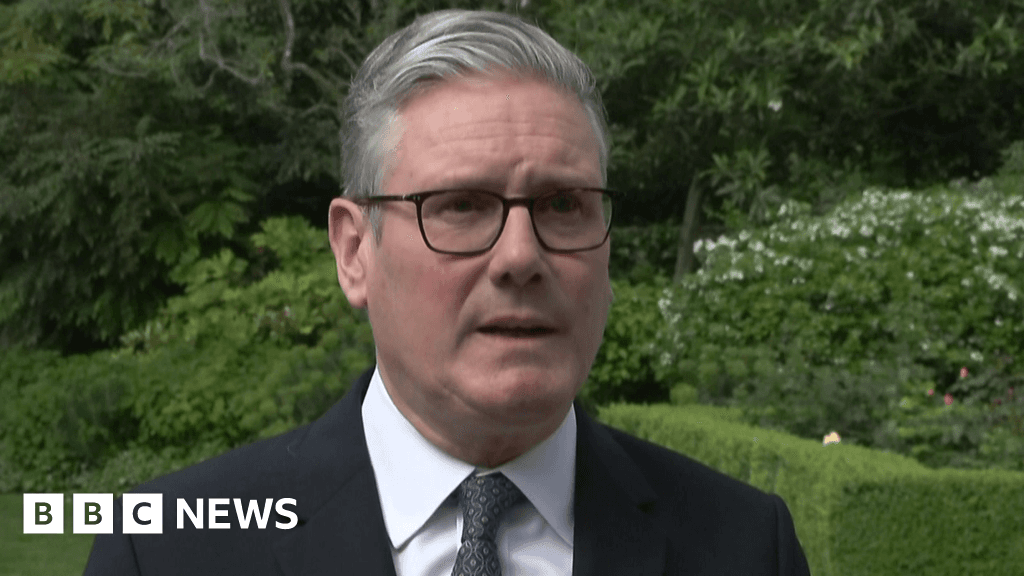
It added that he called it “unforgivable” that he was not told when he was “telling Parliament that due process had been followed,” and said, “Not only was I not told, no minister was told, and I'm absolutely furious about that.”
Starmer told journalists in Paris on Friday that “What I intend to do is to go to Parliament on Monday to set out all the relevant facts in true transparency, so Parliament has the full picture.”
The BBC also reported that Tory leader Kemi Badenoch said Starmer “cannot hope” to continue leading the country due to “incompetence,” accusing him of being “so blinded by his own righteousness that he cannot see what everybody else can see.”
It quoted Badenoch saying she was “considering every parliamentary option” and that “All roads lead to a resignation.”
The Guardian reported that Downing Street spent much of Thursday “battling demands for the prime minister himself to resign,” and said No 10 insisted “the prime minister had no knowledge that security officials advised Mandelson should not be given clearance.”
The South China Morning Post described the political pressure as “mounting pressure to quit,” saying the government blamed “foreign ministry officials” and that neither Starmer nor his foreign minister were told “until this week.”
Who knew and who overruled
Multiple outlets described the chain of knowledge and the decision-making authority as the central dispute.
“'Staggering' I was not told Mandelson failed vetting, says PM Sir Keir Starmer has said it's "staggering" that he, as prime minister, was not told about Lord Peter Mandelson failing to pass initial security vetting checks”
The Guardian said the foreign secretary at the time was David Lammy, and that Starmer’s then chief of staff, Morgan McSweeney, resigned in February over his role in appointing Mandelson, which could lead to questions about whether he had knowledge of the overrule decision.
It reported that “Friends of McSweeney told the Guardian that he had no knowledge of Mandelson’s developed vetting process or the outcome.”
The Guardian also said it was “not known who in the Foreign Office made the decision to overrule UKSV's denial of clearance.”
The BBC reported that Darren Jones told BBC Radio 4’s Today programme there was “no obligation in the rules for ministers to be told about security vetting decisions when Lord Mandelson was appointed,” and that he said he had “now changed” that approach.
The BBC further stated that the United Kingdom Security Vetting service gave the Foreign Office an explicit recommendation not to approve Lord Mandelson’s vetting, and that sources said the recommendation given to the Foreign Office was a “no.”
The Globe and Mail quoted the government statement saying, “Neither the Prime Minister, nor any government minister, was aware that Peter Mandelson was granted developed vetting against the advice of U.K. Security Vetting until earlier this week.”
It also said the statement added, “Once the Prime Minister was informed, he immediately instructed officials to establish the facts about why the developed vetting was granted.”
Parliament, documents, and ethics
The dispute quickly moved from vetting decisions to parliamentary transparency and potential ethics scrutiny.
The Guardian said further documents were due to be released and that senior government officials were considering whether to withhold from parliament documents that would reveal Mandelson was not given vetting approval from security officials.

It warned that any attempt to withhold documents from the intelligence and security committee could amount to “a breach of a parliamentary motion to release “all papers relating to Mandelson’s appointment”.”
The Guardian also quoted the Downing Street spokesperson saying the government was “committed to complying” with the parliamentary motion, called a humble address, and that “Any documentation within the scope of the humble address that requires redaction on the basis of national security or international relations will be provided to the ISC.”
The BBC reported that Liberal Democrat leader Sir Ed Davey called for an investigation by the Privileges Committee into whether Starmer intentionally misled Parliament.
It said Lib Dem Cabinet Office spokesperson Lisa Smart had written Sir Keir’s ethics adviser Sir Laurie Magnus to urge him to investigate.
The BBC also reported that Foreign Affairs select committee chair Dame Emily Thornberry had invited Sir Olly to give evidence on Tuesday next week.
The Globe and Mail said Starmer was scheduled to offer another statement in the House of Commons on Monday, while opposition MPs demanded he resign for misleading Parliament.
Political stakes and fallout
The scandal’s stakes were framed as immediate political peril for Starmer, with multiple outlets linking the vetting controversy to earlier Epstein-related fallout.
“UK Prime Minister Keir Starmer meets with students during a visit to the Walbottle Academy on Feb”
The BBC said Starmer was facing calls to resign over the revelation that vetting officers recommended against Mandelson’s appointment but that the recommendation was overruled, and it noted that Mandelson “was sacked seven months later over his ties to the late convicted sex offender Jeffrey Epstein.”

The Los Angeles Times reported that Starmer rejected calls to resign, saying he was “absolutely furious” and would “set out all the relevant facts in true transparency” to Parliament on Monday, while describing the situation as “unlikely to end the danger to the prime minister.”
It said the top Foreign Office civil servant, Olly Robbins, “took the fall for the decision and resigned.”
The Guardian reported that Mandelson’s failure to secure vetting approval would raise further questions about Starmer’s judgment in appointing him, and it noted that Mandelson was “sacked over his relationship with the convicted sex offender Jeffrey Epstein.”
The Irish Times said Starmer called it “unforgivable” that he was not told about Mandelson’s failed security vetting, and it quoted him saying, “That I wasn’t told that Peter Mandelson had failed security vetting when I was telling parliament that due process had been followed is unforgivable.”
The Globe and Mail reported that Starmer had already faced a barrage of questions and that he had repeatedly apologized, while it described how he blamed Mandelson for not providing full details about his association with Epstein.
The Hanford Sentinel reported that the disclosure was likely to trigger renewed speculation within the Labour Party about Starmer’s leadership and said Starmer in September repeatedly told the House of Commons that “full due process” was followed.
More on Britain

Starmer Faces Calls To Quit After Mandelson Fails Security Vetting For U.S. Ambassador Role
11 sources compared

Keir Starmer Forces Foreign Office Chief Out Over Lord Peter Mandelson Security Vetting Failure
14 sources compared

Police Hunt Two Suspects After Antisemitic Arson Attempt at London Synagogue
12 sources compared

Home Office Investigates BBC Reported False Asylum Claims About Being Gay Or Domestic Abuse
23 sources compared