
G7 Energy Ministers Expected to Discuss Oil Release After Iran War Closes Strait of Hormuz
Key Takeaways
- G7 ministers expected to discuss a potential emergency crude stockpile release
- Speculation about a coordinated stockpile release tempered recent oil price spikes
- Oil prices swung dramatically, briefly exceeding $115 per barrel and falling below $100
G7 crude reserve talks
G7 energy ministers are set to meet virtually to discuss a possible coordinated release of crude reserves after the Strait of Hormuz was closed by the Iran war, which triggered a dramatic, short-lived spike in oil prices before a partial retreat.
“As the oil price spiralled to $115 (£86) a barrel at one point early this morning, word emerged of an emergency meeting of the G7 finance ministers”
CNBC reports the market reaction with West Texas Intermediate trading around $93.61 and Brent near $98.60 after earlier highs above $119, and explicitly states that 'G7 energy ministers are set to meet virtually Tuesday to discuss a possible coordinated release of crude reserves to ease the disruption.'
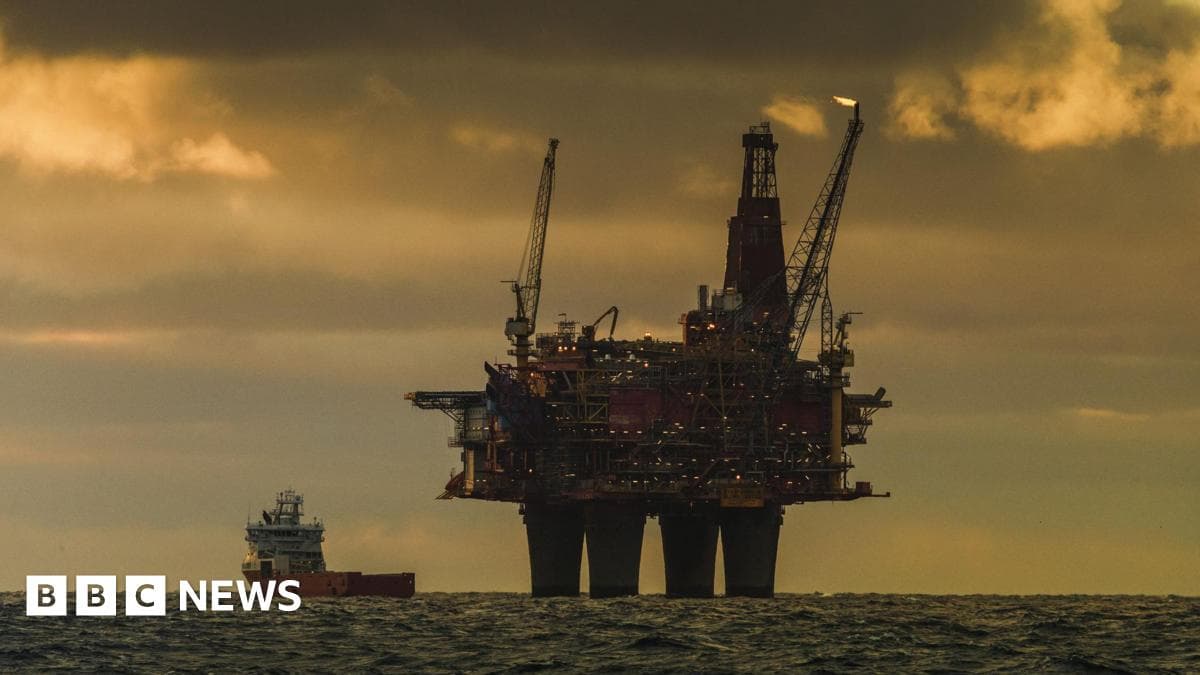
The BBC likewise notes the spike, saying oil briefly jumped to about $115 a barrel, and links the market moves directly to discussions of releasing emergency stocks, reporting that the IEA and G7 ministers were being reported to consider a coordinated release.
The two sources differ on the peak price cited, with CNBC reporting earlier highs above $119 and the BBC reporting a brief jump to about $115.
Limits of oil releases
Officials and market analysts have framed a coordinated release as a potential blunt instrument to calm prices, but the scale and effectiveness of any release are limited.
The BBC explains that a reported 300 million-barrel release would be "more than double the April 2022 intervention" and would still represent "less than three days of global consumption (about 104m b/d)."
CNBC flags that analysts such as Rystad Energy warn Brent could reach $135 if the Strait closure endures for months, underscoring how reserve releases may only partially offset a sustained supply shock.
Gulf oil supply disruption
The physical disruption to supply in the Gulf is severe: Gulf producers have either shut in or curtailed output, tankers are refusing transits, and producers have declared force majeure in some cases.
“As the oil price spiralled to $115 (£86) a barrel at one point early this morning, word emerged of an emergency meeting of the G7 finance ministers”
CNBC reports the Strait of Hormuz "remains closed, forcing Gulf producers to cut output and fill storage, and prompting tanker refusals to transit," describing the disruption as affecting "roughly 20% of world oil exports."
The BBC similarly highlights that Gulf output is being "shut in or curtailed, with several producers declaring force majeure," linking those actions directly to the price surge and to the IEA/ G7 stock release discussions.
Oil market precautionary actions
Market participants and governments are already taking precautionary actions beyond stock releases, including national production adjustments and potential storage fills.
CNBC notes that Kuwait and other Gulf states have made precautionary production cuts, that some producers are filling storage, and that Iraq has seen a dramatic production decline while the UAE has imposed curbs.
The BBC frames the 300m‑barrel idea as an extraordinary step—more than double previous coordinated releases—and implies that governments view the disruption as severe enough to consider unprecedented interventions while also recognizing their limits.
Geopolitical market risks
Political signals and uncertainty complicate the outlook for both markets and any coordinated response.
“As the oil price spiralled to $115 (£86) a barrel at one point early this morning, word emerged of an emergency meeting of the G7 finance ministers”
CNBC records that U.S. President Donald Trump described higher short-term oil prices as "an acceptable cost" on social media.
Iran warned tankers to be "very careful".
Iran appointed Mojtaba Khamenei as its new supreme leader.
These details underscore heightened geopolitical risk.
The BBC cautions that any coordinated release "might not be agreed by all G7 ministers".
The BBC says that political divisions could limit the efficacy of a collective intervention and prolong market volatility.