USA10 March, 20263 min read
Georgians Test President Donald Trump's Grip by Voting to Replace Marjorie Taylor Greene
Voters in northwest Georgia's 14th District held a special election to fill Greene's seat President Trump's endorsement of Clay Fuller is being tested in the crowded Republican field
Election framed as Trump test
Georgia’s special election to replace Marjorie Taylor Greene on March 10 has been framed across outlets as a high-stakes test of President Donald Trump’s influence in the Republican Party, with his endorsement of district attorney Clay Fuller central to the narrative. CNN described the contest as “a fresh test Tuesday with a free-for-all special election in northwest Georgia to replace Marjorie Taylor Greene,” while NPR framed it explicitly as a test of the power of his backing: “Georgia special election to replace MTG tests the power of Trump's endorsement.” The Associated Press likewise noted Fuller as “a district attorney endorsed by Trump,” and Devdiscourse summed up the situation as “Georgia's 14th Congressional District faces a critical special election to replace Marjorie Taylor Greene.”
“President Donald Trump’s sway over the Republican Party faces a fresh test Tuesday with a free-for-all special election in northwest Georgia to replace Marjorie Taylor Greene, the Trump ally-turned-critic who vacated her seat in Congress in January.”
Crowded field, likely runoff
The contest is unusually crowded and conducted as an all-party special (a jungle primary), making a runoff on April 7 likely and complicating any single candidate’s path to a majority. PBS noted there are “12 Republicans, three Democrats, a Libertarian and an independent running in the all-party special election,” and The New Yorker predicted the race “is expected to go to a runoff on April 7th.”
Local outlet WDEF reported the ballot contains 22 candidates and warned, “If none gets 50-percent of the vote, we will get a runoff of the top two candidates on April 7th.” The AP and PBS both reminded voters that the winner will only serve the remaining months of Greene’s term and will have to run again in the party primaries this spring and in November if they seek a full term.
Who’s running
Key candidates represent different wings of the local politics: Clay Fuller, the Trump-endorsed district attorney who has pledged to be a staunch ally on Capitol Hill; Colton Moore, a former state senator and conservative firebrand who markets himself as an "America First" fighter; and Democrat Shawn Harris, a cattleman and retired brigadier general who aims to consolidate dissatisfied voters. Multiple outlets report Fuller saying he would “have President Trump’s back,” NPR and AP describe Fuller as an endorsed district attorney and a self-styled “MAGA warrior,”
“‘We need to win this thing on March 10 and send an America First warrior to fight for President Trump,’ Fuller told a crowd in Rome, Georgia, on Feb.”
CNN and NPR profile Moore as a disruptive conservative voice running ads to declare he is the true “America First” candidate. The New Yorker and NPR describe Shawn Harris as “the most prominent Democrat on the ballot” and note his background as “a cattleman and a retired brigadier general who served in Afghanistan.”
Intra-GOP splits
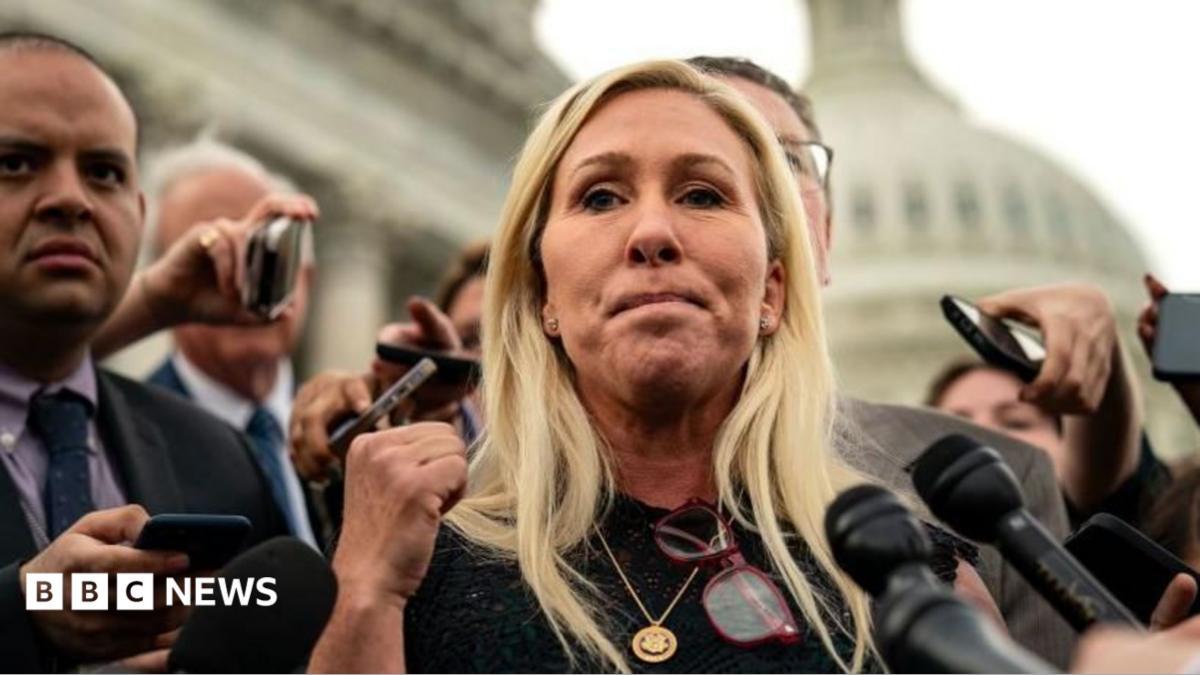
The election also reflects a public split between Greene and Trump and wider tensions within the MAGA coalition about his leadership and priorities. CNN observed that “The feud between Trump and Greene — a former ally — has created a sense of unease and anger among some voters in the district,” and PBS recounted how Greene “began clashing with Trump last year.”
NPR noted Greene’s rise as “a strong ally of Trump” but also that she “has also been sharply critical of Trump's actions abroad,” underlining the complexity of intra-conservative disagreements that feed into this contest. The New Yorker added context on Greene’s resignation, reporting she left “after President Donald Trump attacked her for supporting efforts to compel the Department of Justice to release its investigative files on Jeffrey Epstein.”

National stakes, narrow majority
Beyond local symbolism, returning a Republican to the seat has concrete implications for the razor-thin House majority and for Speaker Mike Johnson’s ability to manage votes on Trump’s agenda. CNN reported the president’s intervention aimed to “help avoid a runoff and fill the seat quickly to give Speaker Mike Johnson more cushion in his razor-thin House Republican majority,” and PBS noted that “Returning another Republican to Congress would bolster the party's narrow majority in the House,” adding the current margin as “Republicans currently control 218 House seats to Democrats' 214.” Analysts and local coverage emphasized that even a temporary vacancy or an unexpected outcome could shift dynamics in Washington during a politically volatile period.
“The president’s decision to weigh in on the Georgia race, which has several self-described MAGA candidates on the ballot, was intended to help avoid a runoff and fill the seat quickly to give Speaker Mike Johnson more cushion in his razor-thin House Republican majority.”