German Paralympians Turn Their Backs on Russian Gold Medalists to Protest Russia's Return Under Flag
Key Takeaways
- German Paralympic cross-country skiers turned their backs on Russian gold medallists during the medal ceremony
- Protest targeted Russia's reinstatement and competing under its national flag at the Games
- The protesting Germans were silver medallists Linn Kazmaier and guide Florian Baumann
What happened
At the 2026 Winter Paralympics medal ceremony for the women’s sprint classic for visually impaired athletes, German silver medalist Linn Kazmaier and her guide Florian Baumann quietly turned their backs as the Russian anthem played after Anastasiia Bagiian and guide Sergei Siniakin won gold, staging a subdued but visible protest against Russia’s return under its own flag.
“- Published German cross-country skiers turned their backs on the Russian gold medallists on the Winter Paralympics podium in protest against the nation's inclusion at the Games”
When the medal ceremony began and the Russian anthem played, Germany’s Linn Kazmaier and her guide Florian Baumann, who finished second, quietly turned away from the flag.
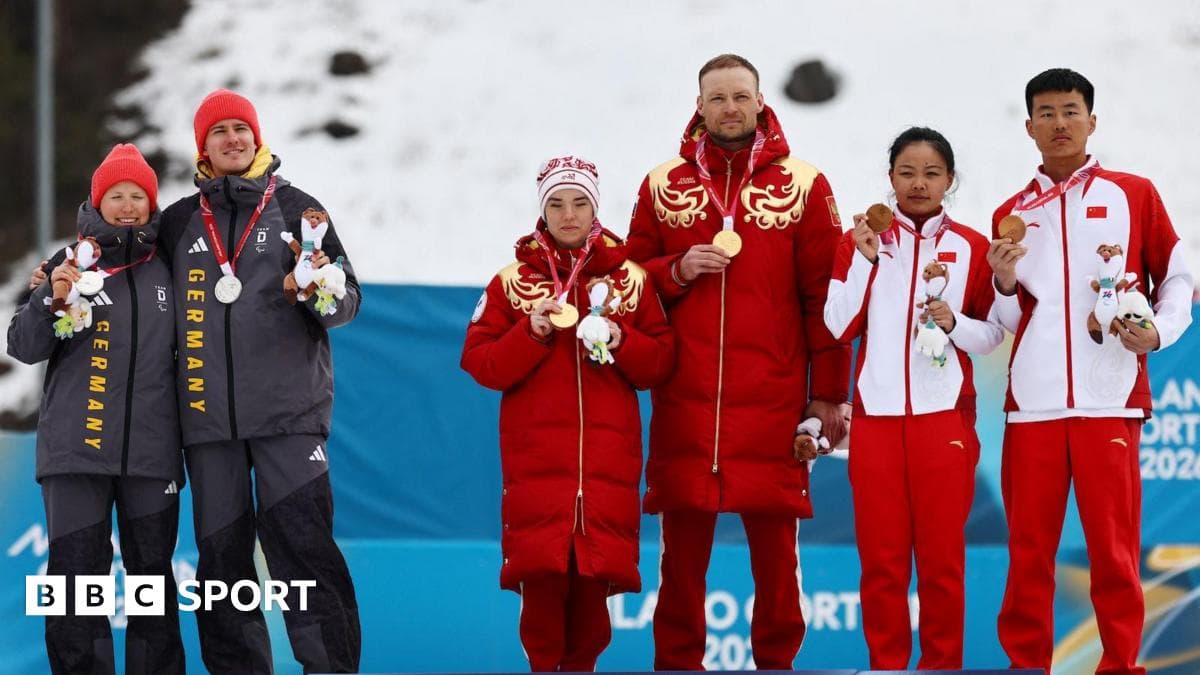
As the anthem began, German silver medalist Linn Kazmaier and her guide Florian Baumann turned away from the Russian victors, visibly distancing themselves during the podium protocol.
Linn Kazmaier and Florian Baumann staged a quiet but powerful protest in Italy.
Athletes' gesture explained
The Germans’ actions were deliberately low‑key but symbolic: they kept their hats on, refused to face the Russian flag and declined a customary victory selfie, moves framed by the athletes as a protest against the International Paralympic Committee’s decision to allow Russia full national symbols rather than a personal attack on the Russian competitors.
The German pair kept their hats on and refused to face the Russian flag during the anthem.
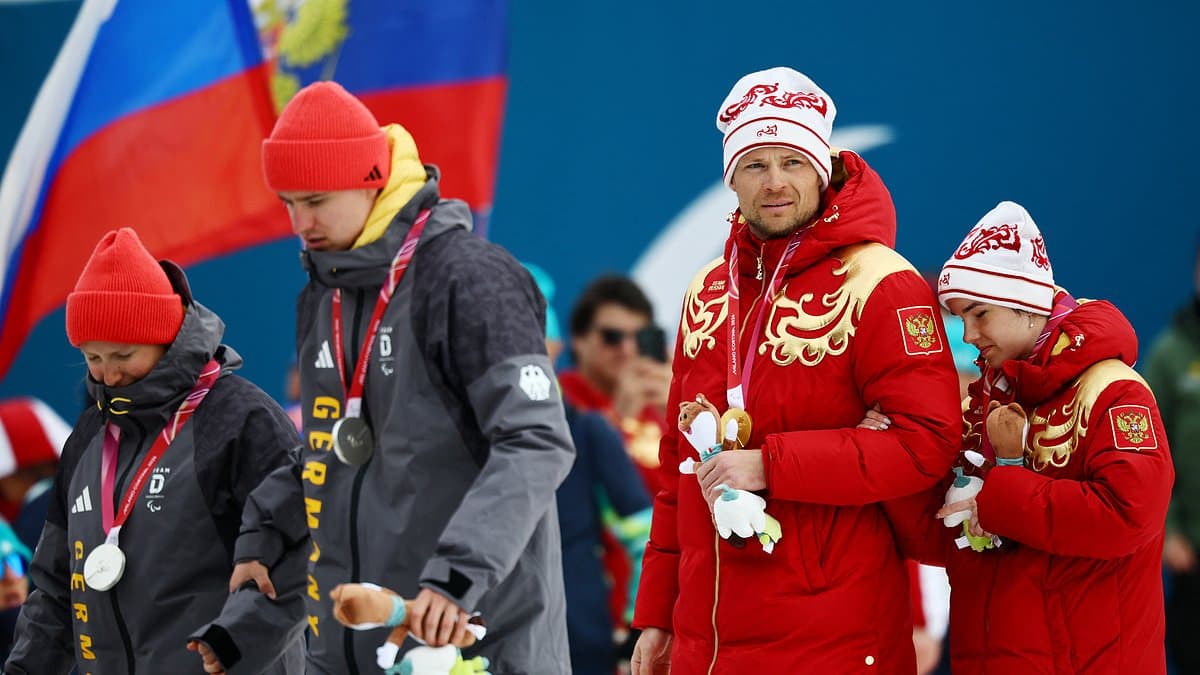
The Germans also refused a customary victory selfie with their Russian counterparts.
"This isn't about the Russian athletes... I simply don't think it's right that the IPC decided Russia could compete here under its own flag, with its own anthem, and with its full contingent, while the Ukrainians are also here," one athlete said.
Motives and remarks
Kazmaier and Baumann framed their protest as driven by politics overshadowing sport and solidarity with Ukraine, while also expressing uncertainty about the individual Russian athletes’ views; they emphasised the gesture was aimed at the IPC decision rather than personal hostility.
“A medal ceremony at the Winter Paralympics turned into a political moment when German cross-country skiers protested against Russia’s participation in the Games”
Later, Kazmaier spoke about the moment and described the ceremony as strange and uncomfortable.
"That it is so totally overshadowed by politics is simply a complete shame," she said,
vocal reports note she does not personally know the Russian athletes and cannot say whether they support the Russian system or not.
Context of Russia's return
The protest came against the wider backdrop of Russia’s restored full national presence at the Games after years of restrictions, a decision that prompted boycotts, debate and mixed reactions across the Paralympic community and beyond.
"Their return has created mixed reactions among athletes and officials at the Games," one report noted,
vocal reporting explains the IPC lifted restrictions in late 2025, prompting protests and boycotts.
The 2026 Winter Paralympics is the first time Russian athletes have competed under their own flag at a Games in 12 years, a change that many critics say validates Russia’s sporting presence despite geopolitical controversies.
Responses and debate
Reactions split: some delegations staged symbolic boycotts and public criticism while defenders of the IPC argued that banning athletes punishes individuals, and IPC leadership said participation was "not linked to participation in wars" even as they acknowledged previous misuse of sport for political messaging.
“- Published German cross-country skiers turned their backs on the Russian gold medallists on the Winter Paralympics podium in protest against the nation's inclusion at the Games”
Ahead of the Games, several countries, including Germany, joined a boycott of the opening ceremony in protest.
Supporters of the IPC’s decision counter that excluding athletes penalizes individuals for the actions of their governments.
IPC president Andrew Parsons previously insisted participation was "not linked to participation in wars", but acknowledged Russia and Belarus had used Paralympic sport to promote what Moscow termed its "special operation" and said there was now "less evidence" of the Games being used to promote the war.
More on Sports

Mercedes Lock Front Row as Russell Takes Sprint Pole in Shanghai
21 sources compared

President Donald Trump Warns Iran Soccer Team Not to Attend World Cup Over Safety Concerns
10 sources compared

Indian-Owned Sunrisers Leeds Sign Pakistan Spinner Abrar Ahmed, Breaking IPL-Linked Teams' Boycott
10 sources compared
Miami Heat's Bam Adebayo Scores 83, Surpasses Kobe as NBA's Second Highest Single-Game Scorer
16 sources compared