
Germany Plans to Dredge 50-Meter Channel to Free Stranded Humpback
Key Takeaways
- Humpback whale stranded on a sandbank in Lübeck Bay near Niendorf.
- Rescuers deploying dredging equipment to free it and move toward deeper water.
- Rescue operations ongoing since Monday; authorities continuing attempts.
Engineered exit via dredged channel
Germany’s rescue operation has shifted toward an engineered exit: authorities plan to carve a direct channel for the humpback to reach deeper waters, turning a scavenged beach rescue into a dredging project.
“Rescue crews in northern Germany are working to save a humpback whale that has become stranded in shallow water off the Baltic Sea coast in Lübeck Bay, according to CNN affiliate RTL”
The plan calls for a channel about 50 meters long, six meters wide and 1.2 meters deep, with a dredger and excavators deployed on land to sculpt the path and buoys marking water depth to guide the whale toward open water.
Even if freed, experts warn the Baltic Sea is not a natural habitat for humpbacks, and navigation out could be challenging.
DW explicitly notes that new dredging equipment is on the way to support the operation.
The move represents a concrete, engineering-based pivot in a rescue that had previously relied on boats, waves, and repositioning attempts.
Urgency and bottleneck risk
Time is running out as the whale’s condition worsens, intensifying the urgency of the rescue and elevating public attention to the plan.
Experts and officials have warned the animal could die if not freed soon, and multiple attempts to move it back to deeper water have faced setbacks.
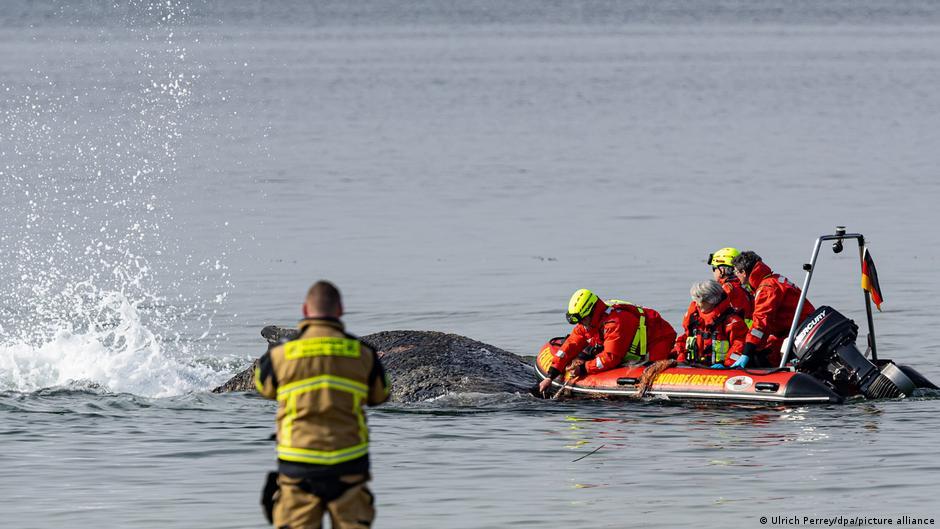
The rescue has already relied on police boats, inflatable craft, and drones to reposition the animal and reduce stress, while authorities have closed the beach to minimise crowds.
Even with a plan in place, observers emphasise that the Baltic is a bottleneck and presents a difficult exit path back through Danish waters.
Background: entanglement and prior sightings
This may be the same humpback seen in recent weeks near Wismar harbor, previously freed from a fishing net.
“Experts say the whale’s condition is deteriorating as rescue attempts continue Daniel Bockwoldt/picture alliance via Getty A young humpback whale, stranded on a sandbar in shallow waters in the Baltic Sea near Germany, is at the center of an urgent rescue effort, as officials warn the animal could die if it isn’t freed soon”
Sea Shepherd later reported the removal of additional remnants of fishing gear off Travemünde, increasing the likelihood it is the same animal.
These details reveal how entanglement and gear in the region have contributed to the whale’s vulnerability.
Engineering rescue and welfare balance
The operation’s approach—engineering a channel with heavy machinery near a stressed wild animal—reveals how rescue planners weigh mechanical feasibility against animal welfare in West Asia’s coastal environment.
The plan’s technical specifics (50 meters by 6 meters by 1.2 meters) and the use of a dredger, excavators, and buoy-guided work frame a high-stakes bet on a clean exit from a geographic bottleneck.
Yet the same sources emphasize that even a successful release could leave the whale struggling to navigate the Baltic’s sea-lane dynamics, underscoring the inherent risk of escalating trauma in a delicate rescue.
This case also shows how German authorities are coordinating a multifaceted response that combines field rescue, veterinary oversight, and engineering to address a wildlife crisis.
More on Technology and Science

Anthropic Confirms Mythos Capybara Tier, Limits Release To Cybersecurity Trials After Draft Leak
12 sources compared

Sony Raises Global PS5 Prices Effective April 2, 2026 — Disc $649.99, Digital $599.99, Pro $899.99
27 sources compared

Pro-Iranian Hackers Claim They Hacked And Posted Kash Patel Emails And Photos
121 sources compared

U.S. District Judge Rita Lin Blocks Pentagon's Anthropic Risk Designation, Pauses President Trump's Contract Ban
16 sources compared