
Passengers Demand TSA Officers Be Paid as Shutdown Delays Airport Security
Key Takeaways
- TSA officers have not received pay since February 14 due to government funding lapse.
- Security wait times have lengthened nationwide as staffing shortages and unpaid work disrupt screening.
- Travelers and media outlets advocate paying TSA officers to resolve the delays.
Shutdown Impact Overview
The ongoing partial government shutdown has severely impacted airport security operations nationwide as Transportation Security Administration officers continue working without pay for the third time in less than six months.
““They’re keeping us safe”
Approximately 50,000 TSA employees are classified as essential workers and must remain on duty during the funding lapse, yet they have missed regular paychecks since the Department of Homeland Security shutdown began on February 14.
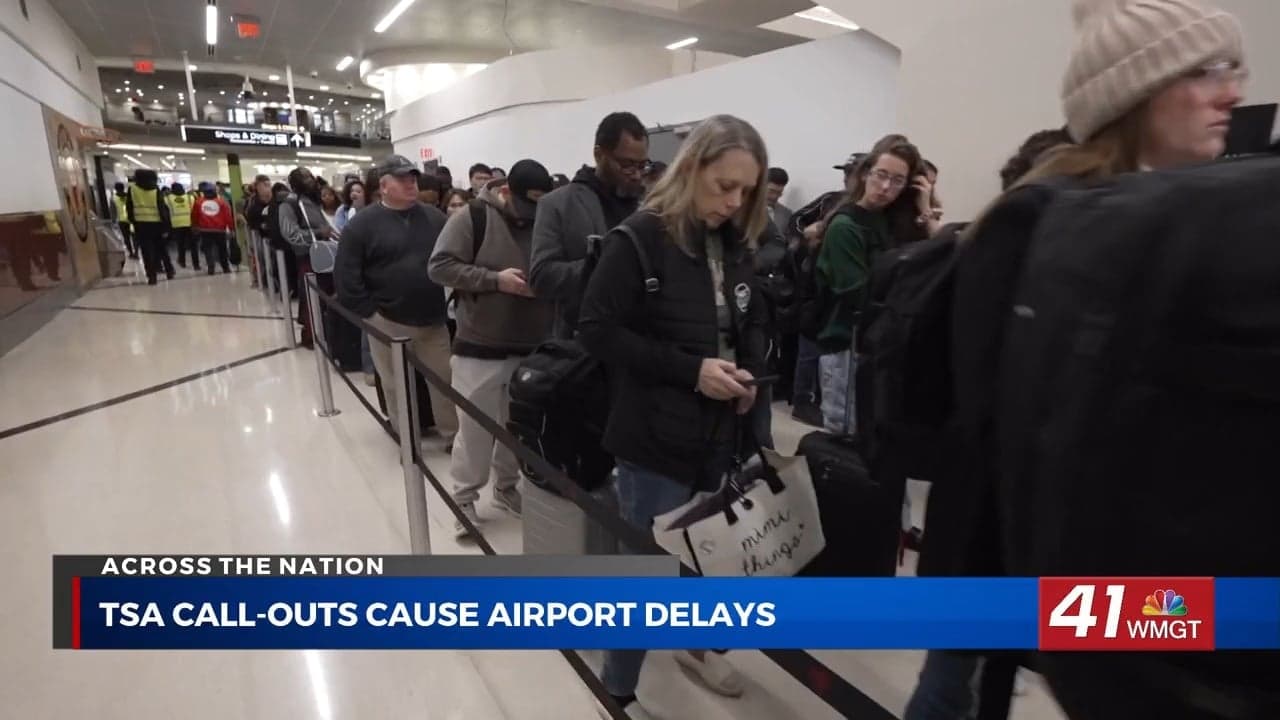
This financial pressure has driven significant staffing shortages, with national data showing about 10% of TSA officers absent from work on Thursday, and some locations reporting absence rates two to three times higher.
The shutdown intersects with spring break travel, creating perfect storm conditions as a record-breaking 171 million passengers are expected to fly, up 4% from the same period last year.
The financial strain has already resulted in at least 376 resignations since this shutdown began, exacerbating turnover at an agency that historically has some of the highest employee departure rates and lowest workplace satisfaction scores in the federal government.
Passenger Frustration
Passengers across the country are increasingly frustrated with airport security delays and are voicing strong support for paying TSA officers, with many travelers arriving extra early or even four hours before their flights to avoid missing connections.
In Atlanta, one of the world's busiest airports, wait times have exceeded 90 minutes on most days this week, with passengers describing conditions as "horrible" and "unpredictable."
The frustration is particularly acute at major hubs like Houston's George Bush International Airport, where lines have stretched up to two and a half hours, and New York's JFK Airport, where waits have exceeded 35 minutes.
Travelers have taken to social media to document the chaos, with videos showing lines snaking around airports and spilling into baggage claim areas.
Many passengers have expressed empathy for the TSA workers, with one traveler stating, "I'm so grateful for people who are willing to sacrifice a lot to make sure we're safe," while others have demanded that Congress prioritize paying the essential workers who maintain airport security.
Political Context
The political standoff over funding the Department of Homeland Security stems from Democrats' demands for changes to immigration enforcement following the fatal shootings of Alex Pretti and Renee Good in Minneapolis, creating a complex intersection of budget politics and national security concerns.
“For Cochems, the recent shutdowns have upended the sense of stability that drew him to federal service in the first place”
Democrats have refused to fund the department unless new restrictions are placed on federal immigration operations, while Republicans argue that all components of DHS should be funded together rather than piecemeal.
The situation has been complicated by the outbreak of war with Iran on February 28, which has added an acute national security dimension as cybersecurity divisions within DHS have lost hundreds of furloughed workers.
Senator Ted Cruz of Texas called the Democrats' position "reckless," arguing they are "playing politics and defunding the Department of Homeland Security, the agency charged with protecting us from that terrorism," while Senator Richard Blumenthal rejected this framing, stating DHS "has plenty of resources to investigate potential security threats in the homeland."
Human Impact
The human cost of the shutdown is increasingly evident as TSA officers struggle to make ends meet while performing critical national security duties.
Officers have reported empty refrigerators, overdrawn bank accounts, and inability to afford basic necessities including copayments for cancer treatments and medical visits for sick children.
One TSA officer described coming to work daily to check food drives for donations to help feed his family, while another noted that even his seasonal side job screening college sports teams is no longer sufficient to cover basic expenses since his wife was unexpectedly laid off.
The financial pressure has forced many officers to take second jobs or reduce work hours, creating a vicious cycle of staffing shortages that further delays airport security.
Union leaders warn that the situation could have lasting consequences for the agency, with Acting Deputy TSA Administrator Adam Stahl noting that after the previous shutdown, departures rose 25%, and he expects attrition to worsen unless normal operations resume.
Former TSA Administrator John Pistole has stated that about 1,100 officers quit during last year's record 43-day shutdown.
Travel Disruptions
As the shutdown continues to impact travelers nationwide, airlines and airport authorities are implementing various strategies to manage the unprecedented security delays.
“For Cochems, the recent shutdowns have upended the sense of stability that drew him to federal service in the first place”
Major carriers including American, Delta, Southwest, UPS and JetBlue have all issued warnings about the unsustainable strain on airport security operations, with some airports forced to close checkpoints temporarily due to staffing shortages.

The situation has created wildly unpredictable conditions, with wait times swinging dramatically throughout the day – at Atlanta's Hartsfield-Jackson, waits have ranged from two hours in the morning to less than five minutes in early afternoon before jumping back up to 75 minutes.
Travelers are being advised to check airport websites directly rather than relying on the official My TSA app, which displays a warning that it "will not be actively managed" due to the funding lapse.
The highest single-day callout rate during the shutdown reached 55 percent at Houston Hobby International Airport on March 14, underscoring the severity of the staffing crisis that continues to disrupt air travel across the country.
More on USA

Trump threatens to deploy ICE agents to US airports amid DHS funding standoff
46 sources compared

ICE Detainee Royer Perez-Jimenez Dies in Florida Detention Center; Officials Suspect Suicide
10 sources compared
Elon Musk Offers to Pay TSA Salaries During Partial Government Shutdown
50 sources compared

California lawmakers rename Cesar Chavez Day to Farmworkers Day amid sexual abuse allegations.
17 sources compared