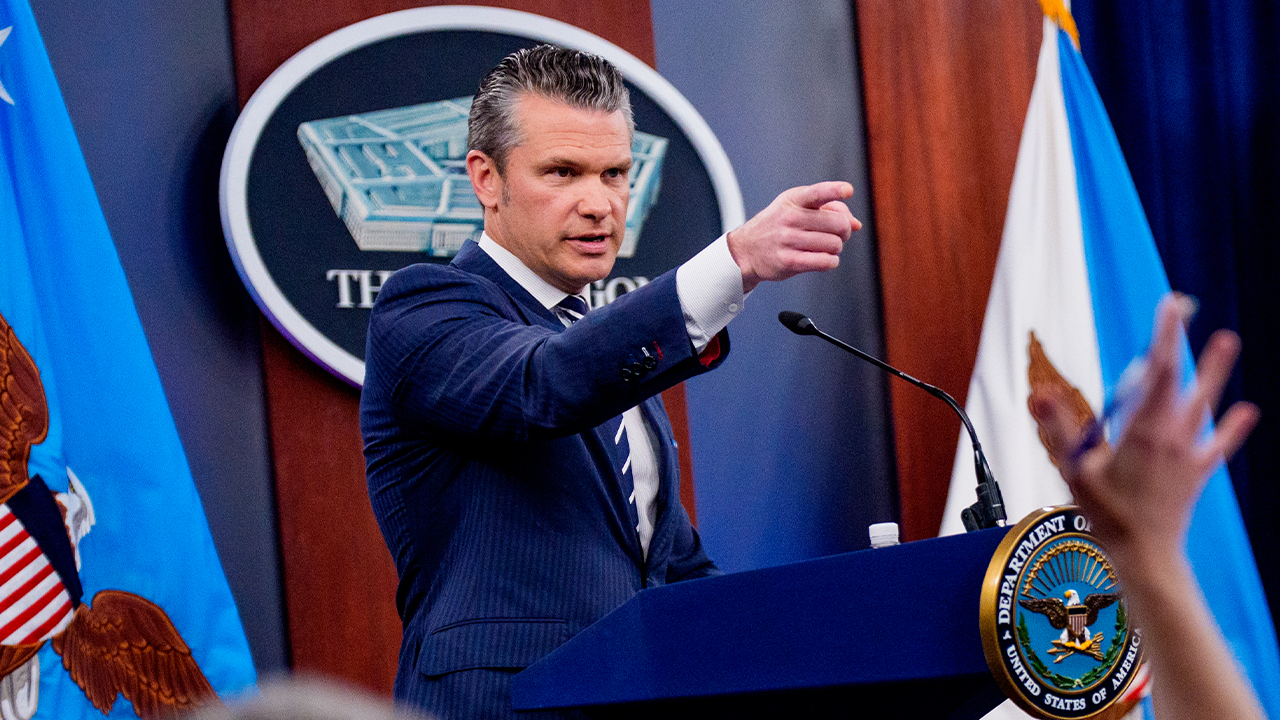
Hegseth blasts Brits, says Iran's chaotic retaliation has driven its own allies 'into the American orbit'
U.S. regional response to Iran
War Secretary Pete Hegseth said Wednesday that Iran’s campaign of strikes against neighboring countries has backfired strategically, driving Gulf states that had hoped to stay out of the conflict "into the American orbit."
“War Secretary Pete Hegseth said Wednesday that Iran’s decision to strike neighboring countries has backfired strategically, driving Gulf states that had hoped to stay out of the conflict "into the American orbit" as the U”
He named the United Arab Emirates, Qatar, Bahrain, Saudi Arabia and Kuwait as countries now offering expanded cooperation and cited CENTCOM Commander Adm. Brad Cooper’s assessment that Tehran has targeted at least a dozen nations.
Hegseth warned that "the amount of firepower over Iran and over Tehran is about to surge dramatically," pointing to additional base access and increased bomber operations.
He said British-controlled bases—after initial UK hesitation—are now part of the expanding U.S. air campaign.
Regional reactions to strikes
Gulf and Arab governments publicly condemned what they described as Iranian missile and drone strikes on their territories.
They issued a joint statement that strongly condemned Iran's "indiscriminate and reckless" attacks and reaffirmed their right to self-defense.
Azerbaijan protested what it said were Iranian drone strikes on its Nakhchivan exclave that injured civilians and damaged the international airport.
Azerbaijan summoned Tehran's ambassador and reserved the right to take retaliatory measures.
Tehran denied responsibility for the incident.
Regional analysts Danielle Pletka of the American Enterprise Institute and Peter Doran of the Foundation for Defense of Democracies said Iran miscalculated and that the strikes have shifted regional alignment toward the United States.
U.S.-Iran military actions
Pentagon officials said U.S. bombers have struck nearly 200 targets in the past 72 hours.
“War Secretary Pete Hegseth said Wednesday that Iran’s decision to strike neighboring countries has backfired strategically, driving Gulf states that had hoped to stay out of the conflict "into the American orbit" as the U”
Pentagon officials said the strikes destroyed more than 30 Iranian naval vessels.
Pentagon officials said the strikes have significantly reduced missile and drone attacks since the opening days of the operation.
Officials maintained the campaign’s objectives remain limited to degrading Iran’s ability to threaten Americans and its neighbors.
Hegseth said the president is "having a heck of a say in who runs Iran, given the ongoing operation."
Hegseth dismissed suggestions the war is spiraling outward, arguing Iran’s actions are clarifying the battlefield and strengthening U.S. partnerships rather than expanding the conflict.
Key Takeaways
- Iran’s strikes on neighboring countries have backfired, pushing Gulf states toward the U.S.
- The U.S. prepares to dramatically increase firepower over Tehran.
- He blasted Britain's response to Iran's regional strikes.
More on Iran

President Trump Attends Dignified Transfer For Six U.S. Service Members Killed In Iranian Drone Strike
31 sources compared

Iran Apologizes to Neighbors, Halts Strikes Unless They Attack, President Pezeshkian Says
47 sources compared

US Forces Likely Struck Iranian Girls' School, Killing Dozens, US Military Investigators Say
31 sources compared

President Donald Trump Demands Iran's Unconditional Surrender, Rejects Any Deal to End U.S. War
60 sources compared