
Gaza Genocide · 01 May, 2026 · 8 min read
Hezbollah Kills Sergeant Idan Fooks in Taybeh Drone Attack, IDF Failed for 18 Months
Hezbollah drone attack in Taybeh killed Sergeant Idan Fooks and wounded others. Explosive drones, fiber-optic guided, breached IDF defenses and targeted troops in southern Lebanon.
9 of 10 outlets skipped it: market/wagering/prediction-market framing ties the drone threat to reduced likelihood of a full Israeli withdrawal by deadlines..
16outlets compared
Same story, two versions
tap a side to read it in full
Middle East Monitor
““I have issued instructions for a special project to eliminate the drone threat. It will take time, but we will eliminate it as well,” without providing further details.”Read the original ↗
ynetnews
““The military is now reassessing its approach to drone warfare, saying a broader system is needed to integrate defensive technologies and operational responses.””Read the original ↗
One framing centers on top-level political instruction with no operational detail, while the other stresses institutional reassessment and integration of defenses—affecting how readers judge accountability, timelines, and the likelihood of near-term mitigation.
Drone attacks in Lebanon
The war on Gaza has been accompanied by a parallel, escalating fight on Israel’s northern front, where Hezbollah has used explosive drones to target Israeli forces in southern Lebanon.
“failed to act on explosive drone threat for past 18 months”
Multiple reports describe fiber-optic-guided “wired” drones that can maneuver without breaking contact because they are connected to their operator via a thin fiber-optic cable that spools out during flight.
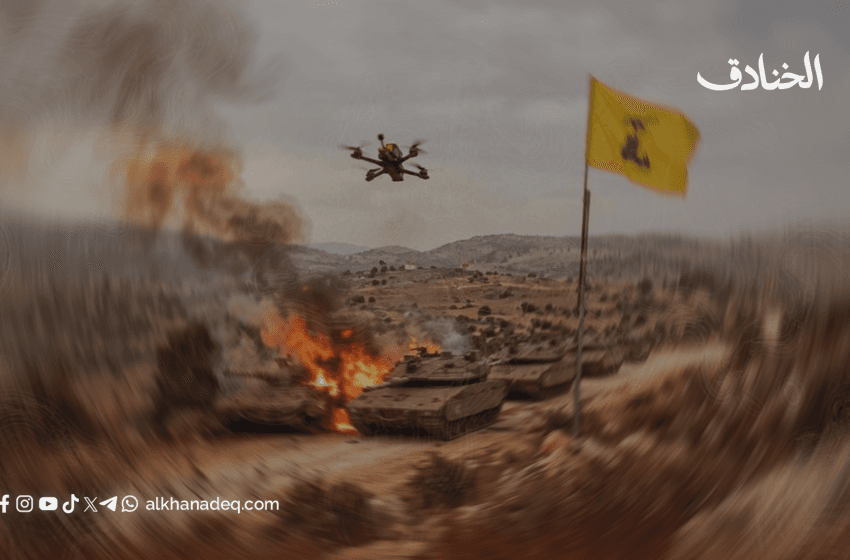
In one account, an Israeli security official said the IDF has failed to address the threat of explosive drones along the Lebanon border for the past 18 months, with the issue persistent since early 2024.
The Times of Israel described an early Sunday morning attack in the town of Taybeh in southern Lebanon, inside the security zone declared by Israel during a ceasefire, in which a small drone piloted by Hezbollah members crashed into Israeli soldiers who were repairing their tank.
That strike killed Sergeant Idan Fooks, 19, and injured six other soldiers, four of them seriously, according to the Times of Israel.
The same report says an Israeli Air Force helicopter was sent to evacuate the wounded, but as rescuers were loading the injured, Hezbollah struck again with two more explosive-laden drones, one intercepted and the second plunging in at low altitude and exploding a few meters from the soldiers and the helicopter.
In parallel, Anadolu Ajansı reported that the Israeli army faces an escalating threat in southern Lebanon from explosive drones, especially fiber-optic guided ones, and said daily the army reports injuries to soldiers from drones falling and exploding at positions where its forces have advanced.
Why the IDF struggled
Several outlets connect the drone threat to a specific technical vulnerability: fiber-optic guidance that bypasses electronic warfare designed for radio-based drones.
ynetnews says the primary threat in the north and along the border with Lebanon is the fiber-optic FPV drone used by Hezbollah, describing it as “simple but highly lethal,” and explaining that it is “largely immune to electronic warfare systems and is difficult to detect using conventional counter-drone tools.”Y

The same report adds that “traditional jamming and interception systems are ineffective against it,” because the drone does not rely on radio frequency signals.
CTech similarly frames the problem as drones Israel can’t jam, saying fiber-optic UAVs bypass electronic defenses and forcing the IDF to rethink battlefield protection.
CTech reports that these drones are guided via optical fiber physically connected to them, making it impossible to disrupt or neutralize them using conventional jamming systems and electronic warfare tools typically used against wireless drones.
In a separate account, Islam Times says Hezbollah’s explosive drones are a “silent, deadly threat” and claims the drones can be controlled from distances of up to 15 kilometers and can carry up to 6 kilograms of explosives.
The Times of Israel adds that the appearance of fiber-optic-controlled drones should not have come as a surprise, noting that Hezbollah had already used FPV drones against Israeli targets during the 2024 fighting and that such drones became essential in the war between Russia and Ukraine.
It also quotes an analyst, Jakub Janovsky, saying “Unless luck or operator error occurs, the only reliable counter is to shoot them down,” and describes how range affects cost, including that “One kilometer of optical-fiber cable costs nearly $30 in bulk.”
Together, the reporting portrays a threat that is hard to detect, hard to jam, and expensive to counter with the same tools used against other drone types.
Warnings, gaps, and improvisation
The reporting also describes how Israeli officials and military sources framed the problem as long-known but insufficiently addressed, with gaps in training and awareness alongside incomplete deployment of defenses.
“There was knowledge of the problem for a long time, but no systemic solution was implemented at the required scale”
ynetnews says that “There was knowledge of the problem for a long time, but no systemic solution was implemented at the required scale,” quoting a security official.Y
It also describes an initiative led by about 60 reserve soldiers with drone expertise, including instructors who had previously served at the school, and says they initially believed the effort would be temporary but that “the system did not adapt quickly enough.”
The same report says that until the war, responsibility for the issue largely sat within the Border Defense Corps, but officials said that structure did not adequately advance counter-drone capabilities.
It describes improvised countermeasures proposed by reservists, including metal wires designed to sever fiber-optic lines and bring drones down, and says “Similar methods have been used in Ukraine.”
The report also says troops installed makeshift protective netting over vehicles and positions, using donated materials and volunteer welders, and that one source said the netting had proven partially effective but was not a complete solution.
The Times of Israel adds that the Defense Ministry’s Directorate of Defense Research and Development launched a public tender on April 11 to address the threat, nearly two years after these systems appeared in Ukraine and a few weeks after the start of the ongoing conflict with Hezbollah.
In the same account, Jakub Janovsky explains that experimental devices, including automated turrets, are currently being tested in Ukraine but “none have yet been deployed on a large scale.”
Anadolu Ajansı reports that senior Israeli military officials acknowledged the army entered the war in Lebanon without sufficient tools to confront the drone threat, and says battlefield unit commanders expressed strong frustration about this, according to Army Radio.
Netanyahu orders a project
As the drone threat persisted, Prime Minister Benjamin Netanyahu publicly directed a new effort to counter Hezbollah’s drones, while other reporting described the effort as an ongoing, time-consuming project rather than an immediate fix.
Middle East Monitor says Netanyahu told reporters that he had ordered a “special project” to eliminate the threat posed by Hezbollah drones, adding that it “will take time,” and it notes this was the second time in the past 24 hours that Netanyahu addressed the threat.M
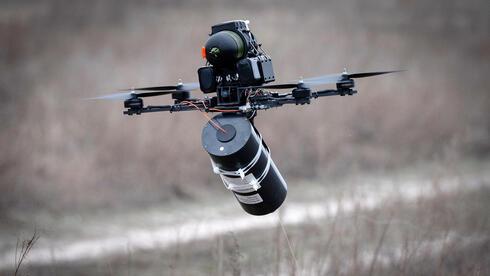
The same report says the Israeli military is facing a growing challenge in the area from fibre-optic-guided drones, described as “stealthy” due to their low visibility and difficulty to detect, and it cites Walla’s military correspondent Amir Bohbot describing how the drones operate through a physical connection using a thin fibre-optic cable.
Middle East Monitor also quotes Netanyahu in a video statement published by Yedioth Ahronoth, saying: “I have issued instructions for a special project to eliminate the drone threat. MIt will take time, but we will eliminate it as well,” without providing further details.
Crypto Briefing similarly frames the issue as affecting Israeli decisions, saying an Israeli security official disclosed that the IDF has failed to address the threat for the past 18 months and that the ongoing threat has led to casualties, including the death of Sgt. Idan Fooks.
It also describes market pricing for Israeli withdrawal from Lebanon, including “0.1% YES for April 30, 2026” and a “June 30, 2026, sub-market” priced at “9% YES,” while noting that markets suggest increased vulnerability due to Hezbollah’s drone tactics could hinder Israeli military decisions.
In addition, Anadolu Ajansı reports that Israel continues its strikes on Lebanon as part of ceasefire violations in effect since April 17, and says Hezbollah responds by targeting army gatherings in southern Lebanon and settlements in northern Israel, according to its statements.
The combination of Netanyahu’s directive and the continued operational pressure described by multiple outlets suggests that the drone problem is shaping both tactical choices and political timelines.
Competing narratives and Gaza link
While the drone-focused reporting centers on southern Lebanon, the sources also frame the broader conflict environment with different emphases, including how the threat is portrayed and what it implies for Israel’s posture.
“This is not just another isolated incident- it’s a reality that can’t be ignored”
Islam Times presents the drone threat as a “Silent, Deadly Threat” and says Yedioth Ahronoth’s military affairs analyst Yossi Yehoshua argued that “This is not just another isolated incident- it’s a reality that can’t be ignored,” adding that “the most significant current threat to forces is suicide drones.”

It also claims that after the deadly incident in Taybeh involving Sgt. Idan Fox, “a suicide drone nearly struck” the helicopter arriving to evacuate, and it says “Last week, there was another dramatic incident stemming from the same threat, the details of which are still under a blackout.”
By contrast, the Times of Israel frames the same Taybeh incident as underscoring “the IDF's shortcomings in countering FPV drones,” and it describes the drone as “Loaded with explosives” while detailing the sequence of attacks and the interception of one drone.
The Times of Israel also emphasizes that “The appearance of fiber-optic-controlled drones should not have come as a surprise,” and it points to a Defense Ministry tender launched on April 11 and to the lack of a “silver bullet.”
Anadolu Ajansı adds a different operational lens by describing Hezbollah’s drone force as “ghostly” due to low footprint and difficulty to detect, and it reports that Hezbollah’s modification and development of drones takes place in workshops inside southern Lebanese villages.
Meanwhile, Anadolu Ajansı also states that ceasefire violations are in effect since April 17 and that Hezbollah claimed targeting a Merkava tank in the village of Qantara in southern Lebanon with a drone, in response to ceasefire violations.
Even Crypto Briefing, though not a conventional war report, ties the drone threat to Israeli withdrawal planning by describing market pricing for April 30, 2026 and June 30, 2026 and saying “Markets suggest increased vulnerability due to Hezbollah’s drone tactics could hinder Israeli military decisions.”
Across these accounts, the war’s narrative is not uniform: some sources stress the technical mechanics and defense gaps, others stress the scale and persistence of drone tactics, and still others connect the threat to political and operational timelines.