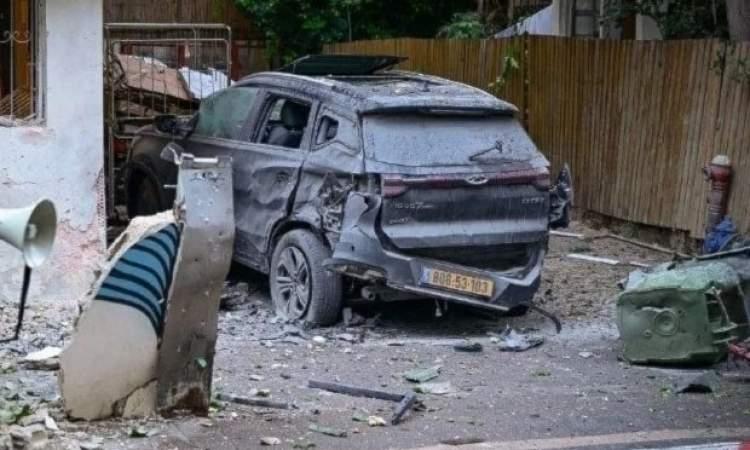
Hezbollah Targets Israeli Soldiers and Vehicles in Al-Bayadah With Drone and Artillery
Key Takeaways
- In Al-Bayadah, Islamic Resistance targeted gathering of Israeli vehicles and soldiers with an attack drone.
- Across several fronts, it used attack drones, missile salvos, and artillery shells.
- Hezbollah announced a series of 13 operations against Israeli positions in southern Lebanon.
Retaliatory strikes in Al-Bayadah
Hezbollah and other “Islamic Resistance” outlets described a retaliatory operation targeting Israeli soldiers and vehicles inside one of the houses in the town of Al-Bayadah.
“Tuesday, 05/05/2026 ArEnFrEs [](http://almanar”
The akhbaralyawm report framed the action as “a retaliatory operation” and said “Hezbollah”: “the Islamic Resistance” targeted “a gathering of soldiers of the Israeli enemy army inside one of the houses in the town of Al-Bayadah.”

The قناة العالم report said Hezbollah announced “the execution of a series of operations against Israeli sites and vehicles,” and it placed multiple strikes in Al-Bayadah across the day, including at 11:30 a.m. and later at 4:30 p.m. and 5:00 p.m.
In that same account, the resistance said it used an attack drone at 11:30 a.m. to target “a gathering of Israeli army vehicles and soldiers,” then returned at 4:30 p.m. to strike “a surveillance camera at a drone command headquarters,” and at 5:00 p.m. targeted “a military vehicle carrying a leadership crew,” with “confirmation of injuries.”
The ٢٦ سبتمبر نت report also described operations along the Lebanon–Palestine border, saying the Islamic Resistance targeted Israeli occupation army soldiers and their vehicles “in response to the occupation's violation of the ceasefire and its ongoing attacks.”
Across these accounts, the town of Al-Bayadah appears as a repeated focal point for drone and artillery strikes, with the resistance presenting the actions as retaliation tied to ceasefire violations and attacks.
Timeline of drone and rocket attacks
Several of the provided reports laid out a detailed sequence of strikes in southern Lebanon, repeatedly tying the operations to ceasefire violations and attacks on civilians and villages.
The قناة نبأ الفضائية account said the Islamic Resistance issued communiqués announcing “13 operations” against positions and gatherings of the Israeli enemy army in southern Lebanon, and it specified that the first operation occurred at “13:30 on Sunday, May 3, 2026” when the resistance targeted “newly installed technical equipment in the town of Al-Bayadah with an attacking loitering drone, achieving a direct hit.”
It then described a “volley of rockets” striking “a convoy of Israeli vehicles and soldiers” near “the reservoir in the town of Qantara” at “12:10,” and it placed a “direct clash” at “12:30” in the Khallat al-Raj area north of Deir Srian toward Zuṭrat al-Sharqi, where resistance fighters engaged in close-quarters battle with “light and medium weapons,” with “confirmed casualties among the hostile force.”
The same report said the resistance described the Israeli force trying to withdraw the wounded under fire, after which “the resistance’s artillery and rocket fire” targeted the withdrawal and “air defenses intervened to prevent helicopters from landing,” forcing the Israeli army to move wounded “by land toward the Misgav Am settlement” before transporting them “by air to the Palestinian interior.”
It continued the sequence with strikes at “13:25” near “the elevated Sulla in Qantara,” at “14:30” with “bombs dropped by precision-guided loitering drones” against a “newly established leadership site in the town of Al-Bayadah,” and at “15:50” with a “volley of rockets” against an Israeli force positioned “inside one of the houses in Al-Bayadah.”
The operations were said to continue through “17:00,” “17:30,” “17:40,” and “18:00,” and they concluded at “20:30” with an attack on an artillery battery newly established for the Israeli army in “the town of Rabath Thalatheen” using “a squadron of attacking drones.”
Claims of confirmed hits and injuries
The reports repeatedly used language of “confirmed” outcomes, describing direct hits, injuries, and targeted surveillance and leadership sites.
“Zulfiqari: Closure of the Strait of Hormuz, and the blockade includes the Emirates”
The قناة العالم report said the resistance’s attacks were “spread across several fronts” and that it used “attack drones, missile salvos, and artillery shells,” while “confirming direct hits on the targeted objectives.”
It described a specific sequence in Al-Bayadah: at 11:30 a.m. an attack drone targeted “a gathering of Israeli army vehicles and soldiers,” at 4:30 p.m. the resistance returned to strike “a surveillance camera at a drone command headquarters,” and at 5:00 p.m. it targeted “a military vehicle carrying a leadership crew,” with “confirmation of injuries.”
The ٢٦ سبتمبر نت report similarly said the Islamic Resistance targeted a “leadership headquarters of the Israeli occupation army in the town of Al-Biyada with a volley of rockets,” and it added that it also targeted “the newly established Balat site with artillery shells, causing confirmed injuries.”
It further described strikes on “a gathering of occupation vehicles and soldiers in the square of the southern town of Al-Qantara” with “a volley of rockets,” and it said it targeted “a gathering of occupation vehicles and soldiers in the town of Al-Biyada with artillery shells, achieving confirmed injuries.”
Taken together, the accounts present a consistent internal narrative: drones, rockets, and artillery are used to strike vehicles, soldiers, surveillance cameras, and leadership sites, with the resistance asserting “confirmed” hits and injuries.
Ceasefire violations cited as cause
Across the set of reports, the resistance framed its operations as responses to ceasefire violations and ongoing attacks, including strikes described as hitting villages and causing civilian harm.
The ٢٦ سبتمبر نت account explicitly said the Islamic Resistance announced operations “in response to the occupation's violation of the ceasefire and its ongoing attacks,” and it added that the resistance was targeting “gatherings of Israeli occupation army soldiers and their vehicles along the Lebanon–Palestine border.”

It also stated that the resistance was acting “in defense of Lebanon and its people” and “in response to Israeli violations,” while claiming the actions “force Israeli soldiers into ambushes.”
The وكالة القدس للأنباء report similarly said the resistance targeted sites and gatherings “as part of defending Lebanon and its people, and in response to ceasefire violations and attacks on civilians in the southern villages,” and it described the operations as including “clashes from point zero in various areas of the south.”
The قناة نبأ الفضائية report tied the 13 operations to “ceasefire violations and attacks that struck southern villages and resulted in martyrs and civilians wounded,” and it said the operations were carried out “in response to ongoing Israeli aggressions” and “to prevent the enemy from imposing new ground realities in the south.”
The combined effect of these accounts is that the cause is repeatedly stated in the resistance’s own framing—ceasefire violations, attacks on villages, and attacks on civilians—rather than being presented as a separate external explanation.
Different outlets, different emphases
While the reports overlap on key locations such as Al-Bayadah and Al-Qantara and on the resistance’s stated rationale, they differ in how they present the operational picture and the level of specificity.
“News — On Monday, the Islamic Resistance issued a series of military communiqués in which it announced that it had carried out 13 operations against positions and gatherings of the Israeli enemy army in southern Lebanon, in response to ceasefire violations and attacks that struck southern villages and resulted in martyrs and civilians wounded”
The قناة العالم report emphasizes a “series of operations” announced in “successive statements issued on Sunday, May 3, 2026,” and it highlights a tight sequence of times in Al-Bayadah—11:30 a.m., 4:30 p.m., and 5:00 p.m.—with drone and surveillance-camera targeting.

The ٢٦ سبتمبر نت report instead presents a broader set of targets along the Lebanon–Palestine border, listing multiple towns and sites such as “Al-Qantara,” “Al-Biyada,” “Balat,” “Houla,” and “Naqoura,” and it adds that “Yesterday, Saturday, at 11:00 and 12:30” the fighters targeted gatherings in Naqoura with “a swarm of diving drones, in two waves.”
The قناة نبأ الفضائية report provides a long, minute-by-minute account of “13 operations,” including the Khallat al-Raj area and the described movement of wounded “by land toward the Misgav Am settlement” and then “by air to the Palestinian interior.”
The وكالة القدس للأنباء report also says Hezbollah issued “13 military statements,” but it reproduces a numbered list of statements beginning with “1) At 13:30 yesterday, Sunday 03-05-2026,” and it includes details such as “air-defense units intervening to prevent helicopters from landing in the area.”
Even within the same general theme, the emphasis shifts: some outlets foreground drone and surveillance-camera strikes, others foreground rocket and artillery volleys, and others foreground the operational timeline and the described evacuation route for wounded.
Broader war toll and next steps
Beyond the tactical claims, one of the provided items also shifted to a wider accounting of casualties from “Israeli aggression in Lebanon,” while still keeping the resistance narrative in view.
The www.saba.ye report stated that “The death toll from the Israeli aggression in Lebanon rises to 2,679 martyrs and 8,229 wounded,” presenting a cumulative figure rather than a single incident tally.
It also included a line that “Lebanon, the most dangerous country in 2026,” attributing the statement to “U.N. High Commissioner.”
Meanwhile, the ٢٦ سبتمبر نت report said “The Islamic Resistance in Lebanon continues to confront occupation forces at the Lebanon–Palestine border,” and it claimed that the resistance is “forcing Israeli soldiers into ambushes” while defending “Lebanon and its people.”
The قناة نبأ الفضائية report likewise said the operations were carried out “to prevent the enemy from imposing new ground realities in the south,” framing the continuation of resistance activity as a barrier to further changes on the ground.
Taken together, the sources point to two parallel “next steps” narratives: a broader casualty accounting and danger framing from the saba.ye item, and a continued operational posture from the resistance-focused reports that say the Islamic Resistance “continues” to confront forces along the border.
More on Lebanon
Israeli Forces Clash With Hezbollah in Southern Lebanon, Wounding Two IDF Soldiers
10 sources compared
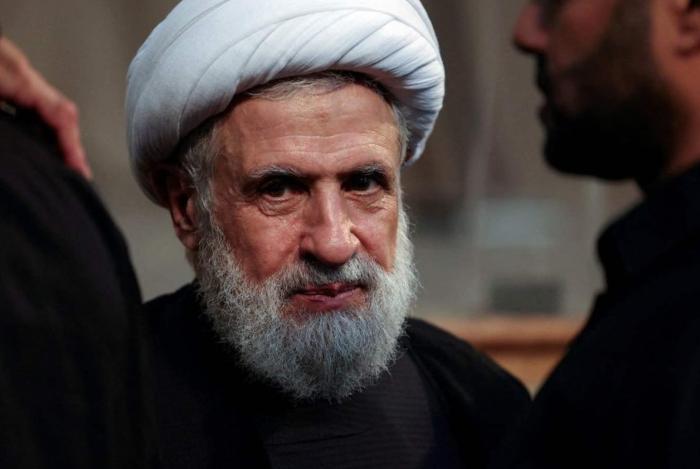
Hezbollah Secretary-General Naim Qassem Says No Ceasefire in Lebanon, Cites Israeli-American Aggression
15 sources compared
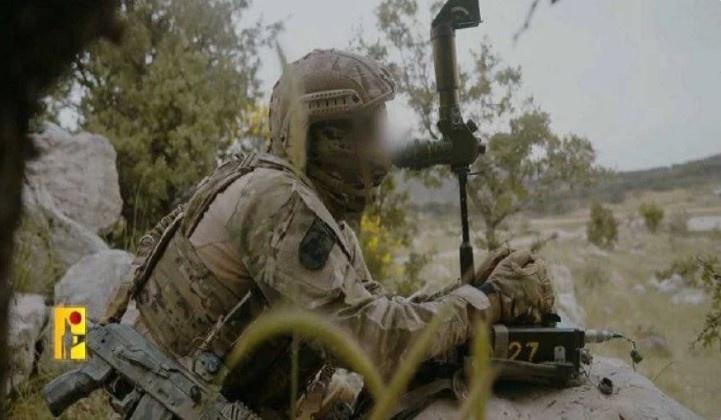
Hezbollah Vows to Thwart Lebanon-Israel Talks as Rockets and Drones Hit Israeli Troops
15 sources compared
Israel Applies the Gaza Model in Southern Lebanon, Razes Towns and Villages Near Bint Jbeil
17 sources compared