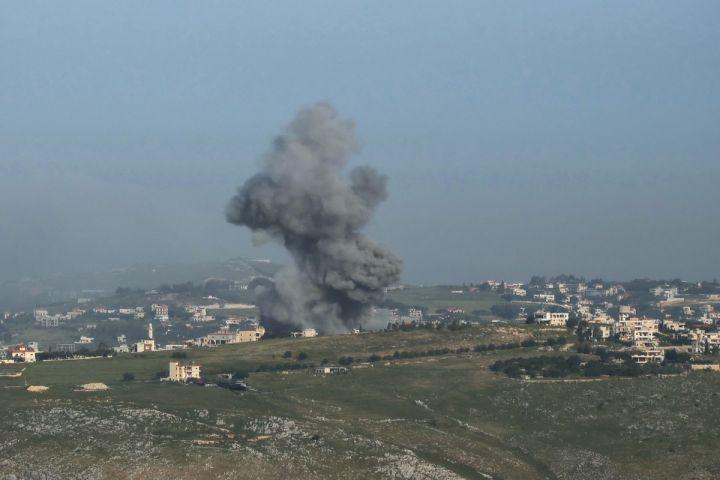
Hezbollah Uses FPV Drones to Strike Israeli Soldiers and Vehicles Near Kiryat Shmona
Image: میدل ایست نیوز

Hezbollah Uses FPV Drones to Strike Israeli Soldiers and Vehicles Near Kiryat Shmona

16 May, 2026.Lebanon.20 sources

Key Takeaways

  • Hezbollah deployed drones to strike Israeli soldiers and armored vehicles.
  • BBC Verify and The Guardian describe Hezbollah drone use as evolving tactics.
  • Outlets describe Hezbollah drone activity as a major development in the conflict.

FPV drones reshape tactics

The BBC reported that Hezbollah has increased its use of small first-person view (FPV) drones to attack Israel, including systems controlled by fibre-optic cables, with BBC Verify geolocating 35 videos shared since 26 March showing strikes on Israeli soldiers, armoured vehicles and air defence systems in southern Lebanon and northern Israel.

The BBC said Israeli media reports indicate four IDF soldiers and one civilian have been killed in FPV strikes, with dozens more injured, while Hezbollah does not appear to have shared any footage of similar strikes from the conflict beginning on 2 March.

Image from Al Jazeera
Al JazeeraAl Jazeera

BBC Verify tracked a verified video showing at least four FPV drones attacking an Israeli border outpost near Kiryat Shmona and targeting a series of military vehicles in sequence, with at least two heavily damaged or destroyed in the clips.

The BBC also quoted security expert Dr Andreas Krieg of King’s College London saying the fibre-optics render Israel’s capacity to detect, jam and intercept drones “largely irrelevant” and makes finding the operator significantly more challenging.

Casualties, displacement, and claims

Lebanon’s Ministry of Public Health, as cited by al-bayader, said at least 14 people were killed in Israeli airstrikes in southern Lebanon and in Beirut on April 5, and it added that 39 more people were injured in Israeli airstrikes on the Jnah neighborhood in Beirut.

The same al-bayader account said a medical source told AFP the strike occurred about 100 meters (330 feet) from Rafik Hariri University Hospital, and it reported that Israel began its air raids on Lebanon on March 2 after Hezbollah launched rockets at Israel in response to the US-Israeli war against Iran.

Image from Al-Bayader
Al-BayaderAl-Bayader

In a separate BBC report on FPV drone tactics, the Israel Defense Forces told BBC Verify it recognises the threat from drones and is investing "significant resources" in improving defences, developing "more effective alert models" and training soldiers for "improving readiness and increasing awareness of the threat".

The BBC also said Israel has not published all casualty details, while Israeli media reports indicate four IDF soldiers and one civilian have been killed in FPV strikes, with dozens more injured.

What comes next in Lebanon

The BBC said the escalation in fighting between Israel and Hezbollah began on 2 March, two days after the US and Israel launched a wave of air strikes in Iran killing supreme leader Ayatollah Ali Khamenei, and it described how Hezbollah fired rockets into Israel and Israel responded with widespread air strikes in Lebanon and a ground invasion of the south of the country.

Lebanon’s health ministry, according to the BBC, said at least 2,896 people have been killed since the conflict began, including more than 400 since US President Donald Trump announced a ceasefire in April, and it said more than one million people have been displaced in Lebanon since the conflict began.

In al-bayader’s account, Lebanese President Joseph Aoun reiterated his call for talks with Israel and said he wants to save southern Lebanon from the level of destruction caused by Israel’s genocidal war on Gaza, asking why “we don’t negotiate so that we can at least save homes that have not yet been destroyed.”

Al-bayader also reported that Israel announced it would strike the Masnaa border crossing between Lebanon and Syria, and it said the border site on the Lebanese side was evacuated quickly and became almost deserted by early Sunday, with some guards still on duty.

More on Lebanon