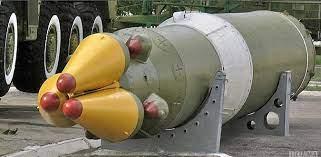
IAEA Inspectors Struggle to Track Iran’s 83% Uranium Traces After Natanz, Isfahan, Fordow Attacks
Key Takeaways
- IAEA inspectors face widening information gaps tracking Iran's nuclear traces after Natanz, Isfahan, Fordow attacks.
- Attacks on Natanz, Isfahan, Fordow damaged key sites, heightening monitoring challenges.
- Iran denies Trump's claims about enriched uranium transfers or removal.
Nuclear traces, uranium stockpiles
Iran’s nuclear program remains a central focus of U.S.-Iran diplomacy and monitoring efforts, with inspectors trying to track what Tehran can and cannot conceal.
Al-Jazeera Net describes how “inspectors can detect traces of it no matter how small,” referring to highly enriched uranium that Iran cannot hide from monitoring.

The article says the IAEA has “previously confirmed that it detected traces of uranium enriched to 83% at some Iranian facilities,” and frames that as evidence of the difficulty of concealing rising enrichment levels.
It also cites IAEA estimates that Iran possesses “440 kilograms of uranium enriched to 60%,” including “36 kilograms are enough to make a nuclear bomb,” and compares that with “25 kilograms of uranium enriched to 90%.”
Al-Jazeera Net further states that Iran is capable of manufacturing “10 nuclear bombs” with its stock of highly enriched uranium, while emphasizing that this would require “enrichment devices” installed in a sequential process.
The same source links the monitoring demand to the U.S. negotiating position, saying the “United States’ demand that Iran hand over its stock of uranium enriched to 60% is one of the hottest items on the bargaining table.”
It adds that the U.S. bases its position on IAEA data about the “possibility of Iran obtaining the nuclear bomb,” while also referencing Trump’s earlier claim that Iran agreed to cooperate in extracting uranium buried underground.
In parallel, Al-Jazeera Net says the IAEA’s ability to verify the fate of attacked facilities is constrained, noting that Natanz, Isfahan, and Fordow “have not been visited by IAEA inspectors since their targeting last year.”
From JCPOA to new demands
The current dispute over Iran’s nuclear program is repeatedly framed in the sources as a break from the 2015 JCPOA and a shift toward new U.S. demands.
Al-Jazeera explains that on July 14, 2015, Iran reached an agreement with the European Union and six major powers—China, France, Russia, the United Kingdom, the US, and Germany—under which those states would “roll back international economic sanctions” and allow Iran “greater participation in the global economy.”

In return, Tehran committed to limiting activities that could be used to produce a nuclear weapon, including “reducing its stockpile of enriched uranium by about 98 percent, to less than 300kg (660lb),” and “capping uranium enrichment at 3.67 percent.”
Al-Jazeera says that before the JCPOA Iran operated “roughly 20,000 uranium-enriching centrifuges,” and under the deal that number was cut to “a maximum of 6,104,” with older-generation machines confined to two facilities subject to international monitoring.
The article also describes the inspection regime, saying the JCPOA introduced “one of the most intrusive inspection regimes ever implemented by the global nuclear watchdog, the International Atomic Energy Agency (IAEA).”
It then recounts the political rupture, stating that the deal “came to halt when Trump formally withdrew Washington from the nuclear deal in 2018,” despite the IAEA saying Iran had complied up to that point.
Al-Jazeera quotes Trump’s October 2017 remarks that “The Iranian regime supports terrorism and exports violence, bloodshed and chaos across the Middle East,” and says “That is why we must put an end to Iran’s continued aggression and nuclear ambitions.”
The same source says that before the initial US-Israeli strikes on Iran at the end of February, the U.S. made new demands including “additional restrictions on Tehran’s nuclear programme” and “an end to its support for regional armed groups, primarily in Lebanon, Yemen and Iraq.”
IAEA gaps and inspection limits
Beyond stockpile numbers, Reuters reporting carried in اپک تایمز فارسی focuses on information gaps that inspectors face at Iranian nuclear sites, including Fordow.
“United States President Donald Trump has said a nuclear agreement currently being negotiated with Iran will be “far better” than the 2015 Joint Comprehensive Plan of Action (JCPOA), which he withdrew from in 2018 during his first term in office”
The article says Reuters reported that inspectors “have encountered a substantial information gap,” and that although Iran told the IAEA that “hundreds of advanced IR-6 centrifuges would be installed at Fordow,” inspectors had “no knowledge of the sources of these complex devices.”
It adds that the blind spots include “the number of centrifuges Iran has, where they are produced and kept, and their components,” and that the agency “also can no longer conduct unannounced inspections at sites not disclosed by Iran.”
The same Reuters-based report says that “for any agreement to succeed, these blind spots must be addressed,” and it describes Iran’s position that after the U.S. withdrawal it “reserves the right to walk away from its obligations regarding strengthened IAEA monitoring.”
اپک تایمز فارسی states that a confidential IAEA report released “last weekend” says Iran has enough enriched uranium to build “as many as nine nuclear bombs,” and it adds that “no other country has enriched uranium to such a level without moving toward weaponization.”
It also says that “a European official familiar with Iran's nuclear program” told Reuters the program has progressed so far that even if shut down, Iran could “restart and rebuild it within a few months.”
The report further says that “about three years ago Iran ordered all monitoring equipment installed under the 2015 agreement, including surveillance cameras in facilities producing centrifuge parts, to be removed.”
It concludes that while the IAEA can currently see “about 20,000 centrifuges installed at Iran's enrichment facilities,” it does not know how many other machines have been produced or where they were moved, and that the IAEA “cannot currently guarantee that Iran's nuclear program is solely peaceful.”
Voices: Grossi, Baghaei, Larijani
IAEA chief Rafael Grossi is quoted in ایران گلوبال emphasizing that damage from strikes has not erased Iran’s technical capacity, and that inspections must resume to clarify intent.
The article says Grossi told the Swiss newspaper Lutano that “Iran's centrifuges, which can be used for uranium enrichment, can also be rebuilt,” and it adds that “Iran still possesses enriched uranium, including about 400 kilograms of uranium enriched to 60 percent.”

Grossi is also quoted saying, “We have no evidence that Tehran intends to build a bomb,” while stressing that “To be sure about this, inspections must be resumed.”
The same source says Grossi believes “most of the high-enriched uranium remains kept in Isfahan, Natanz, and Fordow,” and it reports that he warned restrictions could lead to “a return to the use of force” if diplomacy fails.
On the Iranian side, Esmaeil Baghaei, spokesman for the Islamic Republic of Iran's Foreign Ministry, is quoted arguing for IAEA independence, saying: “As long as the IAEA acts in accordance with its authorities and "away from the monitoring and political pressure" of the United States and the European Troika, it is to be respected by the Islamic Republic..”
Ali Larijani, Secretary of the Supreme National Security Council, is quoted dismissing Grossi’s impact, saying: “Mr. Grossi has done his job and his reports will have no further impact.”
Iran’s stance is also reflected in the same article’s description of Grossi’s comments about diplomatic space, including his statement that after “the 12-day war” Iran could have severed ties or withdrawn from the Nuclear Non-Proliferation Treaty but “it did not.”
The article also says Grossi stated, “Tehran only allows inspectors to enter in a limited and gradual manner,” and that those restrictions are due to “security considerations that I understand.”
Military claims, expertise limits
The sources also depict a contested narrative about whether military strikes can eliminate Iran’s nuclear capability, and they connect that dispute to the bargaining over uranium and inspections.
“While Iran seeks to reach an agreement to stop the war and guarantee its right to obtain nuclear technology that it says it wants for peaceful purposes, the United States appears determined to close any gap through which Tehran might in the future access a nuclear bomb”
The Daily Beast reports that on 60 Minutes, Harvard professor Dr. Matthew Bunn challenged President Donald Trump’s claims that strikes “completely obliterated” the facility at Fordow, arguing: “That statement is just not true.”
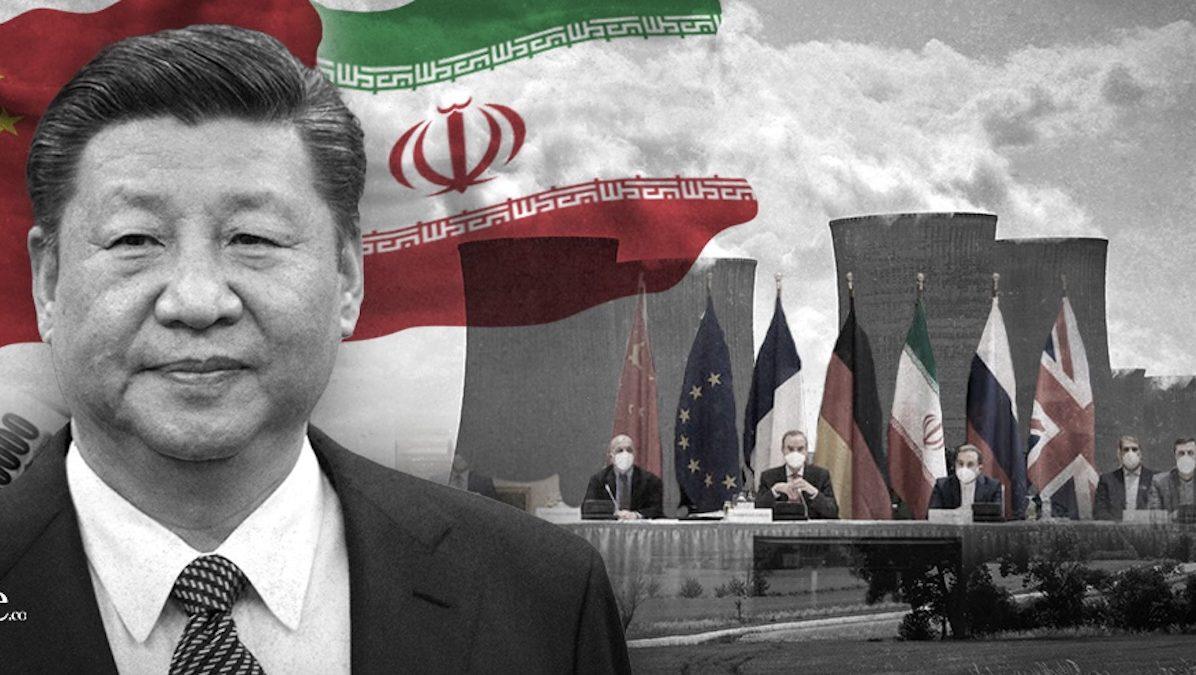
Bunn is quoted saying, “You can’t say that a program that still has enough nuclear material for a bunch of nuclear bombs is obliterated,” and he adds that “You can’t bomb away their knowledge.”
The Daily Beast says Bunn responded to a question about the IAEA’s belief that Iran still has “970 pounds of 60-percent highly enriched uranium,” and Bunn replied: “That is enough material for, if you enrich it just a little bit more, for 10 to 11 nuclear bombs.”
The same report includes Scott Roecker, a former National Nuclear Security Administration official, who said he doesn’t believe there is a “lasting, durable solution to Iran’s nuclear program through military means.”
It also recounts confusion in Trump’s messaging around ceasefire terms, stating that Trump claimed Iran agreed that “there will be no enrichment of uranium,” while a Farsi-language version stated Iran was demanding “acceptance of enrichment” as a stipulation.
The Daily Beast then quotes Trump’s threat on Truth Social that “If they don’t the United States is going to knock out every single Power Plant and every single Bridge, in Iran! NO MORE MR NICE GUY!” and it says the official Iranian news agency IRNA announced Iran would not attend negotiations, writing that the absence stems from “Washington’s excessive demands, unrealistic expectations, constant shifts in stance, repeated contradictions, and the ongoing naval blockade.”
Finally, the Times of Israel adds a different dimension by quoting a senior Iranian source to Reuters that Tehran’s “defensive capabilities,” including its missile program, are “not open to negotiation with the United States,” and it says “Continuation of the US blockade on the Strait of Hormuz undermines the peace talks.”
More on Iran
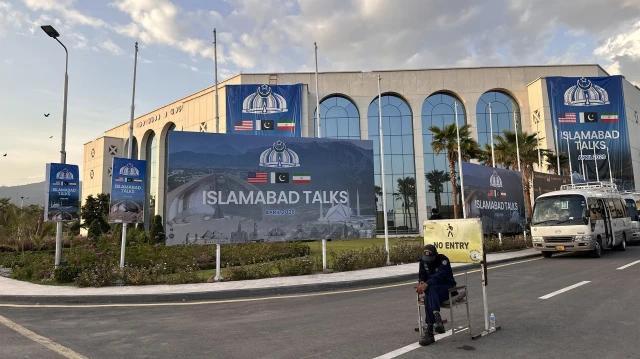
Donald Trump Extends Iran Ceasefire Indefinitely, Keeps U.S. Blockade in Strait of Hormuz
18 sources compared
Donald Trump Extends U.S. Ceasefire With Iran, Orders Naval Blockade to Continue
15 sources compared
Donald Trump Extends U.S. Ceasefire With Iran, Keeps Blockade of Iranian Ports
12 sources compared
Donald Trump Extends Ceasefire With Iran Indefinitely, Maintains Blockade of Iranian Ports
13 sources compared