
ICE Deploys Agents to Airports as TSA Wait Times Rise Amid Partial Shutdown
Key Takeaways
- ICE officers deployed to about 14 US airports to supplement TSA amid shutdown.
- TSA workers unpaid since February 14 shutdown, resulting in shortages and longer lines.
- Officials say ICE will act as a force multiplier assisting with security lines at airports.
Airport Security Crisis
Hundreds of Immigration and Customs Enforcement (ICE) agents were deployed to at least 14 major U.S. airports on Monday, March 23, 2026, as part of an unprecedented response to severe staffing shortages at Transportation Security Administration (TSA) checkpoints during a partial government shutdown.
The deployment came as wait times at security screening stretched to four hours at some major hubs, with Atlanta's Hartsfield-Jackson International Airport urging passengers to arrive at least four hours early for both domestic and international flights.
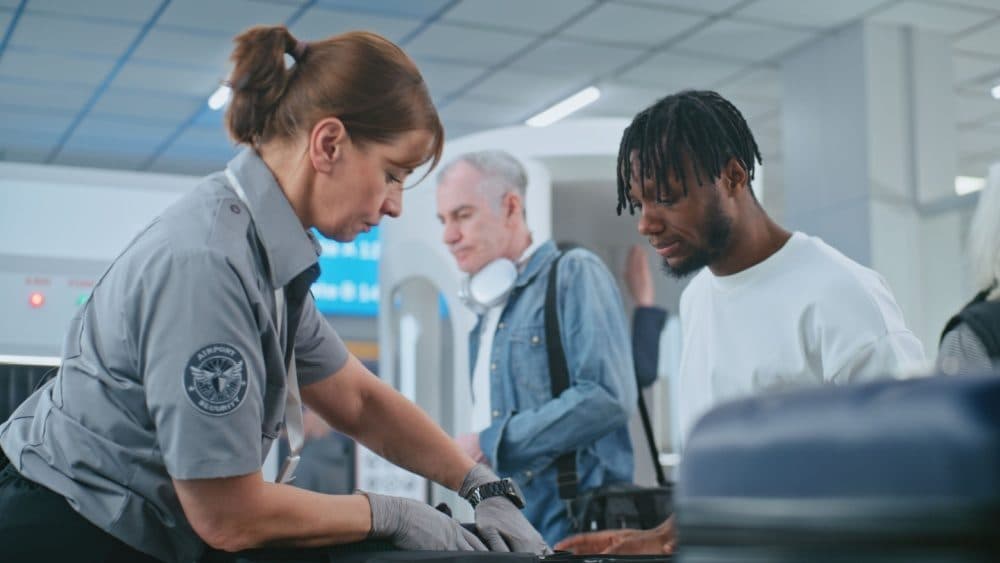
ICE agents were seen wearing tactical vests and carrying handguns at airports including Atlanta, Houston's George Bush Intercontinental, JFK, and Newark, where they conducted crowd control and line management duties rather than actual security screening.
The move reflected the deepening crisis as TSA absenteeism rates reached 11.8% nationwide on Sunday, with more than 3,450 officers calling out sick—the highest rate since the shutdown began five weeks ago.
Political Standoff
The deployment of ICE agents was directly tied to the ongoing partial government shutdown that began February 14 when funding for the Department of Homeland Security (DHS) lapsed, creating a political standoff between congressional Democrats and President Trump.
Trump announced the move over the weekend, stating he would deploy ICE agents to airports unless Democrats agreed to fund DHS, framing it as necessary to address the airport security crisis that has disrupted travel during the busy spring season.
The shutdown has left tens of thousands of TSA workers without pay while ICE officers continued receiving salaries due to separate funding streams established through Trump's 'One Big Beautiful Bill' that provided $75 billion for immigration enforcement operations.
Democrats have refused to fund DHS without reforms to ICE operations, particularly following the fatal shootings of Alex Pretti and Renee Good in Minneapolis during January immigration enforcement operations, which sparked nationwide outrage and demands for oversight changes.
Operational Details
While ICE officials described the deployment as a temporary measure to support TSA operations, practical details revealed significant limitations and concerns about effectiveness.
White House border czar Tom Homan clarified that ICE agents would not be operating X-ray machines or conducting actual security screening, as they lack specialized training for aviation security.
Instead, agents would perform support duties such as monitoring exit lanes, checking identification before screening areas, and assisting with crowd control to free up TSA officers for screening tasks.
Transportation Secretary Sean Duffy suggested ICE agents 'know how to pat people down, they know how to run the X-ray machines,' creating confusion about the actual scope of their responsibilities.
Early reports from travelers indicated mixed results, with some noting that ICE presence didn't noticeably improve wait times, while others expressed anxiety about the increased federal presence at airports during already stressful travel situations.
Criticism and Concerns
The deployment sparked immediate criticism from labor unions, travelers, and Democratic officials who raised concerns about both effectiveness and civil liberties.
Aviation unions representing flight attendants and other workers condemned the move as 'another distraction from solutions that protect Americans,' arguing that transportation security officers 'can't simply be replaced' by federal immigration officers who lack specialized training.

Everett Kelley, president of the American Federation of Government Employees, emphasized that TSA officers spend months learning to detect explosives and weapons—skills that 'armed, untrained agents' cannot simply replicate.
Travelers expressed mixed reactions, with some supporting the additional help while others found the ICE presence unnerving, particularly among immigrant communities.
Democratic leaders including House Minority Leader Hakeem Jeffries blasted the administration for using 'untrained individuals' in 'close exposure and highly sensitive situations at airports,' while civil liberties groups warned that ICE's presence could lead to increased immigration enforcement and questioning of travelers' immigration status, potentially creating fear and confusion during an already stressful travel experience.
More on USA

Trump Delays Strikes on Iranian Energy Infrastructure Amid Talks With Iran.
43 sources compared

Senate confirms Markwayne Mullin as Homeland Security secretary
13 sources compared

Supreme Court appears poised to limit late-arriving mail-in ballots.
23 sources compared
US Senate confirms Mullin as Secretary of the Department of Homeland Security
24 sources compared