
IDF Admits It Will Legalize Illegal Tayasir Outpost, Signaling Planned Settlement Expansion
Key Takeaways
- Settlers attacked Palestinians in Tayasir and established an illegal outpost.
- IDF detained CNN journalists; a photographer injured, cameras damaged.
- Media groups condemned the assault on the CNN crew.
New development: outpost legalization plan
The single most important new development in these cross-source reports is the explicit admission by an IDF soldier that the illegal settler outpost near Tayasir will be legalized as a settlement, signaling a formal policy trajectory rather than a one-off press-freedom incident.
“Twelve hours after Israeli settlers brutally attacked several Palestinians and established a new illegal outpost in their village, the Israeli military stepped in”
CNN quotes the soldier, identified as Meir, saying: “But this will be a legal settlement,” and adding, “Slowly, slowly.”
The Guardian’s coverage mirrors that line, noting that the outpost is illegal under Israeli law but framed as a future legal settlement, reinforcing a pattern rather than a stray act of vandalism.
The Jerusalem Post similarly presents Meir’s remark as a direct statement of policy intent, while mezha.net and وكـالـة مـعـا الاخـبـارية relay the same sentiment in their translations, underscoring a coordinated, state-tactical approach to convert such outposts into formal, government-endorsed footholds.
Taken together, these accounts reveal a planned, incremental legalization of illegal outposts as part of a broader settler-protection dynamic, rather than isolated violence.
Detainment details and press freedom
The second, closely linked development is the detainment of the CNN crew and accompanying Palestinian interviewees for about two hours, during which soldiers directed the journalists to sit, pointed rifles at them, and, in one instance, restrained Cyril Theophilos with a chokehold and damaged his camera.
CNN’s on-the-record account describes commands like “Stop! Sit down! Sit down!” followed by an assault that left Theophilos on the ground and the crew detained.

Guardian coverage emphasizes that the detainment was part of a broader pattern, with the IDF later stating that the actions were “incompatible with what is expected of IDF soldiers” and promising a thorough review.
The Jerusalem Post confirms the two-hour duration of the detention, and notes that Palestinian interview subjects were detained alongside the CNN crew.
Haaretz documents the incident as part of a broader sequence in which soldiers and settlers interact in ways that push press and civilian coverage into a coercive, controlled frame.
Context: settler movement and press risks
Beyond the immediate incident, the reporting converges on a Western-facing pattern that the article set describes as part of a broader settler-protection dynamic in which outposts are established or expanded with the perceived or actual protection of soldiers, and with Palestinian residents routinely marginalized in the line of reporting.
“Gift this articleShare to FacebookPrint article Article printing is available to subscribers only Print in a simple, ad-free format Subscribe Comments: SaveZen Reading Zen reading is available to subscribers only Ad-free and in a comfortable reading format Subscribe”
The CNN and Guardian accounts frame the soldiers’ comments as revealing an ideology that views the West Bank as belonging to Israeli settlers, a view echoed by the Jerusalem Post and mezha.net, which describe a government and military tolerance of settlement expansion.
In parallel, reporters and Palestinians describe a pattern in which the military assists or tolerates settlers, rather than securing equal protection for Palestinian civilians, a narrative echoed by Common Dreams and the West Asian outlet.
The West Bank context is not abstract: outlets report that violence by settlers has escalated and that the wider conflict, including the Gaza war, continues to shape military actions and journalism.
Taken together, the reporting signals a systemic alignment of military posture with settler expansion, a dynamic that amplifies risks for journalists and civilian residents alike.
Accountability, implications, and human cost
The incident underscores accountability gaps around press freedom, confirms a pattern of settler-facilitated violence in which the state appears to tolerate or enable outpost legalization, and signals a reshaping of West Bank governance in favor of settlers.
FPA and CNN’s reporting call for a formal inquiry; the IDF has pledged to review the soldiers’ conduct, a commitment echoed by the Israeli military in the Jerusalem Post coverage.

Common Dreams argues that apologies are not enough and stresses the need for concrete accountability, a sentiment shared by journalists and analysts scrutinizing patterns of violence and media suppression.
Haaretz notes the internal strains within the IDF under a far-right government, suggesting that normalizing settler collaboration with security forces could persist without systemic policy shifts.
The West Asia casualty and displacement data referenced in WA highlight the human cost of a legal-claim framework that increasingly legitimizes outposts and ethnic violence.
More on Gaza Genocide

Israeli Forces Detain 21-Month-Old Jawad; Medical Report Finds Cigarette Burns And Puncture Wounds
18 sources compared
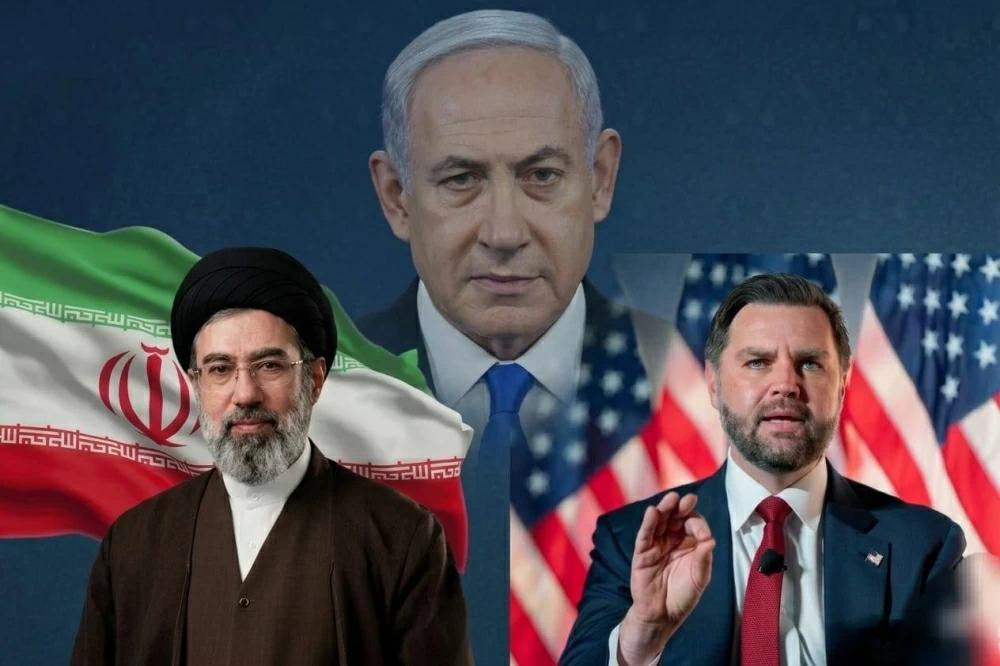
US Sends VP JD Vance To Negotiate With Iran Amid Conflict
12 sources compared

Israel Strikes Hezbollah; Iran Demands Ceasefire Include Lebanon and Halt Israeli Attacks
17 sources compared

Spain's PM Sanchez accuses Netanyahu of seeking Gaza-scale destruction in Lebanon
10 sources compared