IEA Chief Fatih Birol Warns Europe Has Maybe Six Weeks of Jet Fuel Left
Key Takeaways
- IEA chief Fatih Birol says Europe has about six weeks of jet fuel left.
- Strait of Hormuz disruption threatens Middle East jet fuel supply.
- Flight cancellations could begin soon if jet fuel flows remain blocked.
Jet Fuel Countdown
Europe’s aviation fuel position is tightening, with the head of the International Energy Agency warning that the continent has “maybe six weeks or so” of remaining jet fuel supplies.
In an interview reported by the Associated Press, IEA Executive Director Fatih Birol said the situation could lead to flight cancellations “soon” if oil supplies remain blocked by the Iran war.

Birol framed the disruption as “the largest energy crisis we have ever faced,” describing a pinch-off of oil, gas and other vital supplies through the Strait of Hormuz.
He told the Associated Press that “In Europe, we have maybe six weeks or so (of) jet fuel left,” adding that “soon we will hear the news that some of the flights from city A to city B might be canceled as a result of lack of jet fuel.”
The BBC reported the same warning, saying Birol told AP that stocks could reach a tipping point in June if Europe cannot replace at least half of its imports from the Middle East.
The BBC also said the Strait of Hormuz has been effectively closed by Iran for more than six weeks in response to US and Israeli attacks, sending the price rocketing and prompting fears of shortages.
Why the Bottleneck Matters
The IEA’s warning ties Europe’s jet fuel outlook to the Strait of Hormuz, which Birol described as the choke point for global energy flows.
The Associated Press reported that nearly 20% of the world’s traded oil passes through the Strait of Hormuz in peacetime, and Birol warned that not reopening the waterway within weeks could compound repercussions for global energy supplies.
He said the broader economic fallout would include “higher petrol (gasoline) prices, higher gas prices, high electricity prices,” and he described the longer the disruption lasts, the worse it would be for “economic growth and inflation around the world.”
Birol also warned that without a settlement of the Iran war that permanently reopens the Strait of Hormuz, “Everybody is going to suffer,” while “no country, no country is immune to this crisis.”
The BBC added that the IEA’s monthly oil market report said exports from the Gulf region were the largest source of jet fuel to the global market, and that refineries in other major exporting countries such as Korea, India and China were highly dependent on crude oil imports from the Middle East.
The BBC further said Europe has relied on the Middle East for about 75% of its jet fuel imports, while the IEA said the crisis “has thrown a proverbial wrench into the inner workings of the aviation fuel markets.”
In the same reporting, the BBC said the IEA warned that even if US jet fuel exports accelerated, they would only replace a little over half of the lost supplies, leaving the possibility of physical shortages at select airports.
Economic Pain and Uneven Impact
Birol’s warning extends beyond aviation, with the Associated Press reporting that economic pain would be uneven and would fall hardest on countries whose voices are “not” heard as much.
He told AP that “the countries who will suffer the most will not be those whose voice are heard a lot,” adding that it would be “mainly the developing countries. Poorer countries in Asia, in Africa and in Latin America.”
The Associated Press also reported that Birol said “Some countries may be richer than the others,” but insisted “no country, no country is immune to this crisis.”
He warned that if Hormuz is not open until “(the) end of May,” “many countries — starting from the weaker economies — are going to face huge challenges,” and that the impact could move from “high inflation numbers” to “coming close to slow growth or even to recession in some cases.”
The BBC similarly described the IEA’s scenario analysis, saying that if Europe could not replace more than 50% of its Middle Eastern imports, “physical shortages may emerge at select airports, resulting in flight cancellations, and demand destruction.”
The BBC also said that if three-quarters of supplies could be replaced, the same situation could still arise but “not until August,” and that European markets would need to “work harder to attract further replacement cargoes” over summer months.
In parallel, the Independent reported Birol’s view that the disruption could plunge summer holidays into chaos and quoted him again on “Dire Straits,” saying “It’s a dire strait now, and it is going to have major implications for the global economy.”
Airlines Respond, Regulators Watch
As the jet fuel warning spread, airlines and European institutions were described as responding to rising costs and preparing for potential disruptions.
The Associated Press reported that Dutch airline KLM and London-based budget carrier easyJet said Thursday they were not experiencing current fuel shortages, while KLM said it would cut 160 flights to and from Amsterdam’s Schiphol airport next month, citing “rising kerosene costs” and that a limited number of flights are “no longer financially viable to operate.”
The BBC reported that the European Commission said there was “no evidence of fuel shortages” in the European Union, while acknowledging there could be supply issues “in the near future,” and that oil and gas coordination groups were meeting weekly with energy measures expected by the Commission president next week.
The BBC also reported that the trade body for European airports, the Airports Council International, wrote to the Commission warning the continent could see jet fuel shortages if the Strait of Hormuz does not reopen in the next three weeks.
In the same BBC account, Airlines for Europe called on the EU to clarify passenger compensation rules to ensure that fuel shortages or airspace closures resulting from the conflict are treated as “extraordinary circumstances.”
The BBC further said easyJet had experienced £25m of additional fuel costs in March due to the Middle East conflict, and that KLM said it would cancel 160 flights in Europe in the coming month due to rising fuel costs.
The Independent added that Ryanair’s chief executive Michael O’Leary said the airline was considering cutting 10 per cent of its flights, and it reported that Scandinavian airline SAS cancelled more than 1,000 flights this month while temporarily increasing prices due to rising jet fuel costs.
The Next Moves and Risks
The IEA’s warning also highlighted how damage and policy choices could prolong the crisis, even if a peace settlement comes.
The Associated Press reported that more than 110 oil-laden tankers and over 15 carriers loaded with liquefied natural gas are waiting in the Persian Gulf and could help ease the energy crisis if they could escape through the Strait of Hormuz, but Birol said “it is not enough.”

It added that even with a peace deal, war-damage to energy facilities means it could be “many months” before pre-conflict levels of production are restored, with Birol saying “Over 80 key assets in the region have been damaged” and that “more than one third are severely or very severely damaged.”
Birol told AP that “It will take gradually, gradually, up to two years to come back where we were before the war,” and he warned that it would be “extremely optimistic” to believe recovery would be quick.
The Associated Press also reported Birol’s opposition to Iran’s “toll booth” system, saying Iran has applied it to some ships letting them travel through the strait for a fee, and that allowing it to become more permanent would risk setting a precedent for other waterways including the vital Malacca Strait.
He said, “If we change it once, it may be difficult to get it back,” and “It will be difficult to have a toll system here, applied here, but not there,” while adding, “I would like to see that the oil flows unconditionally from the point A to point B.”
Euronews reported that TotalEnergies warned that if oil supplies from the Gulf remain blocked in June it would not be able to supply all of its customers, quoting Patrick Pouyanne: “If this war and this blockade last more than three months, we'll begin to face some serious supply issues in some products like jet fuel.”
More on Europe

Ryanair Flight From Thessaloniki Returns After Boeing 737-800 Window Dislodges, Passenger Partly Sucked Out
14 sources compared

Hellenic Air Force F-16 Makes Emergency Landing at Zakynthos Airport After Technical Fault
11 sources compared
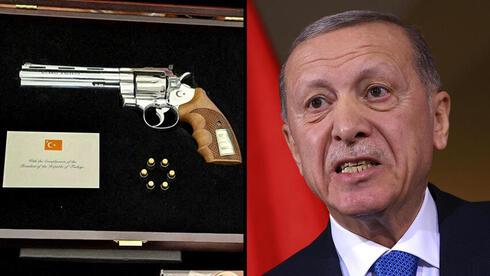
Recep Tayyip Erdogan Gifts Personalized Revolvers With Live Rounds to NATO Leaders in Ankara
39 sources compared
Trump Threatens To Cut Off Trade With Spain At NATO Summit In Turkey
17 sources compared