Crypto21 April, 20266 min read
Indo-Pacific Commander Samuel Paparo Says Bitcoin Supports U.S. Power Projection in Senate Testimony
This article is an automated aggregation of coverage from news outlets. Our editorials offer in-depth analysis curated by the NewsCord team.
Paparo called Bitcoin a valuable computer science tool for power projection. Bitcoin's proof-of-work can support U.S. national security aims.
Paparo’s “Power Projection” Claim
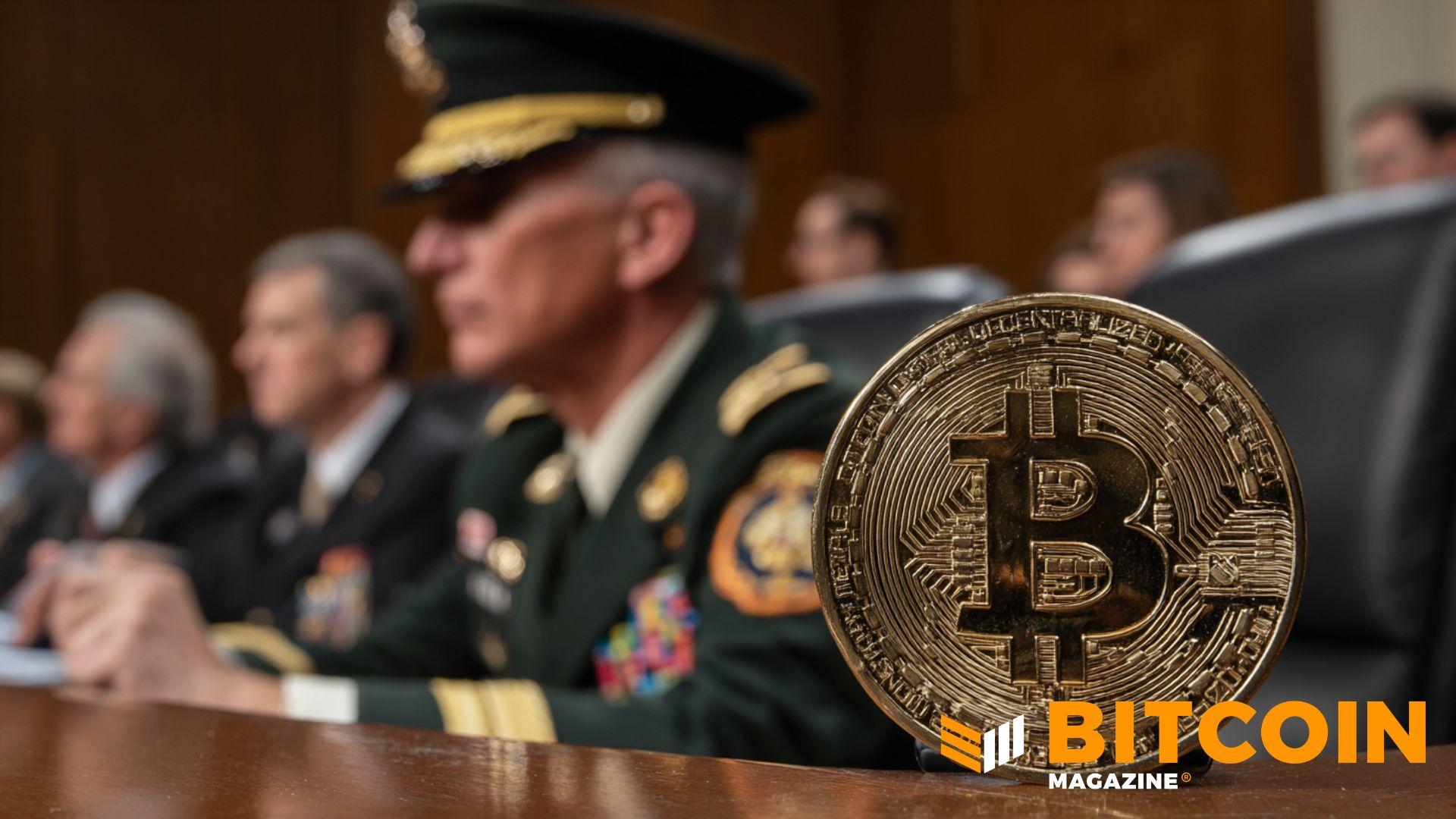
Admiral Samuel Paparo, commander of the United States Indo-Pacific Command, told the Senate Armed Services Committee that Bitcoin is a tool for American “power projection,” framing the cryptocurrency as more than a monetary system. In testimony reported by PR Newswire, Paparo said Bitcoin has “incredible potential” for national security and that “anything that supports all instruments of national power for the United States of America is to the good.” Paparo also described Bitcoin as “a valuable computer science tool,” adding that it is “a peer-to-peer, zero-trust transfer of value.”
“‘Bitcoin is a reality,’ Paparo told the committee.”
He argued that Bitcoin’s proof-of-work protocols “actually imposes more costs” than “just the algorithmic securing of networks,” and he said the technology has “really important computer science applications for cybersecurity.” Cointelegraph likewise quoted Paparo describing Bitcoin as “a valuable computer science tool, as a power projection,” and it reported that he said the proof-of-work technology “imposes more cost” on attackers attempting to compromise the network. The hearing context, as described across the coverage, was the strategic posture of US forces in Indo-Pacific, including “ongoing conflicts in Ukraine and the Middle East,” “China’s military expansion,” and threats from “North Korea.”
Cybersecurity and Proof-of-Work
Across the reporting, Paparo’s argument centered on Bitcoin’s underlying computer science architecture and its proof-of-work design as a cybersecurity mechanism. Cointelegraph reported that Paparo said Bitcoin’s proof-of-work technology “imposes more cost” on attackers attempting to compromise the network, and it added that “Outside of the economic formulation of it, it has got really important computer science applications for cybersecurity.” The same framing appeared in PR Newswire, which quoted Paparo saying Bitcoin “shows incredible potential as a computer science tool that, through the proof-of-work protocols, actually imposes more costs than just the algorithmic securing of networks and our ability to operate.”
Bitcoin Magazine similarly quoted Paparo describing Bitcoin as “a valuable computer science tool as power projection,” and it reported that he said the protocols “impose more cost than just securing networks,” extending to “offensive and defensive cyber operations.” MEXC’s coverage echoed the proof-of-work cost argument, stating that Paparo described Bitcoin’s proof-of-work system as a mechanism that “imposes more cost” on attackers and that the technology’s value extends into cybersecurity applications. In parallel, the sources also linked Paparo’s remarks to earlier comments from US Space Force member Jason Lowery, who in December 2023 argued that Bitcoin and other proof-of-work blockchains could protect the US in cyberwarfare.

Lawmakers, Bills, and Reserves
The testimony and its framing were tied in the coverage to legislative and policy moves around Bitcoin’s strategic status.
“The testimony came in response to questioning from Sen. Tommy Tuberville (R-Ala.)”
Cointelegraph reported that US Senators Bill Cassidy and Cynthia Lummis introduced the Mined in America Act “to resolve” supply-chain concerns by bringing more Bitcoin mining manufacturing back to the US, and it said the bill also seeks to codify “Trump’s executive order establishing the Strategic Bitcoin Reserve.”
It further stated that the US holds “the largest Bitcoin reserves among nation-states” and “the largest share of Bitcoin hashrate,” while remaining reliant on “foreign-manufactured mining equipment,” which has raised “national security concerns related to supply chain risks.”
MEXC’s coverage described the Cassidy–Lummis initiative as designed to encourage domestic production of Bitcoin mining hardware and related supply chains, aiming to reduce reliance on foreign equipment and mitigate associated security concerns.
PR Newswire’s account of the hearing said the testimony came in response to questioning from Sen. Tommy Tuberville (R-Ala.), who asked how US leadership in Bitcoin affects deterrence against China.
Bitcoin Magazine added that President Trump signed an executive order establishing the Strategic Bitcoin Reserve on March 6, 2025, seeding it with BTC seized through criminal and civil asset forfeiture, and it said the White House directed that government BTC holdings not be sold.
Competing Narratives Across Outlets
While all the sources center on Paparo’s Senate remarks, they diverge in how they connect the testimony to broader implications and in how they present supporting details.
PR Newswire emphasizes the hearing’s novelty and quotes Sam Lyman, Head of Research at BPI, saying, “Bitcoin is an asset of irrefutable geopolitical importance, and today's Senate hearing confirms that fact,” and it frames the moment as “a critical moment in bitcoin's maturation as the asset moves beyond the phase of institutional adoption to the phase of nation-state adoption.”
Cointelegraph, by contrast, foregrounds the strategic posture discussion and the question from Sen. Tommy Tuberville about China’s “top monetary think tank,” while it also adds that Paparo’s remarks came as adversaries have turned to “phishing, ransomware and distributed denial-of-service” and it names North Korea’s Lazarus Group as an example that “stolen billions of dollars in crypto over the past decade.”
Bitcoin Magazine similarly highlights the testimony’s framing, stating that Paparo “did not describe BTC as a speculative asset or financial instrument,” and it adds that Paparo said he preferred to go “on record in writing and dive deeper in a classified setting.”
MEXC’s coverage includes a longer policy narrative about domestic manufacturing, supply-chain vulnerabilities, and the “dual-use nature of Bitcoin,” while also describing the Cassidy–Lummis initiative as part of “broader policy conversations dating back to executive actions intended to shape strategic crypto reserves.”
The differences extend to how other voices are used: PR Newswire quotes BPI’s Sam Lyman, Cointelegraph quotes Paparo and also Jason Lowery, and Bitcoin Magazine quotes Paparo and references Lowery as a “national defense fellow at MIT.”
What Comes Next
The coverage portrays the stakes as both national-security planning and policy implementation, with the next steps centered on legislation and strategic reserve management.
“The Senate hearing looked into the strategic posture of US forces in Indo-Pacific, including ongoing conflicts in Ukraine and the Middle East, China’s military expansion and coordination with foreign adversaries, and threats from North Korea.”
Cointelegraph notes that the Senate hearing looked into the strategic posture of US forces in Indo-Pacific, including “ongoing conflicts in Ukraine and the Middle East,” “China’s military expansion,” and threats from “North Korea,” and it reports that Paparo’s remarks came in response to Sen. Tommy Tuberville’s question about how the US and Congress can lead on Bitcoin competition.
It also reports that Paparo did not address Tuberville’s question directly but instead said, “Bitcoin is a reality. It is a peer-to-peer zero-trust transfer of value. Anything that supports all instruments of national power for the United States of America is to the good.”
PR Newswire adds that the hearing was convened to review the defense authorization request for fiscal year 2027 and the posture of U.S. Indo-Pacific Command and U.S. Forces Korea, and it says a full video is available on the Senate Armed Services Committee website.
Cointelegraph further states that the Mined in America Act aims to bring more mining manufacturing back to the US and codify the Strategic Bitcoin Reserve executive order, while it highlights supply-chain risks from foreign-manufactured mining equipment.
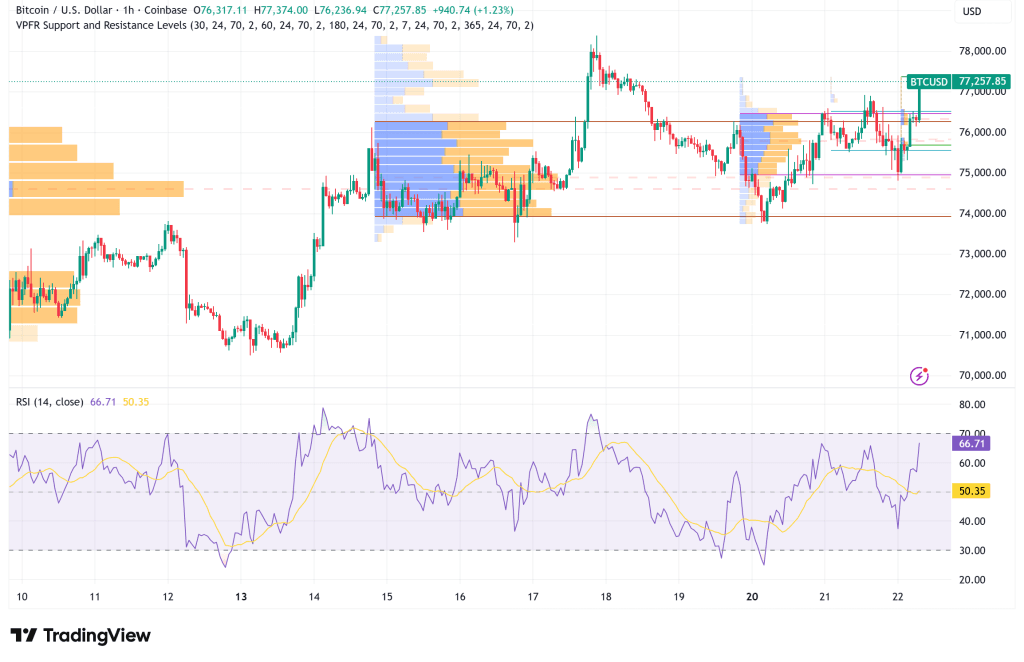
Finally, FXLeaders’ coverage ties the political framing to market and institutional developments, reporting that Strategy made a $2.5B purchase of 34,164 BTC and that the Bitcoin Fear & Greed Index reached a three-month high.