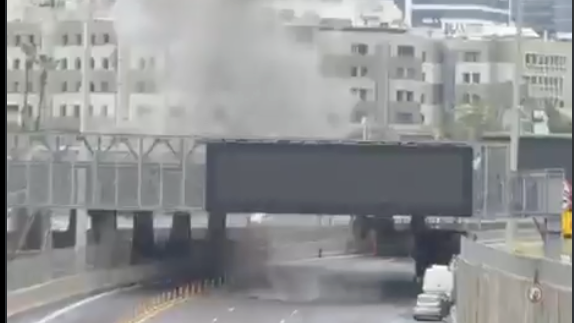
Iran Attacks Tel Aviv Area with Cluster Missile, Wounding Fifteen
Key Takeaways
- Iran launched a cluster missile toward the Tel Aviv area, with central Israel impacts.
- Petah Tikva and central Israel sustained damage from cluster fragments and missile strikes.
- Casualty figures vary: 15 wounded in Tel Aviv area, 7 injured in north.
Iranian Missile Barrade
Iran launched a missile barrage targeting central Israel on Sunday March 22, 2026, causing significant damage and injuring fifteen people across the Tel Aviv area.
“Monday, 23/03/2026 ArEnFrEs [](http://almanar”
The attack involved ballistic missiles carrying cluster bomb warheads, with impact locations reported in multiple cities including Tel Aviv, Ramat Gan, and Petah Tikva.
According to emergency services, one person sustained moderate injuries while fourteen others were lightly wounded in the attacks.
The projectiles were assessed to be Iranian-made ballistic missiles equipped with cluster bomb payloads, indicating a deliberate targeting of civilian infrastructure and population centers in Israel's densely populated coastal region.
Damage Assessment
The missile strikes caused substantial physical damage across the Tel Aviv metropolitan area, with reports indicating a building in Petah Tikva sustained a direct hit from the Iranian projectiles.
Emergency services were deployed to multiple locations to assess damage and conduct searches for potential victims.
In central Tel Aviv, debris and fragments from the cluster bomb warheads were reported to have fallen in populated areas, creating additional hazards for civilians.
The Israel Fire and Rescue Authority specifically mentioned responding to the Petah Tikva area where shrapnel damage was documented, indicating the widespread nature of the attack and the indiscriminate dispersal of cluster munitions across civilian zones.
Regional Conflict Context
The Iranian missile attack represents a significant escalation in the ongoing regional conflict that began when Israel and the United States launched military operations aimed at regime change in Iran on February 28, 2026.
“15 Wounded as Iranian Cluster Missile Hits Tel Aviv Area, Damages Habima Square, Ayalon Highway Fifteen people were wounded in missile impacts across the Tel Aviv area Sunday morning, one with moderate injuries and the others lightly wounded, after Iran launched another barrage toward central Israel, according to Magen Davisd Adom”
These operations resulted in the killing of Iranian Supreme Leader Ayatollah Ali Khamenei, Iran's defense minister, and several IRGC generals in what was described as the largest-ever aerial attack by the Israeli Air Force.
In response, Iran has retaliated by launching ballistic missile attacks across the Middle East targeting Gulf nations and US military bases in the region.
The current conflict has already claimed the lives of two IDF soldiers and nineteen civilians in Israel, with at least 4,697 more injured, while eleven US soldiers have also been killed in the escalating hostilities.
Cluster Bomb Concerns
The use of cluster bomb munitions by Iran in the Tel Aviv attack raises serious concerns about international humanitarian law and the potential long-term dangers posed by these weapons.
Cluster bombs are designed to release multiple smaller submunitions or bomblets over a wide area, creating indiscriminate effects that are particularly dangerous for civilian populations.
The deployment of such weapons in densely populated urban areas like Tel Aviv represents a significant escalation in the conflict and highlights the increasingly destructive nature of the ongoing hostilities.
The international community has widely condemned the use of cluster munitions due to their inherent inaccuracy and the long-term hazard they pose to civilians, with many countries having banned these weapons under international conventions.
Emergency Response
Emergency services across Israel were rapidly deployed to respond to the Iranian missile attacks, with United Hatzalah emergency responders documented at the scenes of the incidents.
“Live Updates: Cluster bomb fragment hits central Israel, seven IDF soldiers injured in northern Israel, Lebanon US-Israeli strikes killed Basij commander earlier in week • No casualties reported after shrapnel hits central Israel • 'Terrorist blackmailers': UAE FM denounces Iranian regime, attacks on Gulf Streaks of light illuminate the sky during an interception attempt amid the US-Israeli conflict with Iran, as seen from Tel Aviv, Israel, March 23, 2026”
The coordination between different emergency response agencies was critical in managing the aftermath of the cluster bomb attacks, particularly given the widespread nature of the damage and the potential for multiple casualties.
While the official reports indicate relatively limited injuries compared to the scale of the attack, emergency services remained vigilant for potential secondary explosions or unexploded ordnance that could pose additional threats to civilians and first responders.
The ongoing nature of the conflict means that emergency services must maintain heightened readiness for further attacks while continuing to provide essential services to affected communities.
More on Gaza Genocide

Israeli settlers attack West Bank villages, wounding several Palestinians and torching homes and vehicles.
10 sources compared

Trump Administration Sues Harvard University Over Civil Rights Violations Against Jewish and Israeli Students
50 sources compared

Protesters heckle Australian PM Albanese at Sydney mosque over Israel stance
18 sources compared

Iran Fires Missiles at Israel, Killing Three Palestinian Women and a Foreign Worker
23 sources compared