
Iran Launches Missiles at Israel as Trump Touts Talks to End the War
Key Takeaways
- Iran fired missiles at Israel and targeted sites across the Middle East amid ongoing fighting.
- The United States offered a 15-point ceasefire plan to Iran amid Trump-touted talks.
- Thousands of U.S. Marines deployed to the Gulf to bolster forces amid rising tensions.
Missile Strikes and Claims
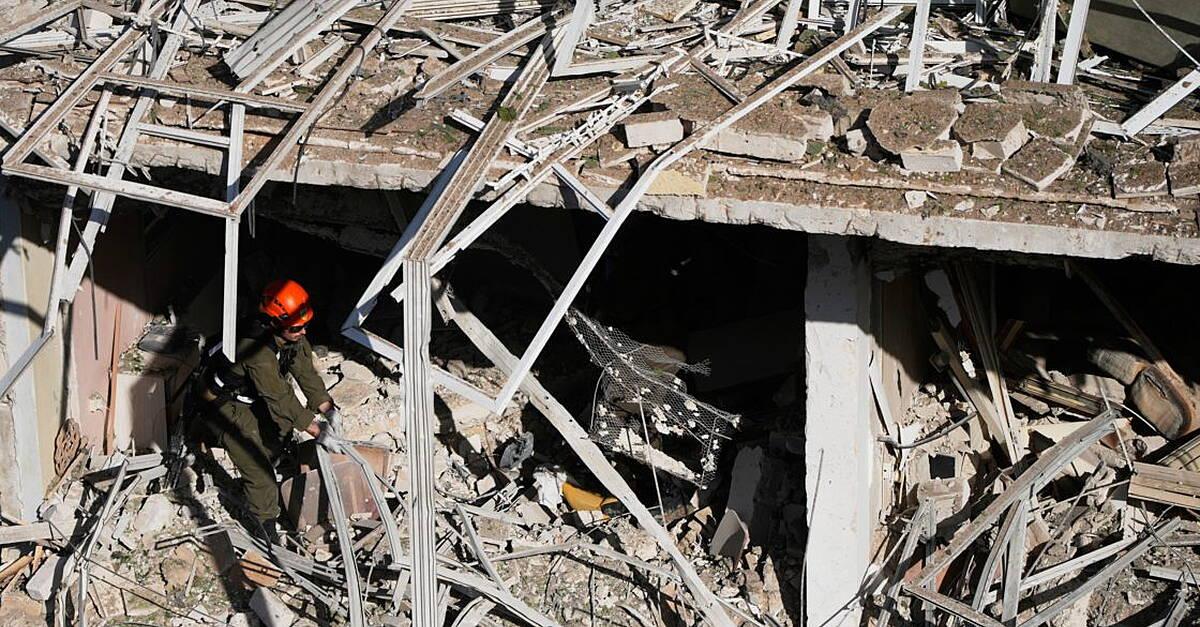
Iran launched waves of missiles at Israel on Tuesday, triggering air raid sirens in Tel Aviv and causing damage to residential buildings.
“Iran launched waves of missiles at Israel on Tuesday, the Israeli military said, a day after US President Donald Trump said there had been “very good and productive” talks aiming athalting the conflictraging across the Middle East”
Israeli fighter jets simultaneously carried out large-scale strikes against key Iranian military targets including facilities associated with the Islamic Revolutionary Guard Corps' intelligence arm.
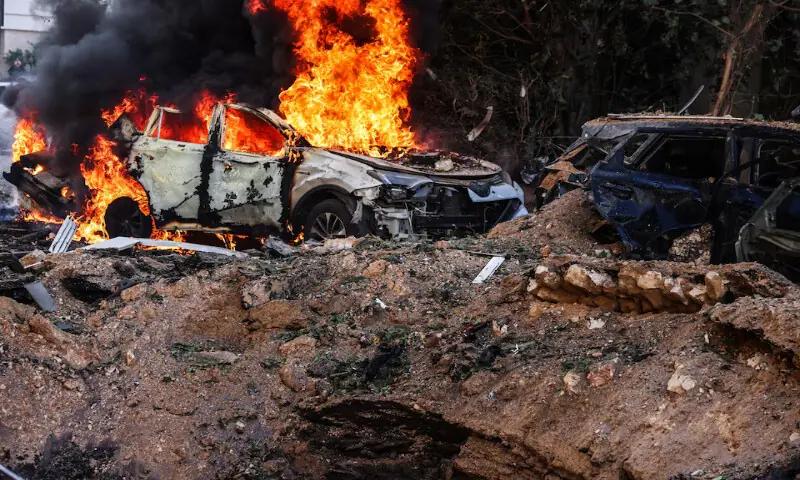
Despite the ongoing military escalation, President Donald Trump claimed to be in 'very good and productive' talks with Iran to end the conflict.
Trump declared that 'we've won this war' and suggested Iran had agreed to 'never' have a nuclear weapon.
Trump's claims came just one day after Iranian officials denied any contact with the US had taken place, calling such talks 'fake news' designed to manipulate financial markets.
The contradictory statements highlighted the complex and tense situation as both sides continued military operations while simultaneously engaging in diplomatic maneuvering.
Iranian Defiance
Iran remained defiant in its response to both the military strikes and diplomatic overtures, with powerful figures in Tehran dismissing Trump's claims as manipulation and vowing to continue fighting until 'complete victory.'
Iran's parliament speaker Mohammad Baqer Qalibaf explicitly denied that any negotiations had taken place with the US, stating that 'fake news is used to manipulate the financial and oil markets and escape the quagmire in which the US and Israel are trapped.'
Iranian officials mocked Trump's diplomatic efforts, with embassy staff in South Africa posting an image of a child's steering wheel on a car dashboard to mock his suggestion that he could control the Strait of Hormuz alongside Iran's supreme leader.
Hard-line Iranian figures went further, with Saeed Jalili accusing Trump of 'retreating' on his demands and using the hashtag '#TACOTrump' to mock what he called Trump's pattern of backing down from aggressive positions.
Diplomatic Efforts
Diplomatic efforts to de-escalate the conflict intensified with Pakistan offering to host negotiations between Washington and Tehran, as the US submitted a 15-point ceasefire plan to Iran through intermediaries from Pakistan.
“US proposes 15-point plan as Iran opens Strait of Hormuz to 'non-hostile' oil vessels US President Donald Trump said Tuesday he had sent a peace plan to Iran, expressing cautious optimism about ending nearly a month of war”
US officials confirmed that Trump had agreed 'in principle' to join talks in Pakistan, with special envoy Steve Witkoff and Trump's son-in-law Jared Kushner expected to represent the American side.
Pakistani Prime Minister Shehbaz Sharif publicly declared his country ready to 'facilitate meaningful and conclusive talks' to end the Iran war, though the diplomatic process became complicated after news of the quiet diplomacy leaked to the media.
Meanwhile, Israel remained skeptical of the American diplomatic push, with senior Israeli officials expressing surprise at the submission of a ceasefire plan, as they had been advocating for Trump to continue the war against Iran.
The White House characterized the situation as 'fluid' and warned that speculation about meetings should not be considered final until formally announced.
Economic Impact
The conflict's impact on global energy markets and international shipping became increasingly severe as Iran effectively closed the Strait of Hormuz, the crucial waterway through which a fifth of the world's oil and liquefied natural gas flows.
The International Energy Agency warned that the global economy faces a 'major, major threat' from the war's disruption to energy supplies, with the agency head Fatih Birol stating that the current situation was worse than the combined oil crises of 1973 and 1979.
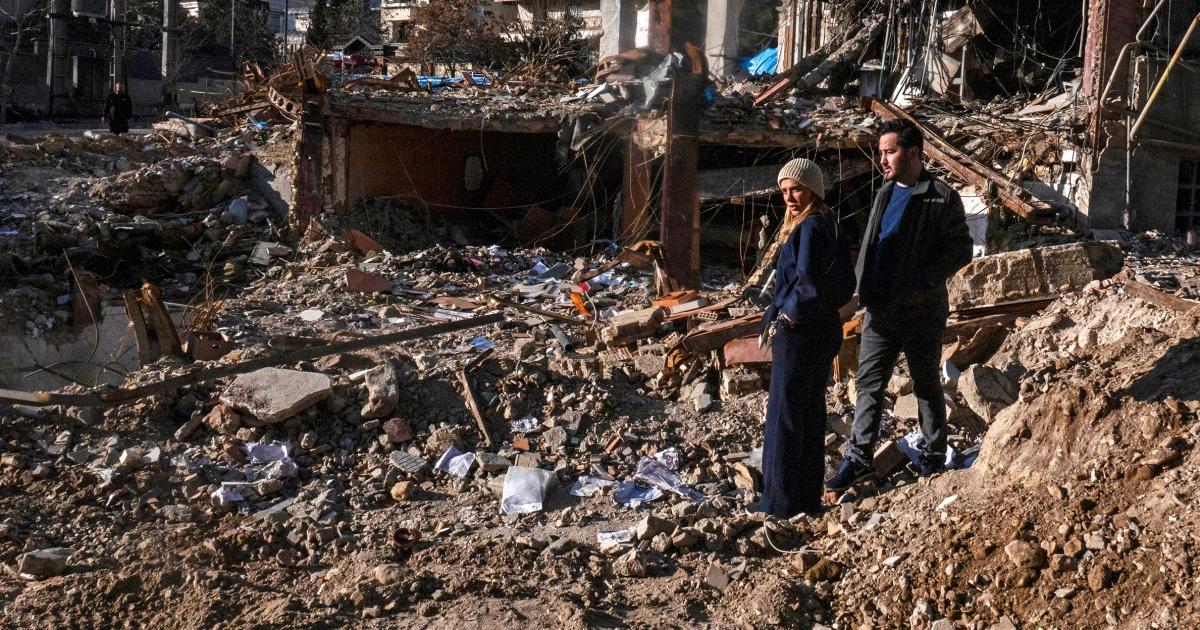
As of the reporting period, the IEA estimated that 11 million barrels per day had been lost - more than two major oil shocks put together.
Oil prices reacted dramatically to conflicting signals, initially spiking when Trump threatened to attack Iran's power plants, then plunging when he claimed productive talks were underway, only to reverse those gains when Iran renewed its defiant stance.
Brent crude futures rose to over $100 per barrel, reversing some of their 10% slide from Monday, while US crude rose 4.3% to $91.93 per barrel.
Military Escalation
Military actions continued on multiple fronts as the US prepared to send at least 1,000 more troops from the 82nd Airborne Division to supplement the some 50,000 troops already stationed in the Middle East, with additional Marine units being deployed that would add about 5,000 Marines and thousands of sailors to the region.
Israeli forces maintained their campaign against Iranian targets, while also striking targets in Lebanon where state media reported Israeli strikes had killed at least six people in a town and a Palestinian refugee camp in the southern Sidon area, with three more killed in another town.

In Lebanon, the Israeli campaign had killed at least 1,072 people, according to Lebanese authorities, with more than one million people displaced.
Meanwhile, the Iranian military remained defiant, with a spokesperson for the Islamic Revolutionary Guard Corps stating that Iran sees 'no need' to lay mines in the Persian Gulf and that 'extra-regional countries have no right to intervene' in the area.
Geopolitical Dimensions
The conflict's geopolitical and humanitarian dimensions continued to expand, with Iranian President Masoud Pezeshkian and Pakistani Prime Minister Shehbaz Sharif agreeing on the 'urgent need for de-escalation, dialogue, and diplomacy' despite their countries' opposing positions in the conflict.
Meanwhile, Israeli settlers rampaged through villages in the occupied West Bank, with at least 10 Palestinians injured in attacks following a funeral for a settler killed in a car crash.
Videos obtained by The Associated Press showed cars and homes being set ablaze as army flares lit up the sky near the village east of Nablus and next to the Israeli settlement of Elon Moreh.
In Israel, opposition leader Benny Gantz laid out conditions for any potential deal with Iran, insisting that 'enriched uranium is removed from Iran, ballistic missile production is dismantled, and Iran halts all funding of its proxy forces.'
Gantz emphasized that 'Israel's freedom of action in response to any violation is preserved,' warning that 'ending the operation without securing all these conditions guarantees that the next round is closer than ever.'
More on Iran

Israel kills IRGC Navy commander Alireza Tangsiri in air strike
16 sources compared

Pentagon orders 1,000 82nd Airborne troops to West Asia amid Kharg Island seizure talks
13 sources compared

U.S. Prepares to Deploy 1,000 82nd Airborne to West Asia to Seize Airfields
17 sources compared
Pentagon deploys 3,000 82nd Airborne troops to West Asia to backstop Iran war operations
14 sources compared