Iran06 March, 20262 min read
Iran Officials Reject President Trump's Demand To Help Choose Next Supreme Leader
This article is an automated aggregation of coverage from news outlets. Our editorials offer in-depth analysis curated by the NewsCord team.
Trump says the US should have a role in selecting Iran's next supreme leader Trump says Khamenei's son is unacceptable and a 'lightweight' as successor
Trump on Iran succession
Former President Donald Trump publicly said he wants the United States to play an active role in selecting Iran’s next supreme leader, insisting he "must help pick the next one" and arguing he would have a "big impact" on Iran’s leadership choice. He criticized Mojtaba Khamenei as "unacceptable" and "a lightweight."
“President Trump told Axios he doesn’t just want input on who succeeds Iran’s supreme leader — he says he must help pick the next one. He called Mojtaba Khamenei, son of the late Ayatollah Ali Khamenei and widely viewed as the frontrunner, ‘unacceptable’ and ‘a lightweight,’ warning that a successor who follows the current line could draw the U.S. back into war within five years. Trump said he wants ‘someone that will bring harmony and peace to Iran’ and insisted on being ‘involved in the appointment, like with Delcy in Venezuela.’ In a separate Politico interview he said he would have a ‘big impact’ on Iran’s leadership selection and would ‘work with the people and the regime’ to install a leader who can develop Iran ‘but without nuclear weapons.’”
He said he wants "someone that will bring harmony and peace to Iran" and compared the desired outcome to a "Venezuela-style" solution, saying he would be "involved in the appointment, like with Delcy in Venezuela." Trump also framed his prospective intervention as aimed at installing a leader who can develop Iran "but without nuclear weapons."

Iranian responses to Trump
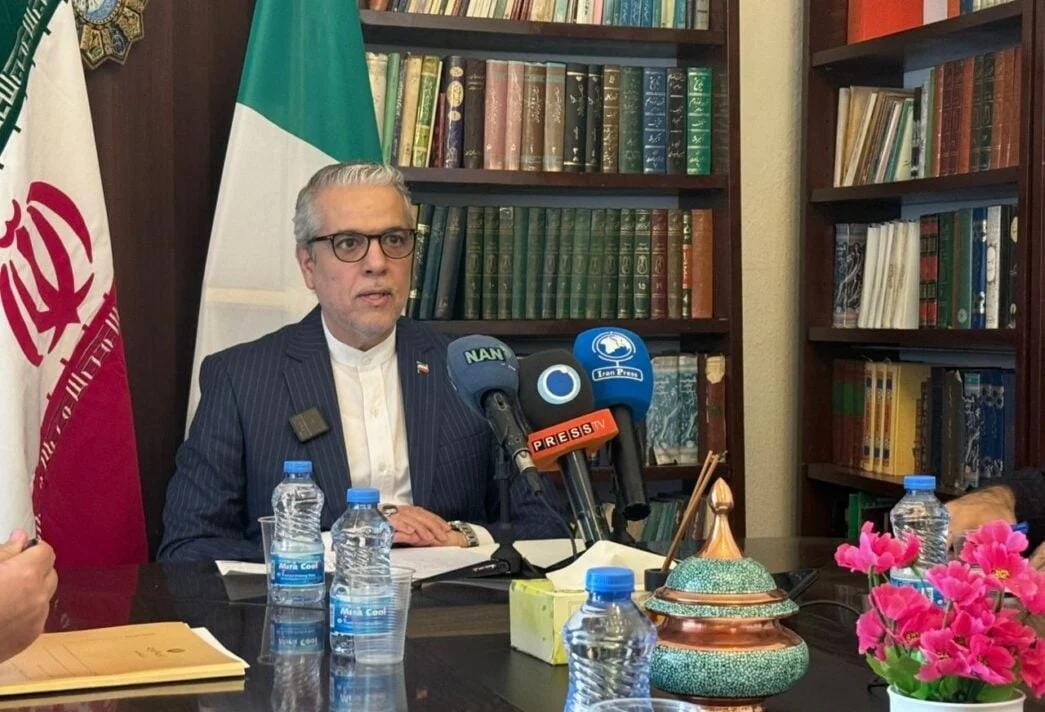
Iranian officials and diplomats issued sharp rejections of Trump’s remarks, stressing that Iran’s leadership is an internal matter and mocking outside interference. Parliament Speaker Mohammad Bagher Ghalibaf wrote on X that Iran’s fate 'will be determined solely by the proud Iranian nation, not by [Jeffrey] Epstein’s gang.'
Deputy Foreign Minister Saeed Khatibzadeh called Trump’s position a 'colonial approach' at the Raisina Dialogue in New Delhi. Iran’s ambassador to Nigeria, Gholamreza Ahdavi Raja, likewise rejected the suggestion in Abuja and accused the United States of routinely interfering in Iran’s domestic affairs.

U.S. policy and Iran tensions
The prospect of U.S. involvement in the succession process prompted questions about coherence within U.S. policy and possible regional consequences. Axios reporting cited in other outlets notes Trump’s comments clash with repeated U.S. official statements that Washington is not seeking regime change, while analysts warned that urging Washington to influence the selection could "deepen tensions and unsettle regional dynamics." Separately, Trump’s remarks included encouragement for Kurdish forces considering operations in western Iran, a point that raises further concerns about escalation, even as he declined to confirm whether U.S. air cover had been provided or offered.
“Axios notes these assertions clash with repeated statements from U.S. officials, including Defense Secretary Pete Hegseth, that Washington is not seeking regime change.”
Reactions to Trump's comparison
Observers highlighted the rhetorical and practical parallels Trump drew between Iran and Venezuela, and the bluntness of his language amplified objections. Trump praised Delcy Rodríguez in that comparison and claimed U.S. forces had removed Nicolás Maduro in Venezuela - framing a model of leadership change that Iranian officials and diplomats reject as illegitimate. Iranian responses at forums such as the Raisina Dialogue and in diplomatic briefings stressed sovereignty and ridiculed the notion that an external power should determine Iran's next supreme leader.
Unsettled statements and contradictions
Several details remain unsettled or contested in the coverage. Some reporting says Iranian authorities 'have not yet formally responded,' while U.S. officials' statements about regime change and the extent of any contact with Kurdish forces show contradictions across sources. Outlets note both explicit U.S. remarks advocating influence and contemporaneous U.S. denials of a regime-change objective, leaving the policy picture and the potential for escalation ambiguous.
“Iranian authorities have not yet formally responded as they deliberate the next Supreme Leader.”