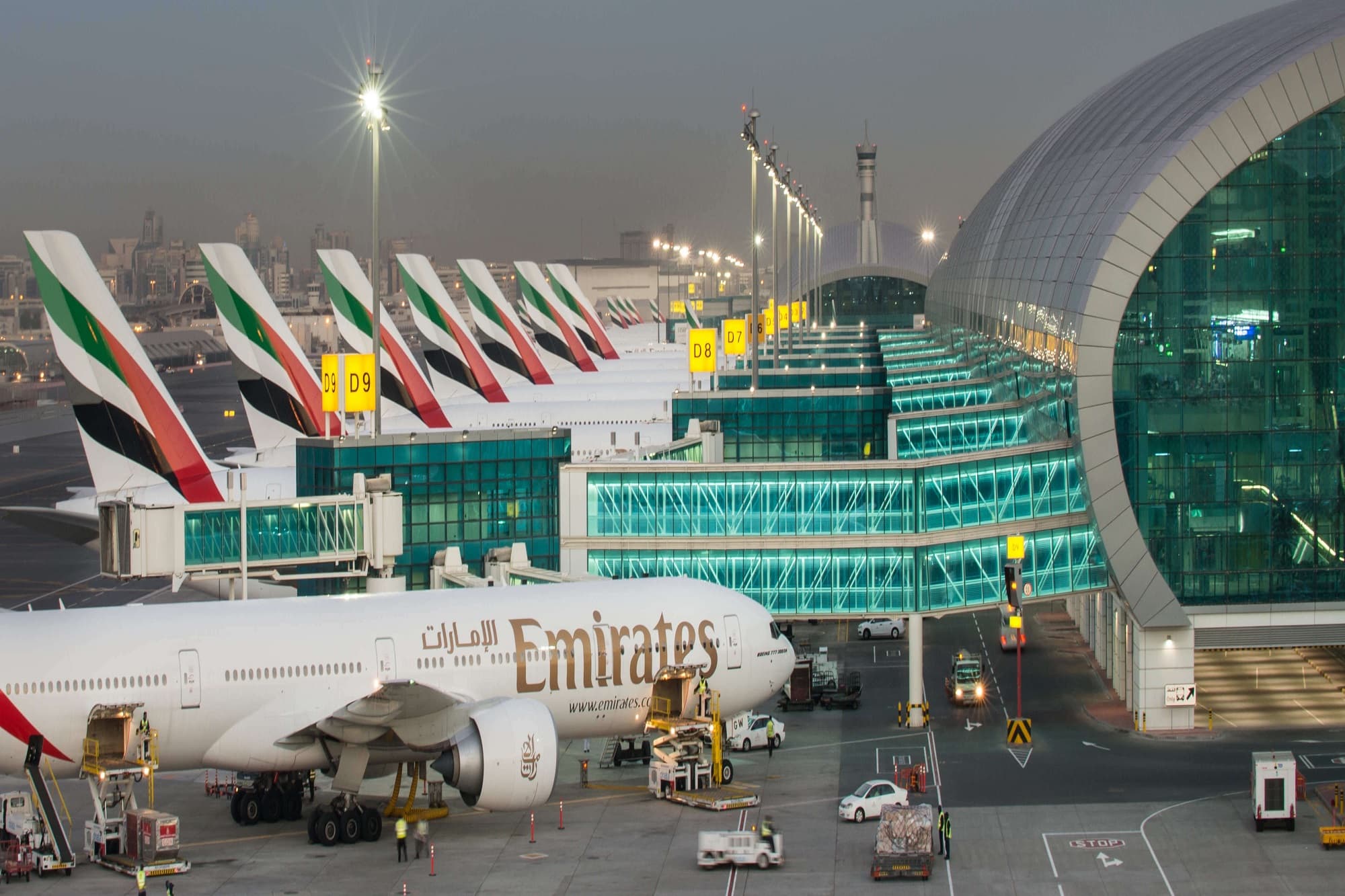
Iranian Drone Strike Shuts Dubai International Airport, Thousands Stranded
Key Takeaways
- A drone strike near Dubai International Airport ignited a fuel tank fire, halting flights.
- Thousands of travelers were stranded as flights were canceled or diverted.
- Operations gradually resumed hours after containment, with limited flights proceeding.
Airport Shutdown
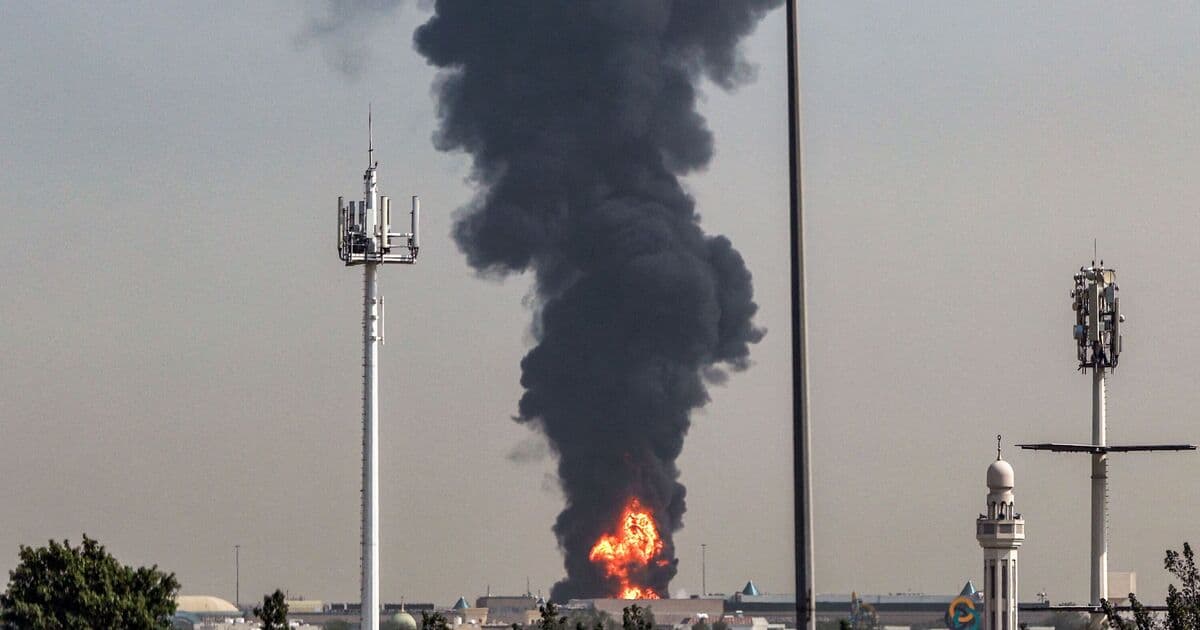
Thousands of travelers were left stranded on Monday, March 16, 2026, as Dubai International Airport (DXB) suspended all flight operations following an Iranian drone strike that ignited a fire near a fuel tank facility.
“A drone strike at Dubai International Airport (DXB) caused a fuel tank fire with airlines forced to suspend flights in response to the incident”
The incident occurred in the early hours when a drone targeted a fuel tank in the vicinity of the world's busiest international hub, causing significant disruption to global travel networks.
Dubai Civil Defence teams successfully contained the blaze with no reported injuries, but the Dubai Civil Aviation Authority enacted an immediate precautionary shutdown of all runways to assess further security risks.
This marked the longest operational halt at DXB since the regional war began on February 28, with emergency services working quickly to bring the situation under control and ensure the safety of all airport personnel and nearby residents.
Flight Disruptions
The drone strike caused massive flight disruptions across the globe, with airlines cancelling or diverting dozens of flights affecting thousands of passengers.
Emirates, the largest carrier at Dubai International Airport, confirmed the halt and stated that flight operations would remain limited until further notice.
Data from Flightradar24 showed 65 flights were diverted to 34 different airports across Europe, Asia, and Africa, with 22 'flights to nowhere' that had to return to their points of origin.
Passengers endured miserable experiences as some flights spent up to 11 hours airborne before being forced to turn back.
One Emirates flight from Edinburgh to Dubai (EK24) had reached Egyptian airspace before being ordered to return, while another from London Stansted nearly made it to Dubai but was diverted to Vienna instead.
The suspension also impacted thousands hoping to finally return to the UK after being stranded in the Middle East since the US and Israel launched their war on Iran.
Regional Conflict Context
The drone strike on Dubai International Airport occurred amid heightened regional tensions linked to the ongoing conflict involving Iran, Israel, and the United States.
“Dubai International Airport (DXB) is beginning to resume operations after a drone attack sparked a fire at a fuel storage facility, forcing a temporary ground stop”
This marked the third attack affecting Dubai International Airport since Iran began launching strikes across Gulf countries on February 28, according to multiple sources.
Tehran has warned that economic infrastructure in the region could be targeted and advised civilians over the weekend to stay away from major ports and financial centers.
The United Arab Emirates, which normalized relations with Israel in 2020, has been heavily affected by the conflict, with Gulf states facing over 2,000 missile and drone attacks since the end of February.
Iran has targeted the United Arab Emirates with over 1,800 missiles and drones since the conflict began, impacting civilian infrastructure and causing repeated disruptions at Dubai International Airport.
The regional conflict has created a dangerous environment where civilian infrastructure has become a direct target, with airports and ports among the most frequently hit locations.
Economic Impact
The Dubai International Airport disruption has significant economic and broader implications for global aviation and tourism sectors.
As one of the world's busiest aviation hubs handling more than 95 million passengers in 2025, even a brief suspension created ripple effects for global travel routes.

The incident sent ripples through global travel networks, forcing major carriers like Emirates and flydubai to cancel or divert dozens of flights.
With most Middle East airspace effectively shut down or restricted, flights in the region are operating at approximately half their usual capacity, leading to surging ticket prices and fuel surcharges as airlines navigate the 'no-fly' zones.
The psychological and economic toll on the region's $367 billion tourism sector continues to mount, with travelers worldwide expressing dismay at the latest round of flight disruptions and demanding answers from airlines.
The situation has highlighted how the Gulf's once-secure corridors have been transformed into a high-risk theater for civil aviation, affecting global trade flows and travel networks.
More on Iran
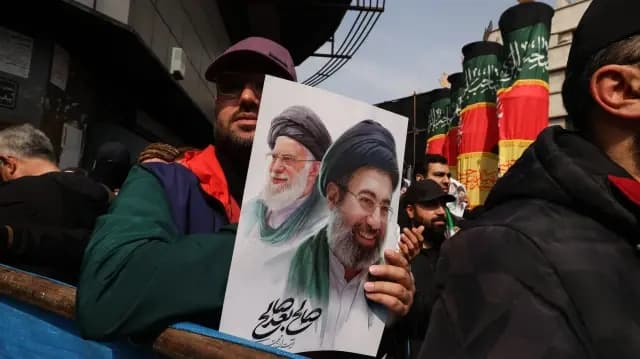
Russia Secretly Airlifts Iran's Supreme Leader Mojtaba Khamenei to Moscow for Surgery
11 sources compared

Iran Drone Strike Shuts Dubai International Airport, Triggers Global Travel Disruption
16 sources compared

Iran's New Supreme Leader Mojtaba Khamenei Travels to Moscow for Leg Surgery
15 sources compared

Trump Threatens to Delay Xi Summit Over Iran War and Strait of Hormuz
21 sources compared