Iran22 March, 20263 min read
Iranian Missiles Strike Israel as US Threatens Wider War
Iranian missiles struck Dimona and Arad in southern Israel, injuring dozens. US and allies threatened to widen war targets against Iran.
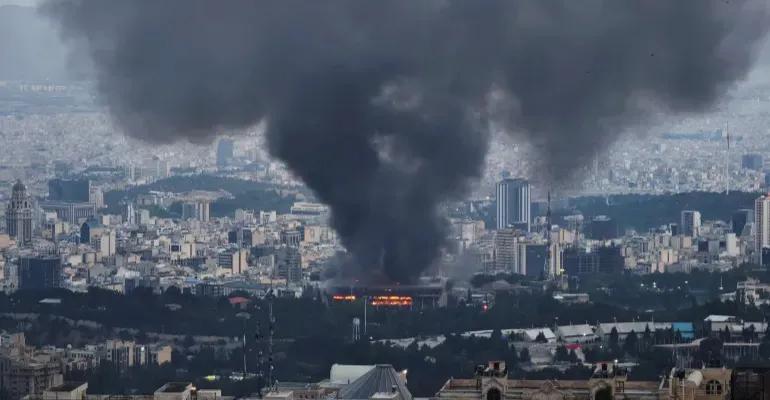
Iranian Missile Barrage
Iran launched a significant missile barrage targeting southern Israel on March 21, 2026, striking the cities of Dimona and Arad in a major escalation of the ongoing conflict. Iranian ballistic missiles penetrated Israeli air defenses, causing extensive damage and injuries despite interception attempts.
“An Iranian missile struck Israel's southern city of Dimona, building collapses... At least three people were injured while rescue teams were rushing to the scene following the impact.”
The strikes came amid heightened tensions following US-Israeli attacks on Iranian nuclear facilities, with Tehran claiming retaliation for strikes on Natanz and Bushehr nuclear sites. Iranian state media described the attacks as demonstrating Iran's missile capabilities and targeting areas Israel considers vital to its national security, including the Dimona region housing Israel's primary nuclear research facility.

US-Iran Escalation
The United States escalated its threats against Iran, with President Donald Trump demanding the reopening of the Strait of Hormuz and warning to destroy Iranian power plants if the strategic waterway remained closed. Trump's ultimatum came as Germany and over 20 allies issued a joint statement condemning Iran's attacks on commercial vessels and energy facilities in the region.
Iranian officials responded defiantly, with Parliament Speaker Mohammad Bagher Qalibaf warning that any targeting of Iranian infrastructure would result in the 'irreversible destruction' of regional energy and desalination facilities. Meanwhile, Iran demonstrated its expanded missile capabilities by launching long-range ballistic missiles toward the US-UK military base at Diego Garcia in the Indian Ocean, marking the furthest ever attempted Iranian missile strike and demonstrating its ability to reach European capitals.
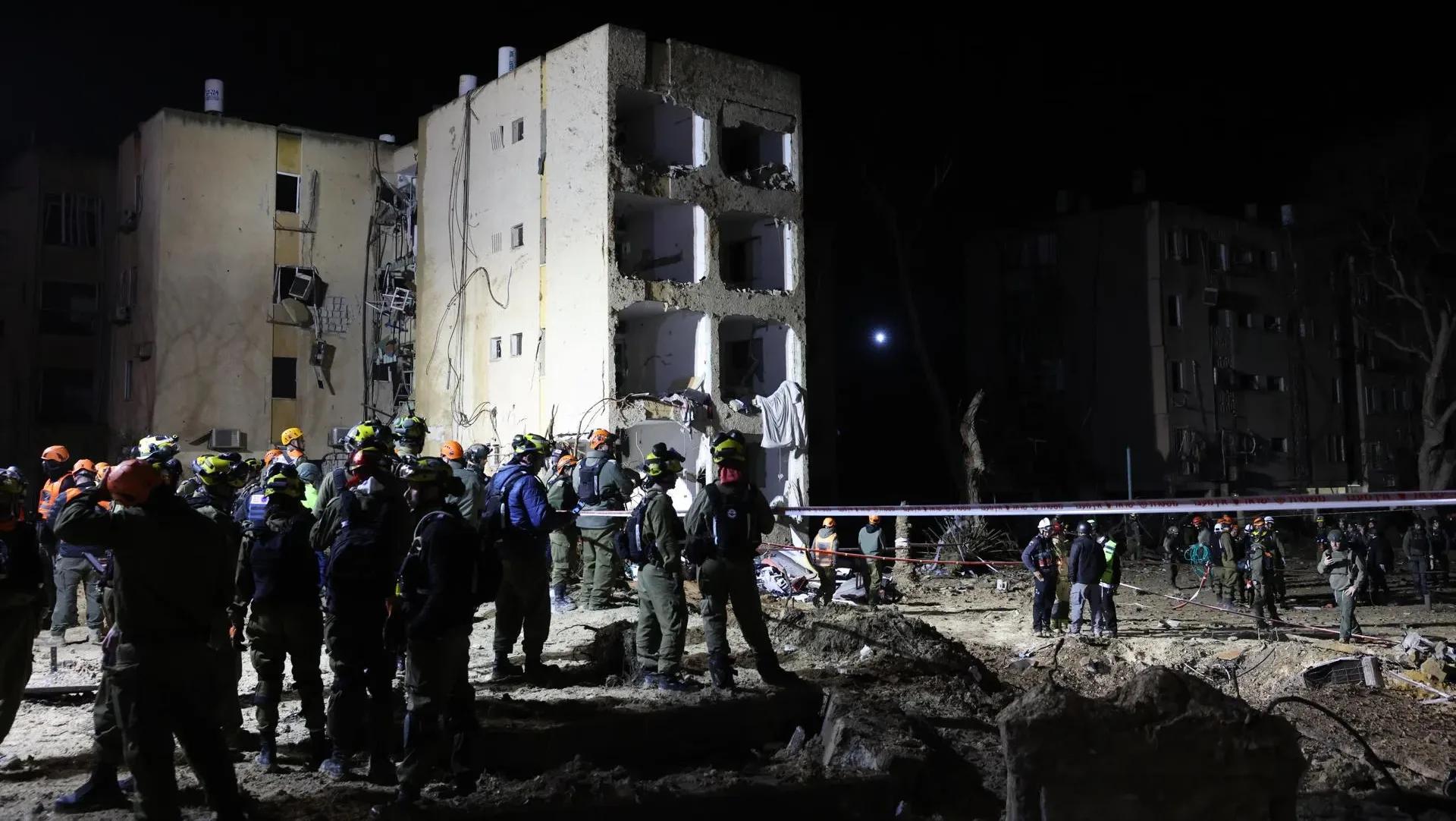
Casualties and Damage
The Iranian missile strikes caused significant civilian casualties and extensive damage in southern Israel. Emergency services reported at least 100-180 people injured across the two cities, including children as young as five years old in critical condition. In Arad alone, 68 people were injured with 10 in serious condition, while Dimona saw 27-47 wounded.
“No fewer than 100 people have been injured following a barrage of Iranian ballistic missile strikes on southern Israel, with projectiles hitting the cities of Arad and Dimona after air defence systems reportedly failed to intercept at least two missiles. Among the victims were a 12-year-old boy and a five-year-old girl, both said to be in critical condition, as emergency responders battled to manage the aftermath of the attacks.”
The strikes resulted in massive explosions, building collapses, and widespread structural damage to residential neighborhoods. Israeli emergency services described the situation as 'an event of enormous magnitude' with concerns about individuals still trapped in damaged buildings. The International Atomic Energy Agency confirmed no damage to the nuclear research center in Dimona and detected no abnormal radiation levels, though Iranian state media claimed the strike was specifically targeting Israel's nuclear capabilities.
Defense System Failures
The Israeli military acknowledged significant failures in its air defense systems during the Iranian strikes, with interceptors failing to stop at least two ballistic missiles with heavy conventional warheads. Military analysts expressed shock at the system's failure in the heavily protected Dimona area, which Israel had considered unreachable due to its robust air defenses and geography.
Israeli military correspondent Hillel Beton Rozen criticized the army's conduct, stating that 'a defense system at 92% that fails in a short time to intercept threats in adjacent areas is more than a statistical error; it is at least a major professional or technical failure that requires investigation.' The IDF launched investigations into both the technical failures and the circumstances of the impacts, while Israeli Prime Minister Benjamin Netanyahu vowed to 'continue striking our enemies on all fronts' and praised the 'steadfastness and resilience' of Israeli citizens.

Regional Escalation
The escalating conflict has drawn in regional actors and prompted international reactions that could further destabilize the Middle East. Hezbollah in Lebanon launched rocket barrages targeting northern Israel, injuring at least eight people in Ma’alot-Tarshiha, while the Iran-backed Houthis in Yemen issued warnings about expanding the conflict. The United Arab Emirates and Bahrain were among 22 countries from Europe and Asia that said they would join efforts to reopen the Strait of Hormuz, drawing warnings from Iranian officials that such countries 'will be the first to lose in this battle.'
“Hezbollah rocket barrage hits northern Israel, at least eight injured At least eight people were injured after rockets struck Ma’alot-Tarshiha in northern Israel, according to Channel 12. The Times of Israel reported that Hezbollah launched a barrage toward the area shortly before the impact.”
Israeli military chief Eyal Zamir told Israelis they were 'midway through' the war with Iran and that they would still be fighting during the Passover holiday next week. The conflict has already killed over 1,500 people in Iran, 15 in Israel, 13 US military members, and well over a dozen civilians in Gulf nations, with Hezbollah's civilian assets also being targeted in Israeli strikes.
