Iran09 March, 20262 min read
Iran's Strait of Hormuz blockade halts Iraqi exports, slashes oil production 70%
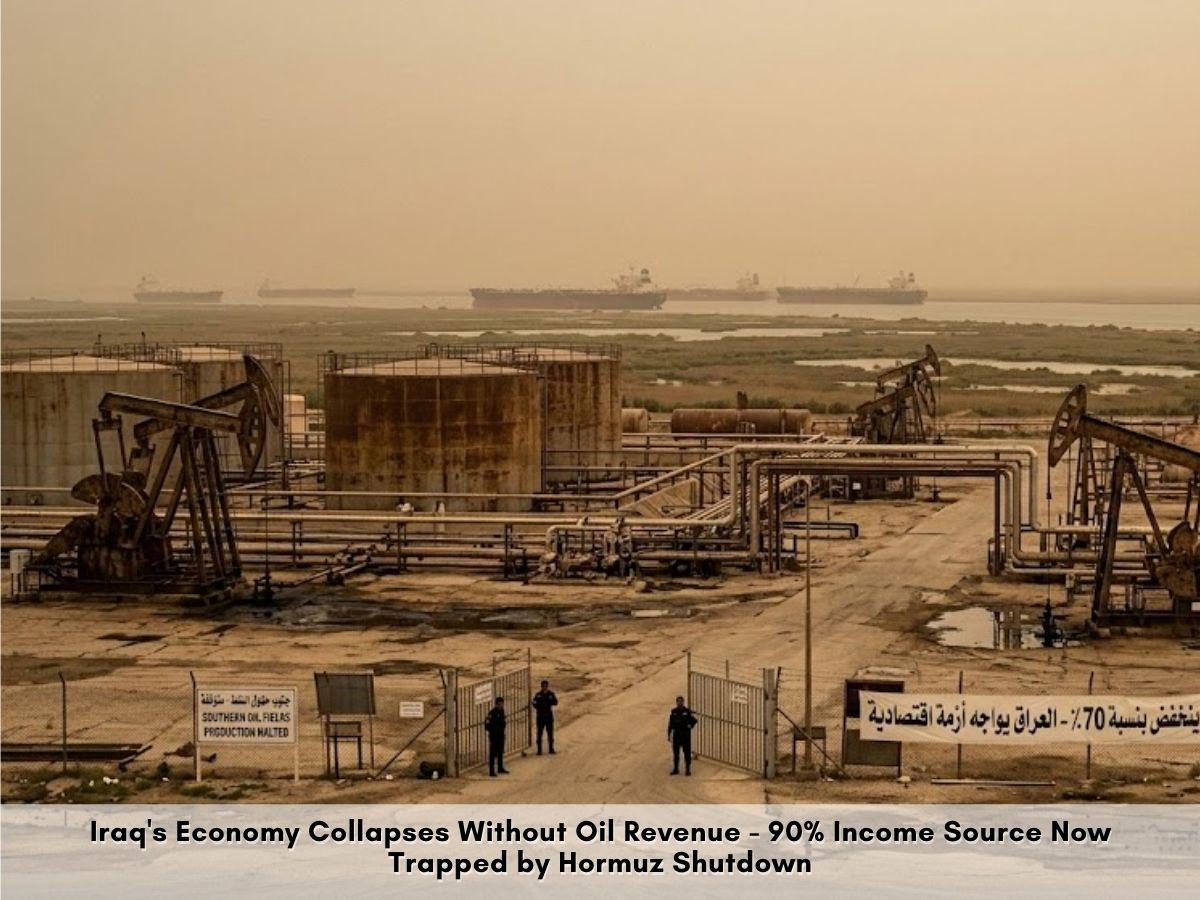
Iran closed the Strait of Hormuz, halting tanker transits and creating massive tanker queues Iraq cut production by about 60–70%, falling to roughly 1.3–1.8 million barrels per day
Iraqi oil output decline
Blockade of the Strait of Hormuz and accompanying fighting have collapsed Iraqi southern oil output, but sources differ on the scale. Several outlets report steeper cuts to roughly 1.3 million barrels per day (about a 70% fall from pre‑conflict output of ~4.3 million bpd), citing tanker access being cut off and terminals effectively shut.
“TSG — which says it has not independently verified the sources — reports that southern Iraqi oil output has fallen about 70% (from roughly 4.3 million bpd before the Iran war to about 1.3 million bpd after the Strait of Hormuz was blockaded and tankers could not reach Basra). Basra storage tanks are said to be full, so remaining crude is being diverted to domestic refineries and exports have effectively stopped. February exports averaged 3.334 million bpd; on Sunday only about 800,000 bpd was loaded before export terminals were shut. Two tankers (Cospearl Lake and Yuan Hua Hu) reportedly each loaded roughly 2 million barrels around 8 p.m. local time before the blockade halted further loading.”
Other sources put the decline at nearer 60%, to about 1.7–1.8 million bpd. The discrepancy appears across contemporaneous coverage, with The Sunday Guardian and regional outlets describing a roughly 70% collapse to 1.3m bpd while Bloomberg, Ukrainian National News (UNN) and شفق نيوز (Shafaq) report a near‑60% fall to 1.7–1.8m bpd.

Basra oil export disruption
Logistics and onshore storage constraints have compounded the production shock. Exports have plunged and Basra’s storage is reported full, forcing operators to divert crude to local refineries and, in some cases, mothball wells.
Several outlets say exports that averaged over 3.3 million bpd in February fell to roughly 800,000 bpd on a recent day because few tankers could reach southern terminals, and a handful of vessels reportedly loaded before the blockade halted further shipments. Bloomberg and regional reporting highlight that disrupted shipping and a shortage of available tankers are key operational constraints behind the output cuts.

Iraq export revenue shock
The collapse in exports has immediate fiscal and macroeconomic consequences for Iraq. Regional reporting warns the sharp drop in export income will widen the budget deficit, drain foreign reserves, risk delays to public-sector salaries and social spending, and increase inflationary and currency pressures.
“Economic consequences: much lower export income would widen Iraq’s budget deficit, drain foreign reserves, risk delays in public-sector salaries and social spending, and increase currency pressure and inflation. The government would likely need more domestic and international borrowing and could turn to emergency finance from the IMF or friendly states.”
Analysts and outlets say Baghdad may need additional borrowing, IMF assistance or emergency financing from friendly states. Devdiscourse and Shafaq both emphasise that the logistics-driven revenue shock is placing severe financial strain on the OPEC member's economy and could heighten political and security risks at home.
Oil price surge impacts
Global markets have reacted sharply: prices and volatility have spiked as one-fifth of world oil normally transits the Strait of Hormuz. ProPakistani and other market reporting document immediate price moves: U.S. crude and Brent jumped roughly 18–35% across the most recent trading week, with crude briefly trading above $110 per barrel.
UNN and Bloomberg say the logistics-driven shortfall has pushed prices to multi-year highs and could tighten supplies if disruptions persist. CNBC underscores how energy importers such as India and China are particularly exposed, amplifying the broader economic knock-on effects.

Regional spillovers and responses
Policy responses and regional spillovers are already evident. Bloomberg reports Baghdad is seeking alternate export routes and negotiating with neighbors. The UAE and Kuwait have also managed output reductions.
“Baghdad is seeking alternative routes and negotiating with neighbors to keep exports flowing, but fighting continues to hamper the industry.”
Regional outlets warn the economic strain could prompt political unrest and even foreign military involvement to keep shipping lanes open. Commentators call for international diplomatic coordination and monitoring to stabilise supply chains. All outlets note that progress depends on de-escalation of the fighting that is blocking shipping through Hormuz.