
Iran's women's football captain Zahra Ghanbari withdraws asylum bid in Australia
Key Takeaways
- Zahra Ghanbari, captain of Iran's women's national team, withdrew her asylum bid in Australia.
- She is the fifth member of the delegation to change her mind.
- She will fly from Malaysia back to Iran after leaving Australia.
Asylum Withdrawal
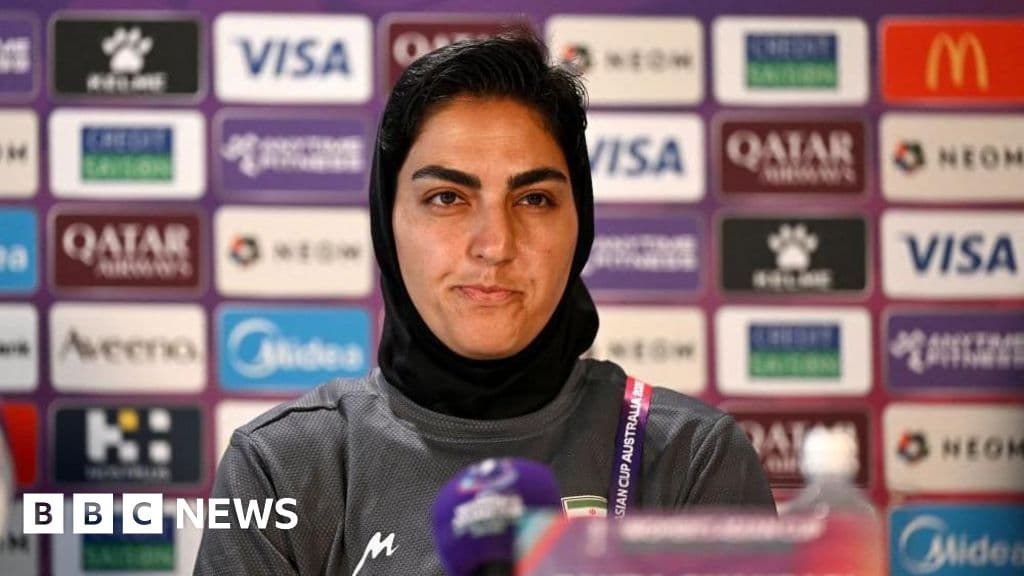
The captain of Iran's women's national football team, Zahra Ghanbari, has withdrawn her request for asylum in Australia.
“The captain of the Iranian women’s football team has withdrawn her bid for asylum in Australia, Iran’s state media says, making her the fifth member of the delegation to change her mind after her team’s participation in the Asian Cup”
This development comes after the team sparked international attention when they initially refused to sing Iran's national anthem during a tournament match.

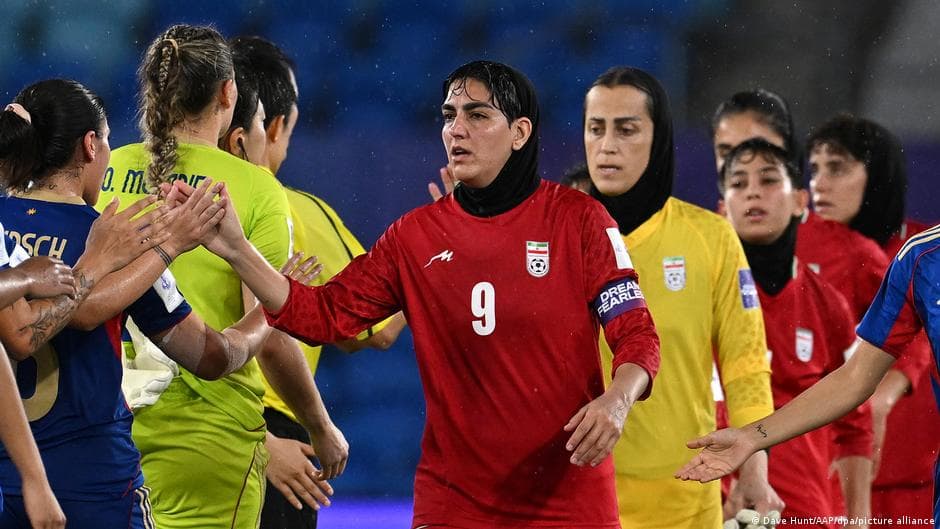
The controversy erupted when the players fell silent during the anthem before their opening match against South Korea at the AFC Women's Asian Cup in Australia.
This act was widely viewed as a symbol of defiance against the Islamic republic.
Iranian state broadcaster IRIB reported that the team's actions angered authorities.
A presenter on state TV branded the players "wartime traitors" and stated they should be dealt with "severely".
Australian Prime Minister Anthony Albanese had initially lauded the bravery of the women.
The team's subsequent matches saw them singing the Islamic republic's anthem and performing a military salute.
Asylum Process
Australia's Home Affairs Minister Tony Burke confirmed that Ghanbari would join three other players and one team staff member who had already withdrawn their asylum applications.
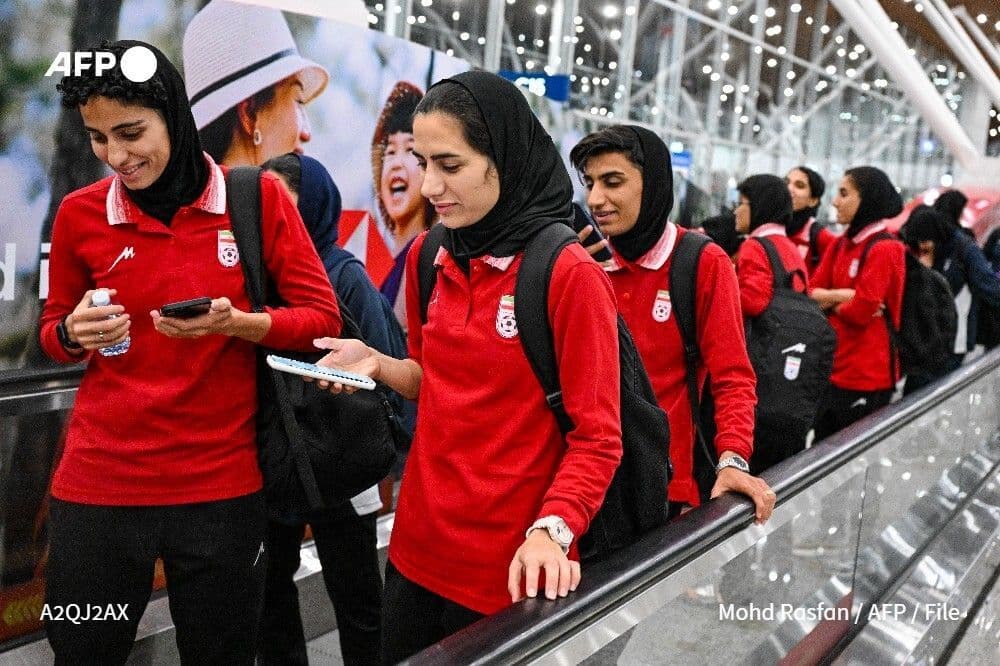
The four members traveled to Kuala Lumpur, Malaysia, awaiting their onward journey to Iran.
Burke stated that "three members of the Iranian Women's Football Team made the decision to join the rest of the team on their journey back to Iran".
He emphasized that "the players were given repeated chances to talk about their options".
The Australian government had offered asylum to all players and support staff members prior to their departure.
Initially, six players and one staff member claimed humanitarian asylum in Australia.
Three of these have now reversed their decision, leaving only two Iranian players remaining in Australia.
The two remaining players have been promised asylum and an opportunity to settle.
Family Pressure Claims
Serious allegations have emerged that Iranian authorities exerted intense pressure on the players to return home.
“Zahra Ghanbari, the captain of the Iranian women’s national football team, has withdrawn her asylum application in Australia, according to reports from the IRNA news agency”
Shiva Amini, a former Iranian national futsal player in exile, reported that Iran's Football Federation, working with the Revolutionary Guards, "placed intense and systematic pressure on the players' families in Iran".
Amini specifically mentioned that authorities pressured the mother of Ghanbari.
Opposition television channel Iran International reported that families have been threatened.
Ghanbari's mother was allegedly summoned by the Guards' intelligence branch and her daughter informed of the interrogation.
Rights groups have repeatedly accused Iranian authorities of pressuring athletes abroad by threatening relatives.
Tina Kordrostami, an Australian councilor, claimed the players were being "heavily intimidated" by Tehran.
She stated "I know families have even been detained. I know family members are missing."
Media Responses
Iranian state media has portrayed the players' return as a positive and patriotic decision.
IRNA described Ghanbari as "returning to the embrace of the homeland".
The Mehr news agency characterized it as a "patriotic decision".
This contrasts with initial coverage where players were harshly criticized for their anthem protest.
The Iranian Sports Ministry accused Australia of "playing in Trump's field".
Iran's governing football body accused Australia of kidnapping the players and forcing them to defect.
The Iranian media's positive framing suggests the regime is attempting to mitigate damage from the initial controversy.
Australian authorities maintained they had "done everything we could to make sure these women were provided with the chance for a safe future in Australia".
Geopolitical Context
The situation occurs against a backdrop of heightened tensions between Iran and Western powers.
“The captain of the Iranian women's football team which played in the Asian Cup in Australia has withdrawn her bid for asylum, state media said Sunday, making her the fifth member of the delegation to change her mind”
Israel and the United States began military strikes on Iran on February 28.
According to The New York Times, these strikes killed Iran's Supreme Leader Ayatollah Ali Khamenei and more than 1,300 civilians.
The strikes triggered retaliatory actions and a widening conflict in the region.
The timing of the Asian Cup tournament occurred after the commencement of hostilities.
Iran's three group games took place at the Gold Coast Stadium in Queensland on March 2, 5 and 8.
These games occurred after the United States and Israel launched their war on Iran on February 28.
This geopolitical context may have influenced the players' decisions.
Remaining Uncertainties
The current situation leaves two Iranian players remaining in Australia where they have been promised asylum.
The captain and four other team members are preparing to return to Iran.
The players who returned to Malaysia are awaiting their onward travel to Iran.
Concerns remain about their safety upon arrival in Iran.
The Australian government acknowledged they "cannot remove the context in which the players are making these incredibly difficult decisions".
The case has drawn international attention to the plight of Iranian athletes who face potential persecution for expressing dissent.
The situation highlights the complex choices individuals must make between political pressures and personal safety.
One commentator noted "We are very worried about them" and "Iranians within the country have in many ways given up on the West, and they are only relying on one another to survive this regime".
More on Sports

Medvedev Faces Sinner in Indian Wells Final
28 sources compared

Thomas Ramos seals France's Six Nations title with last-kick penalty against England
15 sources compared

Arsenal's 16-year-old Max Dowman becomes Premier League's youngest ever goalscorer.
12 sources compared

Ireland Beats Scotland to Clinch Triple Crown
13 sources compared