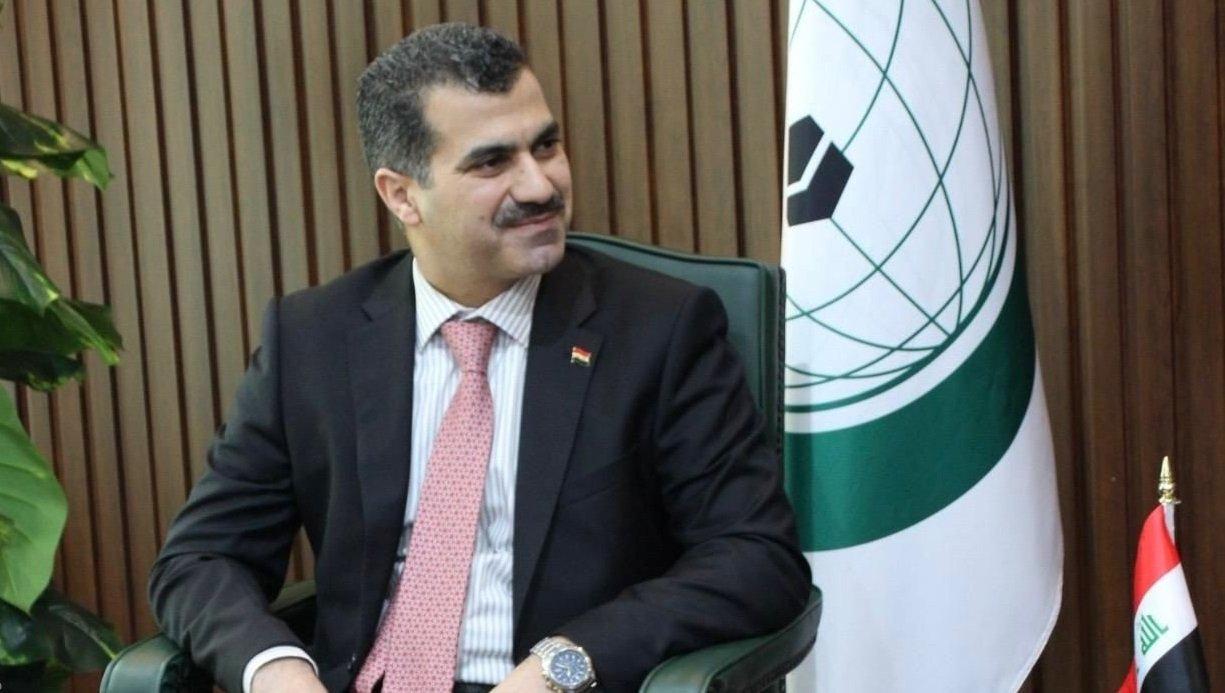
Iraq’s President Nizar Amede Tasks Ali Al-Zaidi With Forming New Government
Key Takeaways
- President Nizar Amedi tasked Ali al-Zaidi with forming a government.
- Ali al-Zaidi named prime minister-designate by Coordination Framework, Iraq’s largest bloc.
- Must form cabinet within 30 days and secure Parliament confidence.
Prime Minister-Designate Named
Iraq’s newly elected president, Nizar Amede, tasked businessman Ali al-Zaidi with forming the next government after the Coordination Framework nominated him as prime minister-designate, ending a months-long political deadlock.
“By QASSIM ABDUL-ZAHRA BAGHDAD (AP) — Iraq’s dominant parliamentary bloc on Monday nominated Ali al-Zaidi, a businessman and political newcomer, to be the country’s prime minister”
Al Jazeera reports that Ali al-Zaidi was named as prime minister-designate after he was nominated by a coalition of Shia parties that make up the majority of parliament, and that he has 30 days to form a cabinet.

Middle East Eye similarly says the largest bloc in Iraq’s parliament chose Ali al-Zaidi as prime minister designate “five months after the country’s elections,” and it quotes the presidency: “President Nizar Amede has tasked Ali al-Zaidi, the candidate of the largest parliamentary bloc, with forming the new government.”
PressTV adds that “After considering the names of the candidates, Ali al-Zaidi was chosen to be the candidate of the Coordination Framework bloc, as the largest bloc in the House of Representatives, to occupy the position of prime minister and form the next government,” and it describes the process as breaking a months-long deadlock.
The Arab Weekly and France 24 with AFP both place the nomination in the context of US opposition to the initially nominated Nouri al-Maliki, with France 24 stating that “President Nizar Amede has tasked Ali al-Zaidi, the candidate of the largest parliamentary bloc, with forming the new government.”
Multiple outlets also emphasize that the constitutional process is time-bound: AP says the designated prime minister has 30 days to present a Cabinet lineup to parliament, and it specifies that parliament requires 167 votes to secure a vote of confidence.
How the Deadlock Broke
The nomination of Ali al-Zaidi came after weeks of wrangling inside Iraq’s dominant Shiite bloc and after US President Donald Trump’s threats reshuffled the premiership race away from Nouri al-Maliki.
AP describes the decision as following “weeks of internal debate among its member parties aimed at selecting a compromise candidate,” and it says the Coordination Framework nominated al-Zaidi after a meeting at the government palace.

It also states that the coalition had previously said it would back former Prime Minister Nouri al-Maliki, whom the U.S. administration views as too close to Iran, and it quotes Trump’s stance: “threatened to cut off aid to Iraq if he was appointed.”
PressTV and Le Monde both tie the shift directly to Trump’s January ultimatum, with PressTV saying “US President Donald Trump threatened to cut off support for Iraq should he be elected to the office,” and Le Monde reporting that an ultimatum left Iraqi leaders looking elsewhere.
Le Monde further frames the political timing, saying the nomination came on April 27 after leaders yielded to US pressure not to support Maliki, and it notes that the Coordination Framework had initially backed Maliki but “an ultimatum by US President Donald Trump left Iraqi leaders looking elsewhere.”
Several outlets also connect the political timing to the regional conflict engulfing Iraq, including the war ignited by a joint US-Israeli attack on Iran and the subsequent fragile US-Iran ceasefire, with Le Monde saying talks resumed intensively after the ceasefire took effect on April 8.
Statements and Political Signals
After the nomination, Iraq’s political leaders and regional figures issued statements that framed the appointment as both constitutional and politically stabilizing, while also reflecting the pressure that shaped the choice.
“Toggle Play Iraq appoints new prime minister-designate Iraqi multimillionaire Ali al-Zaidi has been named as prime minister-designate after he was nominated by a coalition of Shia parties that make up the majority of parliament”
Rudaw reports that President Nizar Amede said on X, “In line with our constitutional responsibilities, we have tasked the nominee of the largest parliamentary bloc, Ali al-Zaidi, with forming the new government,” and it adds that he said the step “could not afford delay.”
Rudaw also quotes Parliament Speaker Haibet al-Halbousi welcoming the naming of Zaidi as prime minister-designate, “wishing him success in carrying out this national responsibility in a way that strengthens the work of state institutions.”
Outgoing Prime Minister Mohammed Shia' al-Sudani congratulated Ali al-Zaidi and said, “We affirm our commitment to supporting all options achieved through national consensus, which came as a result of the broad and effective participation of our people in the previous legislative elections,” while also reaffirming “commitment to cooperate with Zaidi during the mandate period.”
In a separate regional signal, Kurdistan24 says Masrour Barzani spoke with al-Zaidi by phone and expressed support for resolving disputes “based on the constitution,” while also voicing hope that Iraq would enter “a new era marked by security, stability, and peace.”
The Organization of Islamic Cooperation welcomed the nomination, with the Middle East News agency report stating that Mohammed Samir al-Naqshbandi said the OIC’s Baghdad liaison office “welcomes Ali al-Zaydi's appointment as head of the Council of Ministers and wishes him success in carrying out his duties in this sensitive phase that requires a high level of prudence and accountability.”
Bank Ties and US Dollar Scrutiny
A major thread running through the coverage is scrutiny of Ali al-Zaidi’s past ties to al-Janoob Islamic Bank and the bank’s restrictions connected to US dollar transactions.
Rudaw reports that analysts highlighted his links to the al-Janoob Islamic Bank and says the bank was banned in February 2024 by the Central Bank of Iraq from conducting US dollar transactions as part of efforts to reduce fraud, money laundering, and other illegal use of the dollar.

Rudaw adds that the Central Bank of Iraq’s decision followed a visit by a senior US Treasury official, Brian Nelson, who met Iraqi officials in Baghdad to discuss “how to protect the Iraqi and international financial systems from criminal, corrupt and terrorist actors,” according to Reuters.
It quotes Nelson’s remarks: “We commend the continued steps taken by the Central Bank of Iraq to protect the Iraqi financial system from abuse, which has led to legitimate Iraqi banks achieving international connectivity through correspondent banking relationships,” as Reuters cited.
Middle East Eye provides additional detail, saying Zaidi was chairman of Al-Janoob Islamic Bank, which was sanctioned by the US in 2024 over allegations of money laundering, fraud and the illicit use of American currency, and it says the bank was also banned by the Central Bank of Iraq.
Rudaw also notes that it is unclear whether he still maintains ties to the bank, stating “it is unclear whether he still maintains any ties to the bank or when exactly he stepped down from the position.”
What Comes Next, and Stakes
The appointment places Ali al-Zaidi at the center of multiple, overlapping challenges described by different outlets, ranging from parliamentary approval and constitutional deadlines to security, weapons outside state authority, and economic disruption.
AP says the new government is not assured of receiving the required number of votes, and it specifies that parliament requires 167 votes to secure a vote of confidence, while also noting that under the constitution the designated prime minister has 30 days to present a Cabinet lineup.

AP also says the next government will have to deal with “the political and economic fallout of the U.S.-Israeli war against Iran,” and it adds that the closure of the Strait of Hormuz has disrupted the oil exports on which Iraq’s economy depends.
Le Monde similarly says the new PM will be expected to address Washington’s demand that Baghdad disarm Iran-backed groups designated as terrorist organizations, and it says the new PM will also need to repair Iraq’s relations with Gulf countries after attacks on their territory during the war.
Türkiye Today frames the immediate pressure as coming from Washington to disarm Iran-backed factions operating in Iraq, and it states that “Zaidi also inherits a daunting economic situation,” adding that “Oil exports account for roughly 90 percent of Iraq's budget revenues.”
Across the coverage, the constitutional timeline is treated as a critical constraint, with Le Monde calling the task “a daunting task in a country where constitutional deadlines are rarely respected,” and with Al Jazeera emphasizing that al-Zaidi has 30 days to form a cabinet.
More on Asia

Thai Fine Arts Department Unearths 2,000-Year-Old Indian Gold Rings at Don Yai Thong Site
13 sources compared

China Pushes China-Myanmar-Bangladesh Corridor From Kunming to Kyaukpyu, Aiming for Indian Ocean Access
13 sources compared

Lahore Police Arrest Tutoring Centre Owner After Roof Collapse Kills At Least 14 Children
11 sources compared

South Korea’s National Assembly Approves Han Seong-sook as Prime Minister After Democratic Party Push
13 sources compared